

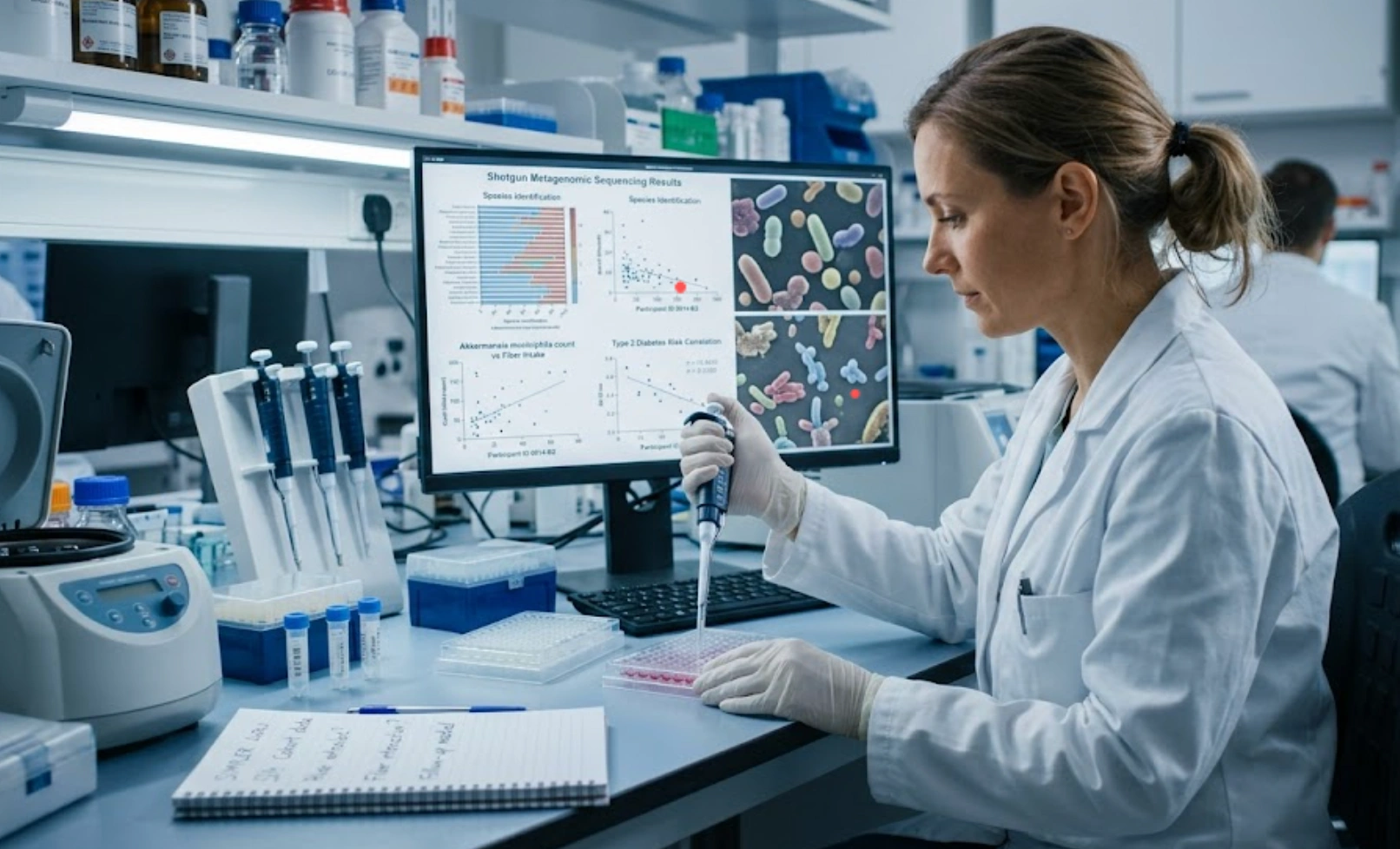
Most stories about the gut microbiome want to sort its trillions of residents into two tidy camps, the good bacteria and the bad ones, heroes and villains living in the same intestinal neighborhood. A large new Swedish study complicates that story in a genuinely useful way. It does identify specific bacterial species tied to future type 2 diabetes risk. But it also shows that at least one of those species has been wearing a hero’s reputation it doesn’t entirely deserve, depending on what else is happening at the dinner table.
A Five-Year Look Inside the Gut Before Diagnosis
Researchers at Chalmers University of Technology followed 4,685 adults in Sweden’s SIMPLER cohort, with an average age just under 74, for a median of 5.3 years. During that stretch, 383 participants developed type 2 diabetes. Rather than the older, blunter method of sequencing gut bacteria that many earlier studies relied on, the team used shotgun metagenomic sequencing, a far more precise technique that can identify individual bacterial species rather than lumping related groups together.
The timing here matters as much as the technique. Because the researchers had gut microbiome data on participants years before some of them developed diabetes, they could ask a genuinely different question than most prior research: were these bacterial patterns a cause sitting upstream of the disease, or just a downstream consequence of a body already sliding toward it. Postdoctoral researcher Gaël Toubon, who worked on the study, pointed to exactly this distinction, noting that the study captured changes in the gut microbiota several years before the disease developed. That sequencing matters. It nudges the evidence toward the microbiome doing something causal, rather than simply reflecting damage already done.
The Six Species That Showed Up Before Trouble Did
Out of 23 candidate species initially flagged, 18 held up after the researchers corrected for the risk of false positives that comes with testing so many organisms at once. Ten were tied to higher diabetes risk, most of them belonging to a bacterial group called Bacteroidetes. Eight were tied to lower risk, most from a different group called Firmicutes.

Six species stood out as the strongest signals for increased risk: Desulfovibrio piger, Alistipes communis, Alistipes finegoldii, Akkermansia muciniphila, Ruminococcus gnavus, and a Lachnospiraceae species labeled GGB3614_SGB4886. On the other side, three species showed up consistently as protective: Erysipelotrichaceae bacterium, Coprococcus catus, and an unclassified Clostridia species labeled SGB6317.
Names like these mean little to anyone outside a microbiology lab, and that’s fine. What matters is the shape of the finding: a specific, identifiable community of organisms, detectable through a stool sample, showing a measurable relationship with a disease that usually doesn’t announce itself until blood sugar has already climbed.
The “Good” Bacterium That Isn’t Always Good
Here’s where the ecosystem framing earns its keep, because one name on that risk list will surprise anyone who’s spent time in wellness circles. Akkermansia muciniphila has built a strong reputation over the past decade as one of the more celebrated “good” gut bacteria, linked in other research to healthy metabolism and even sold in some probiotic supplements on the strength of that reputation. In this study, high levels of Akkermansia showed up among the species associated with increased diabetes risk, but with an important asterisk: that risk was specifically tied to high Akkermansia paired with low dietary fiber intake.
The likely explanation runs through what this bacterium actually needs to do its job well. Akkermansia’s protective reputation seems to rest partly on a supporting role, helping feed other fiber-fermenting bacteria that produce short-chain fatty acids like butyrate, compounds that help maintain the gut’s protective mucus lining. Strip away the fiber that whole process depends on, and the same bacterium that would otherwise be quietly supporting gut health instead sits in an environment where short-chain fatty acid production drops, the mucus barrier weakens, and low-grade inflammation has an easier path into the bloodstream. Akkermansia didn’t change. The conditions around it did, and its effect flipped along with them.
Why the Individual Species Matter Less Than the Whole System

This is the part of gut microbiome research that resists the simple hero-villain framing no matter how many headlines try to force it there. A bacterium’s effect on the body isn’t fixed. It depends on what it’s working with, what it’s competing against, and what raw material, in this case, fiber, is actually available for it to do its job. Treating any single species as permanently good or permanently bad misses the fact that these organisms exist inside a web of relationships, not as isolated actors handing out health or disease on their own.
That’s precisely why the researchers behind this work, and researchers in this field more broadly, tend to steer people away from chasing individual bacteria through targeted supplements and toward something less exciting but more durable: building a genuinely diverse gut ecosystem through consistent dietary fiber, varied plant foods, and the kind of long-term eating habits that support the whole system rather than any single member of it.
What This Means Right Now
None of this means a stool test is about to become a routine part of diabetes screening, and the researchers themselves are careful to frame these findings as requiring further validation before they’d change clinical practice. What it does offer is a genuinely early warning window, years, not months, before diagnosis, and a fiber-focused entry point that doesn’t require waiting for a lab test that doesn’t exist yet. For a family managing an older relative’s metabolic health, or paying attention to their own risk with diabetes already common in the family, the practical message sits comfortably alongside everything else already known about preventing the disease. Feed the ecosystem, not just the one bacterium making headlines this week.