
Body weight really does come down to two levers, as Anders Näär, the UC Berkeley professor who led this research, put it plainly: taking in fewer calories, or spending more energy. Nearly every weight-loss drug on the market pulls the first lever. A compound his lab identified pulls the second one instead, and in obese mice, that single difference changed everything about what the weight loss actually looked like.
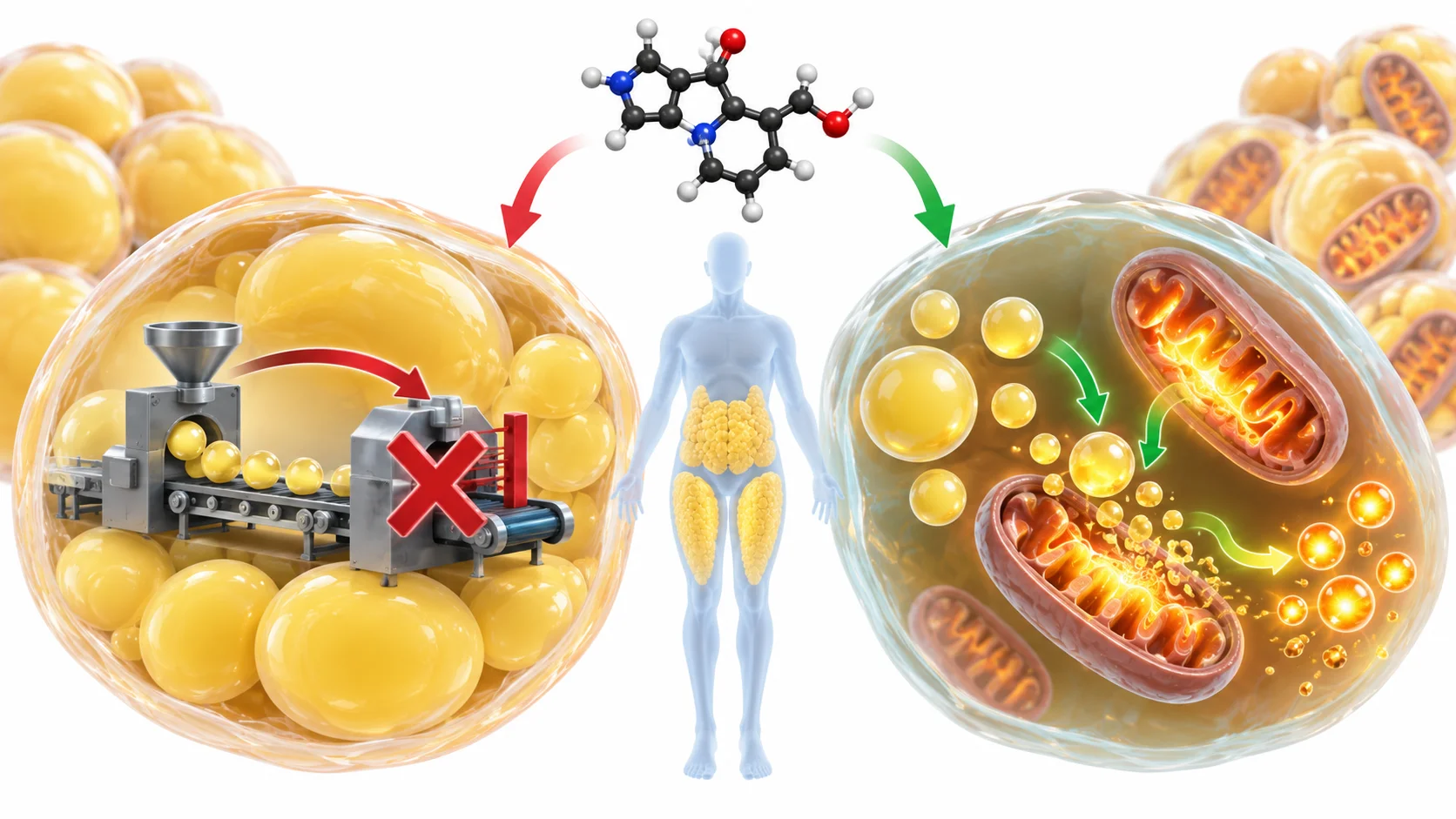
The compound is called TOFA, short for 5-tetradecyloxy-2-furoic acid, and it works through two switches flipped in opposite directions at once. One half blocks a pair of enzymes, ACC1 and ACC2, that cells normally use to manufacture new fat from scratch. The other half activates PPARα and PPARδ, molecular receptors that turn on the genes responsible for pulling existing fat into cells and burning it for fuel. Slow the factory down with one hand while opening the furnace door with the other, and the mechanism does something most single-target obesity drugs can’t manage on their own.

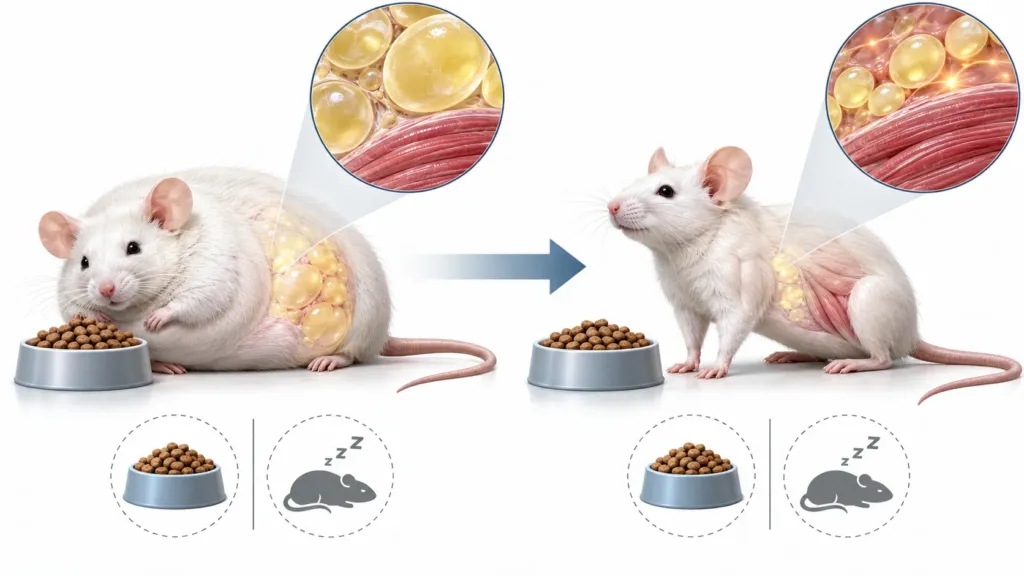
Over four weeks, obese male mice given TOFA lost an average of 18% of their body weight, with cells burning up to 18% more energy than untreated mice. None of it came from eating less. Food intake stayed the same. The mice weren’t more physically active, and their body temperature didn’t rise, which rules out the simplest explanation, that the compound was just making them fidget or run a low-grade fever to shed the weight. What did change was where the weight came from. It was almost entirely fat. Lean muscle mass showed no significant reduction at all.
That last detail is the one worth sitting with, because it’s exactly the gap current weight-loss drugs haven’t closed. GLP-1 medications like Ozempic, Wegovy, Mounjaro, and Zepbound work by suppressing appetite, and while genetic evidence shows they draw down fat mass more than muscle, some muscle loss still shows up consistently enough in patients on these drugs to worry clinicians, particularly for older adults who can’t easily afford to lose strength alongside weight. Muscle isn’t just cosmetic tissue. It supports balance, mobility, and metabolic health in ways that become more consequential with age, a connection researchers have traced directly to how well someone ages overall. A compound that burns fat through an entirely separate mechanism, one that never touches appetite or activity level at all, is a genuinely different tool for addressing that specific tradeoff, rather than just another variation on the same appetite-suppression theme.
The researchers aren’t treating this as a finished discovery sitting on a shelf either. They’ve already formed a company, ReRx Therapeutics, built specifically to push TOFA or something like it further toward an actual treatment, evidence that the team itself sees enough here to commit real resources beyond a single academic paper.
None of that should get ahead of what this study actually is. Every result comes from male mice, not yet tested in female mice within this study, let alone in a single human. There was no dietary restriction involved, which means the results say nothing about how the compound would behave layered on top of the variable eating habits of an actual person’s daily life. The lowest effective dose remains unknown, and TOFA hasn’t undergone anything resembling the safety testing required before a compound can be tested in people, a gap independent coverage of the findings was careful to name directly rather than let the exciting mechanism carry the story past where the evidence actually stands.
What TOFA offers right now isn’t a new option at a pharmacy. It’s a genuinely different idea about where a weight-loss drug’s leverage point could sit, pulling the second lever instead of the first, and a real signal that fat loss and muscle preservation don’t have to be the tradeoff most current medications still treat them as.