

For most families, the road to an Alzheimer’s diagnosis starts with a family doctor, not a neurologist. New data presented at the Alzheimer’s Association International Conference in London suggests that first stop is about to get a lot more reliable.
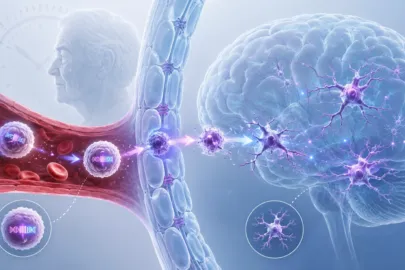
The study, led by neurologist Sebastian Palmqvist at Lund University in Sweden, followed more than 1,300 patients with mild cognitive impairment or dementia and 165 physicians in a real-world setting, not a controlled lab exercise. Each physician examined a patient and wrote down a working diagnosis and care plan before seeing any blood test results. Then they received results from a blood-based biomarker test called PrecivityAD2, which measures amyloid beta and phosphorylated tau, two abnormal proteins closely tied to Alzheimer’s disease, and were asked to reconsider their diagnosis and plan in light of the results. Researchers later checked each diagnosis against the gold-standard methods used to confirm Alzheimer’s, cerebrospinal fluid analysis and amyloid PET scans, to see who actually got it right.

Before seeing the blood test, primary care physicians correctly diagnosed Alzheimer’s 65% of the time. After reviewing the results, that number jumped to 93%. Specialists improved too, from 76% accuracy to 94%, but the more striking part of the story is how close primary care came to matching them. In a head-to-head comparison after both groups had the blood test in hand, family doctors and specialists were essentially diagnosing with the same accuracy, somewhere around 90% for both.
The test turned out to be especially useful for ruling Alzheimer’s out, which matters just as much as ruling it in. Before seeing results, primary care physicians were only willing to confidently rule out Alzheimer’s in 12.9% of appropriate cases. After a negative test result, that number rose to 25%. That’s a meaningful shift for a condition where symptoms like memory lapses and confusion can come from dozens of other causes, some of them far more treatable than Alzheimer’s itself, and where ruling out the wrong diagnosis matters as much as confirming the right one.
Across the whole study, the blood test results led physicians in both primary and specialty care to change the diagnosis or care plan for more than half of all patients evaluated. That’s not a marginal tweak. For a substantial share of patients, the test meaningfully altered the course of their care compared with what a doctor would have concluded on clinical judgment alone.

The timing behind this finding matters more than it might have a few years ago. Alzheimer’s diagnosis used to rest almost entirely on symptoms, memory complaints, confusion, changes in daily functioning, observed and interpreted by a clinician without much objective backup. That approach is inherently harder for a family doctor managing dozens of conditions than for a specialist who sees cognitive decline all day. It’s part of why the FDA has moved to clear blood-based tests for this exact use in recent years. Now that disease-modifying treatments exist that can slow Alzheimer’s progression when started early, an accurate diagnosis from a family doctor isn’t just a clearer answer for a worried family. It’s a faster path to treatment that works better the earlier it starts, a point the National Institutes of Health has highlighted as one of the main reasons faster primary care diagnosis matters.
A second, related study presented at the same conference adds another layer to this story. Researchers found that a specific biomarker, p-tau217, can help forecast cognitive decline years before any symptoms appear at all. Adults with very high p-tau217 levels were about 78% more likely to develop cognitive impairment within a decade, and 38% more likely within five years. Even people with only moderately elevated levels saw a real, measurable increase in risk. Between a diagnostic test that helps a family doctor catch Alzheimer’s accurately once symptoms appear, and a predictive marker that flags risk years before they do, blood-based biomarkers are quickly becoming a tool that spans the entire timeline of the disease, not just the moment of diagnosis.
None of this means a blood test alone should replace a full clinical workup, and the researchers involved haven’t suggested otherwise. What it does mean is that the biggest bottleneck in Alzheimer’s care, getting an accurate diagnosis without waiting months for a specialist appointment that may not even be available nearby, has a real, tested solution now sitting inside an ordinary blood draw. For families who’ve spent time in a primary care office wondering whether a parent’s memory changes were something serious or something explainable, that gap closing matters as much as any single drug breakthrough making headlines this year.