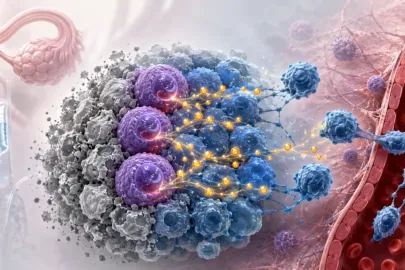

The phrase “cancer vaccine” has spent decades collecting failed attempts, promising early trials that quietly disappeared once tested at scale. On August 19, that streak broke. Merck and Moderna announced that their Phase 3 INTerpath-001 trial had succeeded, marking the first positive late-stage result ever recorded for a personalized mRNA cancer vaccine. Moderna’s stock jumped roughly 12.5% the day the news broke, a market reaction that says something about how rare this kind of result actually is in a field defined mostly by expensive dead ends.
What Actually Happened in the Trial
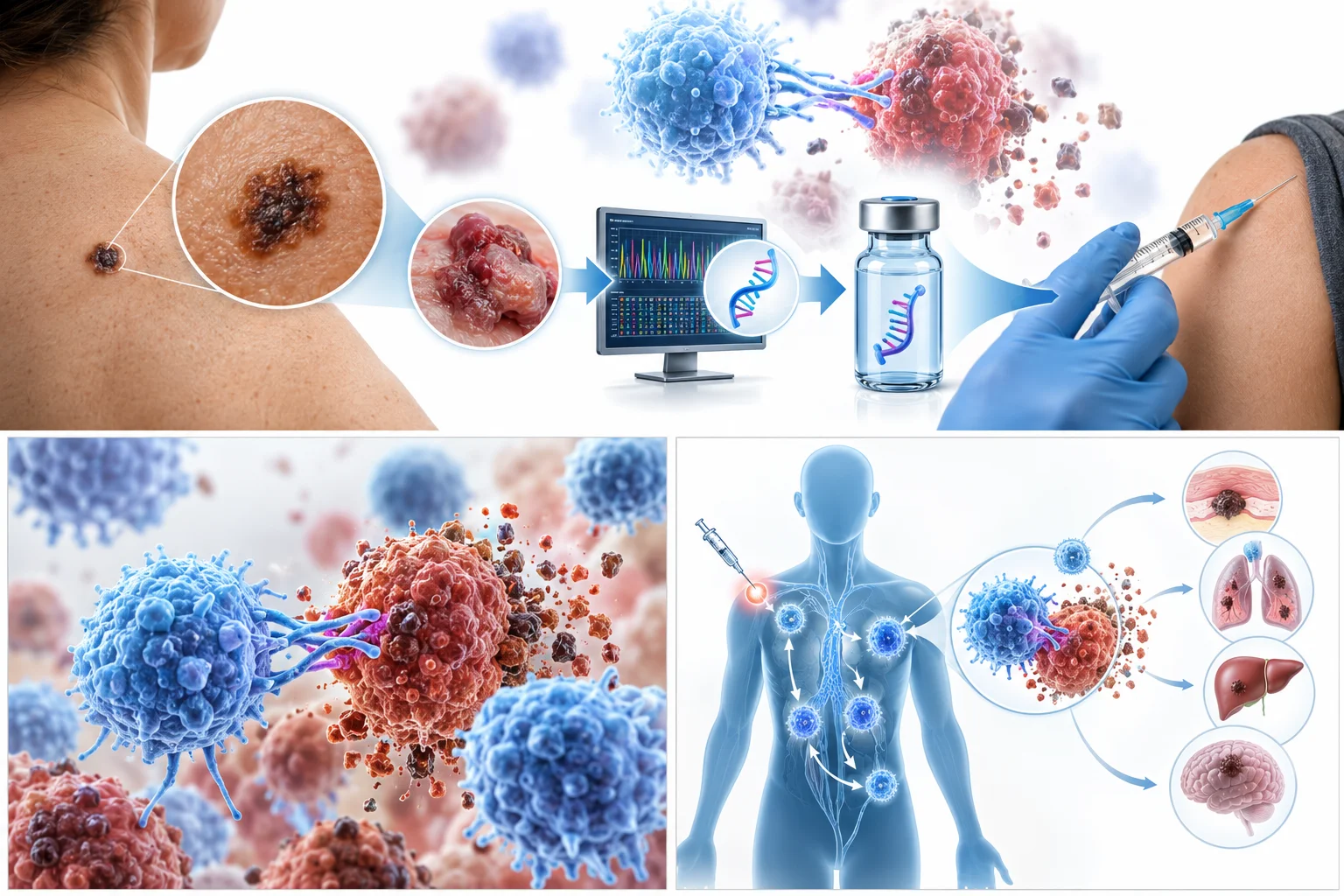
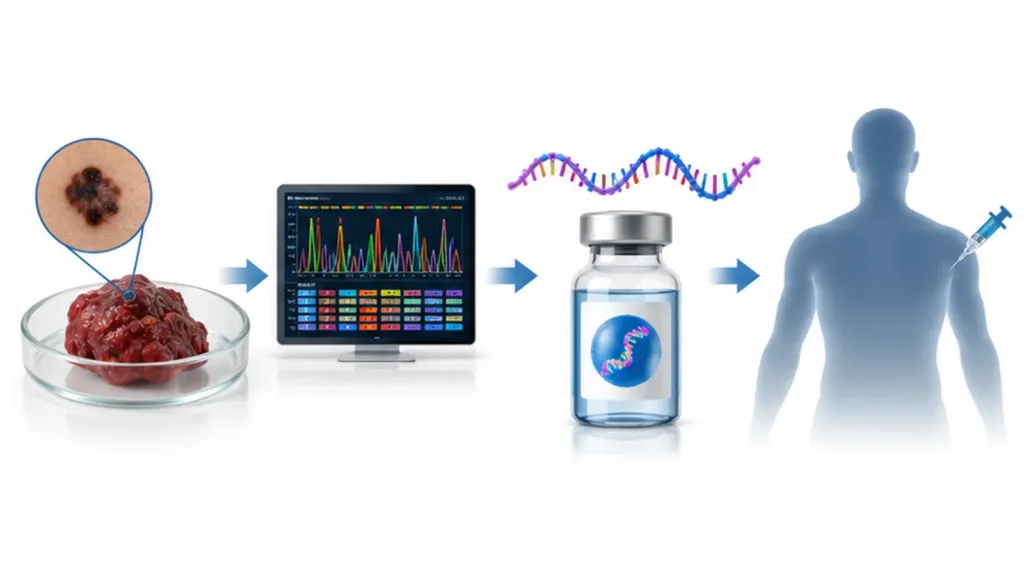
The treatment, called intismeran autogene, isn’t a vaccine in the traditional sense of protecting against a virus. It’s built individually for each patient, sequencing the specific mutations found in their own surgically removed tumor and using that genetic fingerprint to design a custom mRNA formulation meant to train the immune system to hunt down any melanoma cells left behind. Paired with Keytruda, Merck’s existing immunotherapy drug, the combination was tested in 1,137 patients whose stage IIB to IV melanoma had already been surgically removed, randomized two-to-one against Keytruda alone.
The trial met both of its primary goals: recurrence-free survival and distant metastasis-free survival, meaning patients who received the personalized vaccine were significantly less likely to see their cancer come back or spread compared with patients on Keytruda alone. Merck’s Dean Li called the result a step that would reinforce the promise of a more personalized approach to cancer treatment, and Moderna CEO Stéphane Bancel went further, calling the findings a pivotal moment for the entire field of cancer research. Murad Alam, vice chair of dermatology at Northwestern Medicine and not involved in the trial, described the result as very exciting, an independent voice echoing the excitement without a financial stake riding on the announcement.
The Data Nobody Has Seen Yet
Here’s the detail that responsible coverage of this trial keeps circling back to, and it’s worth taking seriously before treating this as a finished story. The press release announcing the results didn’t include hazard ratios, actual recurrence rates, or confidence intervals, as one detailed account of the announcement noted plainly. The companies have said the full numerical data will come later, at an upcoming medical conference. Everything reported so far is a topline “it worked” statement, not the actual numbers a doctor or a patient would need to weigh how much difference this treatment really makes. An earlier Phase 2 trial found a striking 49% reduction in the risk of recurrence or death at five years, but analysts have already cautioned that number will likely shrink somewhat in the larger, more diverse Phase 3 population, and disease can recur before a newly approved treatment ever reaches a patient in the real world.
Recurrence-Free Isn’t the Same as Living Longer
There’s a more fundamental distinction buried in what this trial actually measured. Recurrence-free survival and distant metastasis-free survival are both meaningful outcomes, but neither one is overall survival, whether patients actually live longer. In melanoma specifically, effective treatments already exist for managing a recurrence once it happens, which means delaying that recurrence doesn’t automatically translate into a longer life. That’s not a reason to dismiss the finding. It’s a reason to wait for the fuller dataset, and for longer follow-up, before assuming this changes survival odds rather than just the timeline of when a cancer returns.
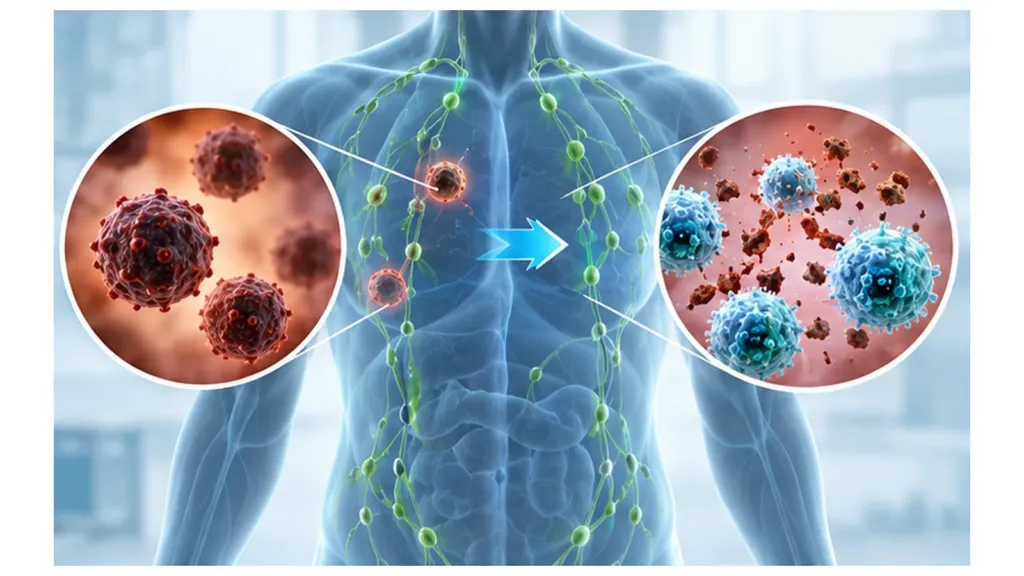
The trial’s scope is also narrower than the celebratory framing might suggest. Success here applies specifically to melanoma that’s already been surgically removed, one part of a much larger development program that currently spans nine separate Phase 2 and Phase 3 trials testing the same personalized vaccine platform against lung, bladder, and kidney cancers as well. Melanoma is the first test case to clear this particular bar, not proof the approach works everywhere it’s being tried.
None of these caveats erase what actually happened here. A genuinely new category of cancer treatment, built individually around each patient’s own tumor rather than a one-size-fits-all drug, just produced its first real Phase 3 success after decades of the field falling short, a pattern of borrowing precision tools built for one disease and pointing them at another that keeps showing up as some of medicine’s most promising recent territory. What comes next, the actual numbers, the survival data, and results from the other cancers still being tested, will determine whether this pivotal moment holds up to the same scrutiny that’s sunk so many cancer vaccine headlines before it.