
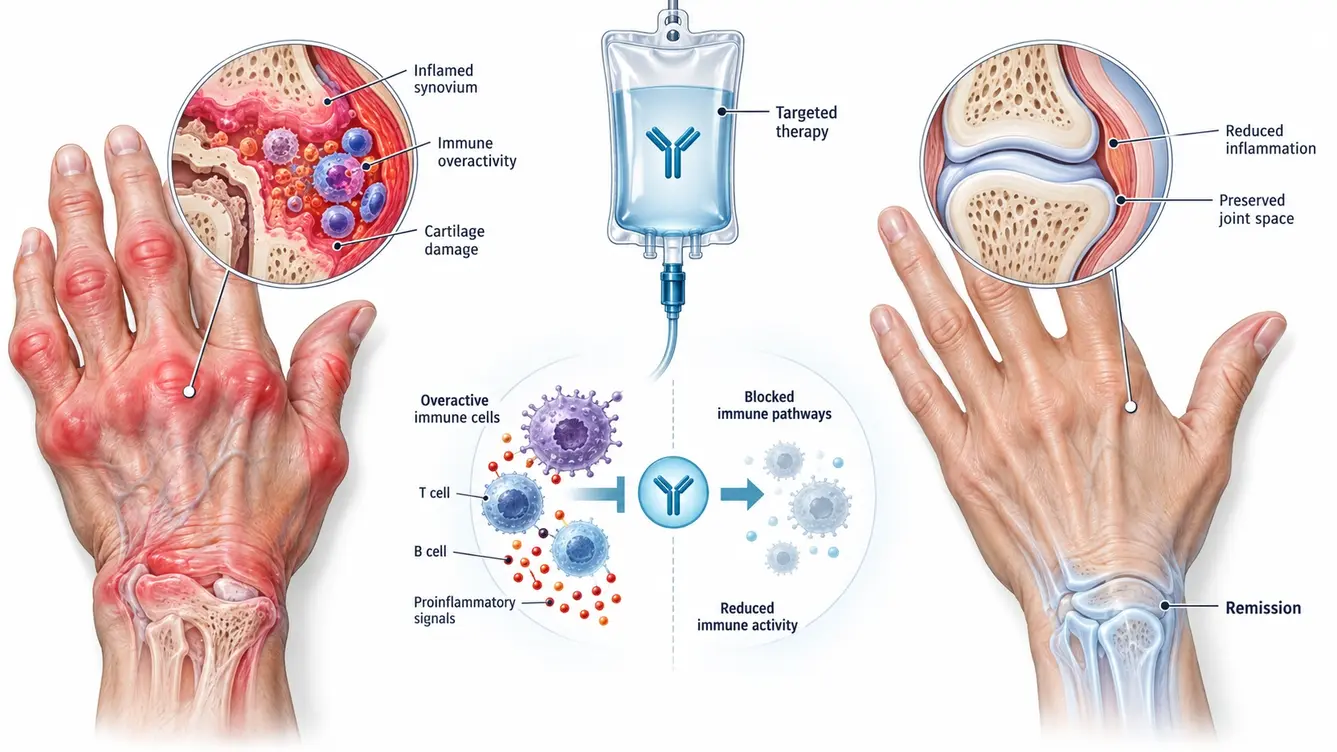
Six patients came into this trial having already tried and failed up to eight different rheumatoid arthritis treatments over the better part of a decade, three men and three women between 31 and 69, none of whom had found lasting relief from any targeted or biologic drug available. A single infusion of a therapy borrowed directly from cancer medicine changed that story for half of them. Researchers at Charité – Universitätsmedizin Berlin, reporting in Nature Medicine, gave all six patients CD19 CAR T-cell therapy, the same general approach used against certain blood cancers, and watched disease activity fall in every single one.
The mechanics borrow their logic straight from oncology. Each patient’s own T cells were removed and genetically engineered in the lab to carry a receptor that acts like a search sensor for CD19, a marker found on B cells, the immune cells responsible for driving rheumatoid arthritis’s attack on the joints. Returned to the body in one infusion, the engineered cells hunt down and eliminate CD19-positive B cells wherever they’re hiding, including long-lived, disease-driving cells buried deep in joint tissue that conventional drugs typically can’t reach at all.
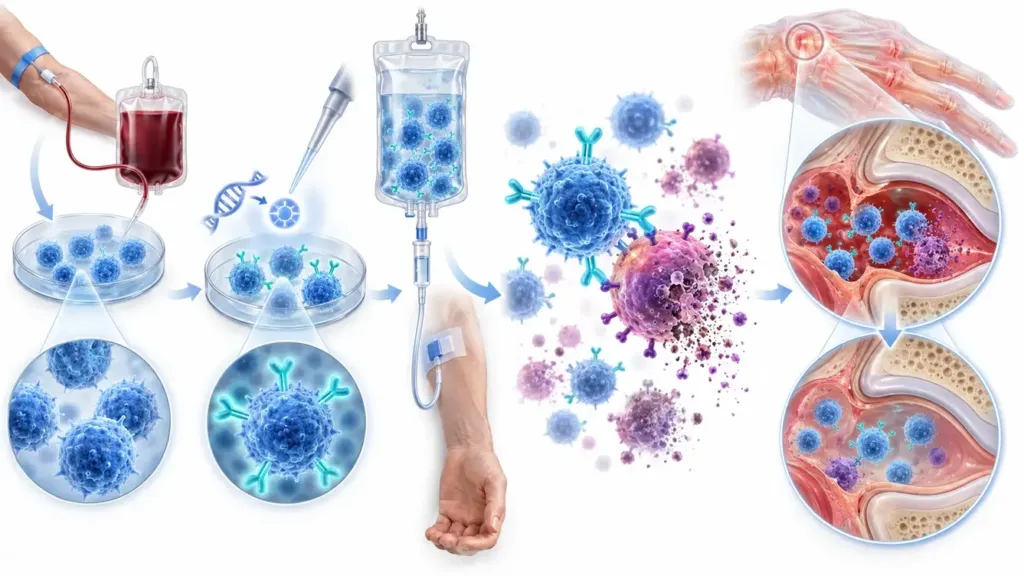
The results, tracked over up to a year of follow-up, went well past a modest improvement. Disease activity scores dropped by a median of 49%. Three of the six patients reached sustained remission and no longer needed any rheumatoid arthritis medication at all, a genuinely rare outcome for a group that had already exhausted the field’s best existing options. Medical Xpress’s coverage included imaging that made the change visible directly: PET-MRI scans of inflamed joint tissue, glowing with active inflammation before treatment, showed no detectable inflammatory activity months afterward, alongside real reductions in swelling, pain, and functional disability.
What may matter most for the field long-term isn’t just that symptoms improved. It’s what happened once the CAR T cells did their job and B cells naturally began repopulating the body again, as they always do after this kind of therapy. The specific disease-driving antibody-producing memory cells that had fueled each patient’s arthritis didn’t come back, a detail Nature Medicine’s own trial report recorded directly, no rise in autoantibodies, no return of disease activity. That pattern suggests something closer to a genuine reset of a malfunctioning immune memory than a temporary suppression that would eventually wear off, the same distinction that separates a maintenance drug from something closer to a cure.
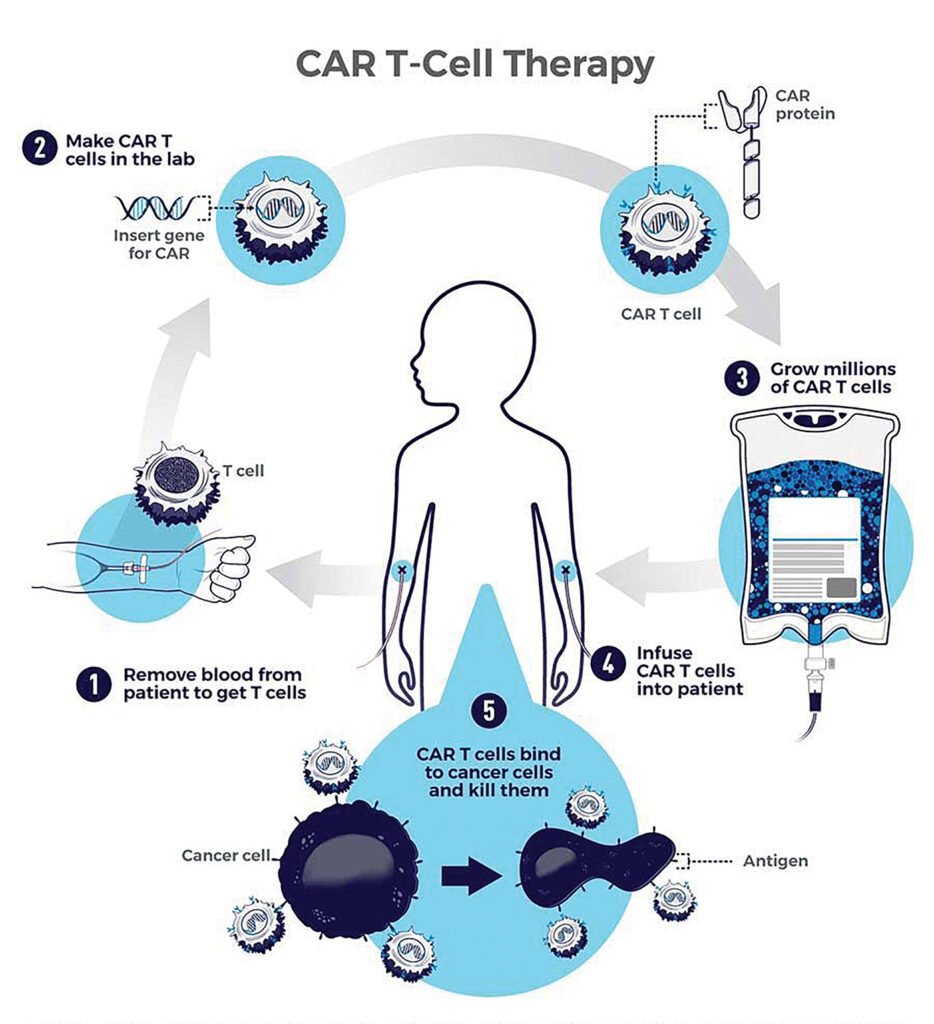
None of that should get ahead of what this trial actually is. Six patients is a phase 1 safety study, not a trial built to prove efficacy at scale, a distinction one detailed independent account of the results was careful to spell out plainly rather than let the remarkable individual outcomes speak for the whole approach. CAR T-cell therapy also carries real risks well documented in its cancer applications, including cytokine release syndrome and neurological side effects, risks this trial specifically tracked as a primary safety endpoint precisely because they can’t be assumed away just because the target disease changed.
This Berlin trial isn’t happening in isolation either. Related work earlier this year found CAR T-cell therapy produced real improvement in patients with systemic sclerosis and overlap autoimmune syndromes, documented in a separate report, including measurable lung improvement in patients who’d developed interstitial lung disease alongside their autoimmune condition. A broader French trial is already testing the same anti-CD19 approach across an even wider range of severe, treatment-resistant autoimmune diseases, lupus and Sjögren’s disease among them. Rheumatoid arthritis, in other words, may turn out to be just the first of several autoimmune conditions where a therapy built for cancer finds a second, genuinely different use: not managing a disease indefinitely, but attempting to switch the immune system back off from the mistake it’s been making all along, the kind of combined, borrowed-tool strategy that keeps showing up as medicine’s most promising path forward across very different diseases.