

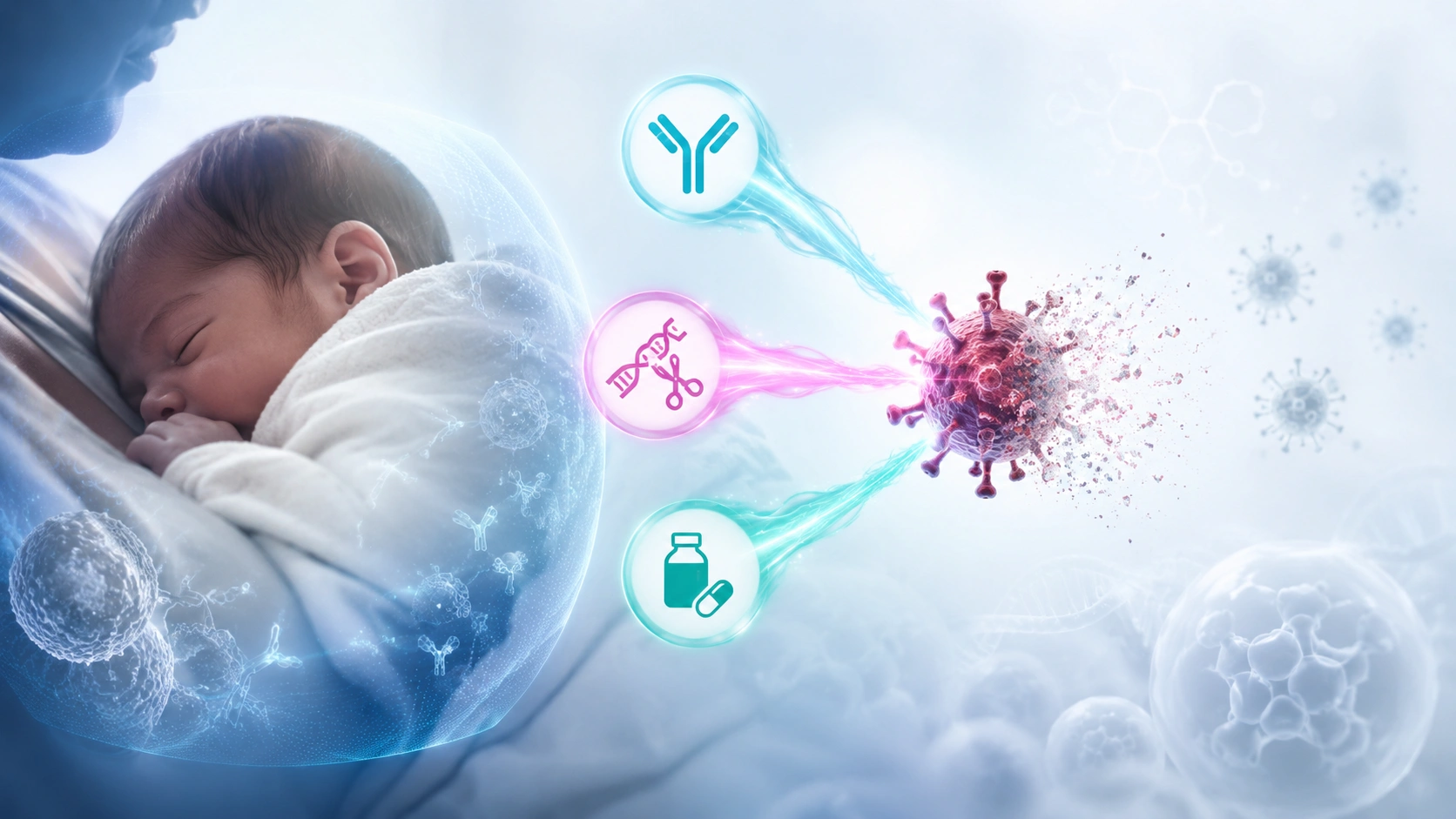
HIV research has lived with a stubborn asymmetry for as long as antiretroviral therapy has existed. Modern drugs can suppress the virus to undetectable levels for an entire lifetime. Almost nothing can eliminate it once it has settled into the body’s hidden viral reservoirs, small pockets of inactive virus tucked into tissue that reactivate the moment treatment stops. A new study out of Oregon Health & Science University, published in Nature Microbiology, describes a rare exception to that pattern, tested in newborn primates rather than adults, and aimed at one of the most stubborn corners of the global HIV epidemic: more than 120,000 infants who acquire the virus every year.
None of the Three Treatments Worked Alone
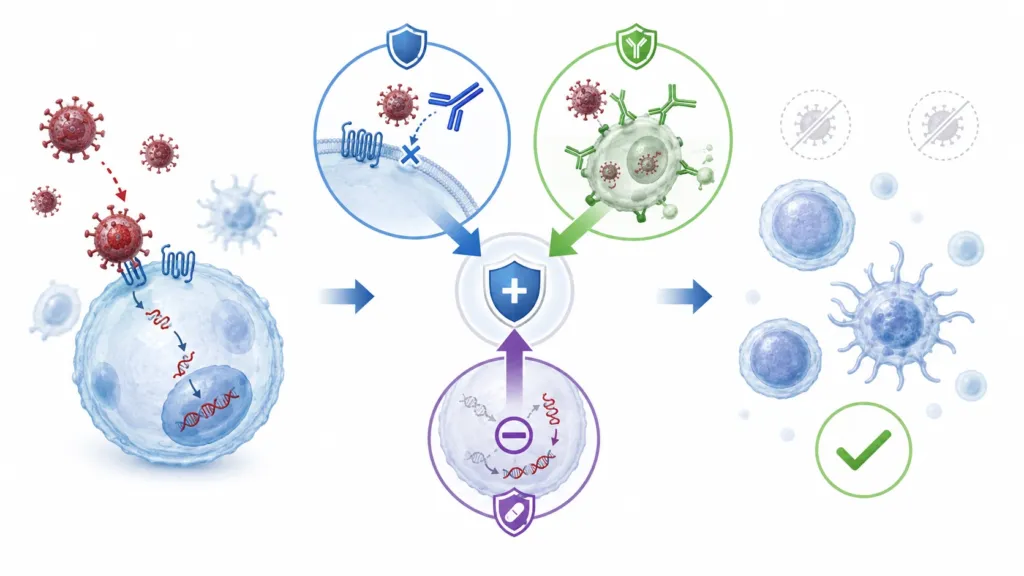
Researchers led by Jonah Sacha tested a combination of three distinct therapies in 55 infant rhesus macaques, given within three days of exposure to a simian version of HIV. Standard antiretroviral drugs blocked the virus from replicating. Broadly neutralizing antibodies, capable of binding many different HIV strains at once, marked infected cells for destruction. An experimental antibody called leronlimab blocked CCR5, a receptor the virus typically hijacks to enter immune cells in the first place.
Given together, the three treatments completely cleared the virus. At 84 weeks after exposure, well over a year later, researchers found no detectable virus anywhere in tissue samples, a result durable enough to look like genuine elimination rather than temporary suppression. What makes the finding stranger, and more scientifically interesting, is what happened when researchers tried each treatment on its own: nothing. None of the three approaches individually cleared the infection. Only the full combination worked, suggesting each piece disrupts the virus at a different, complementary stage of early infection, and none of them alone is enough to close every escape route at once. Sacha himself admitted the result caught the research team off guard: there was no reason to think this would completely clear the virus.
Jagdish Khubchandani, a public health professor at New Mexico State University who wasn’t involved in the research, called the approach scientifically sound on its face: this is a multipronged approach that makes a lot of biological sense, attacking early infection from three separate angles rather than betting everything on one mechanism.
What Comes Next, and What Still Has to Be Answered
Every result here comes from nonhuman primates, not people, and that distance matters more than usual given how differently newborn immune systems behave compared to adult ones, let alone across species. Sacha has said the approach could plausibly move toward human clinical trials relatively quickly given how closely primate physiology mirrors human biology, a point he made directly, and floated an ambitious next step: testing whether the same strategy might work in adults recently exposed to HIV, not just newborns.
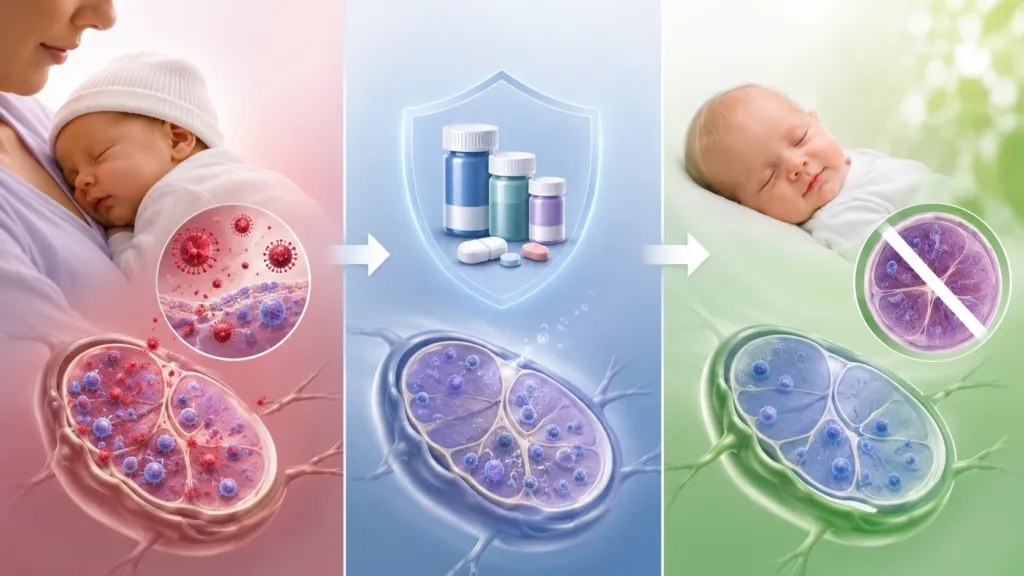
There’s a real practical wrinkle standing between this finding and its most direct application, though, flagged in detail by Medical News Today: in the controlled study, researchers knew the exact moment of exposure. In the real world, pinning down precisely when a newborn acquired HIV is far messier, and the longer an infection goes unaddressed, the more reservoirs the virus has likely already established across more tissue types, narrowing the window in which this kind of combination therapy would actually work. That timing problem points toward where the treatment might prove most useful first, not as a cure administered after a confirmed diagnosis, but as a preemptive regimen for newborns known to be at high risk of exposure during delivery, given while clinicians wait on birth test results rather than after.
None of that diminishes what the underlying science accomplished. A field defined for decades by the gap between suppression and elimination just found a combination, tracked closely by outlets covering the release, that appears to close that gap entirely in an animal model, using tools that individually had already been tested and found wanting. It’s the kind of result that tends to matter less for what it proves today than for the door it opens, a pattern that shows up whenever a combination of existing and experimental treatments accomplishes something none of them could manage alone, and this particular door leads somewhere HIV research has been trying to reach for a very long time.