

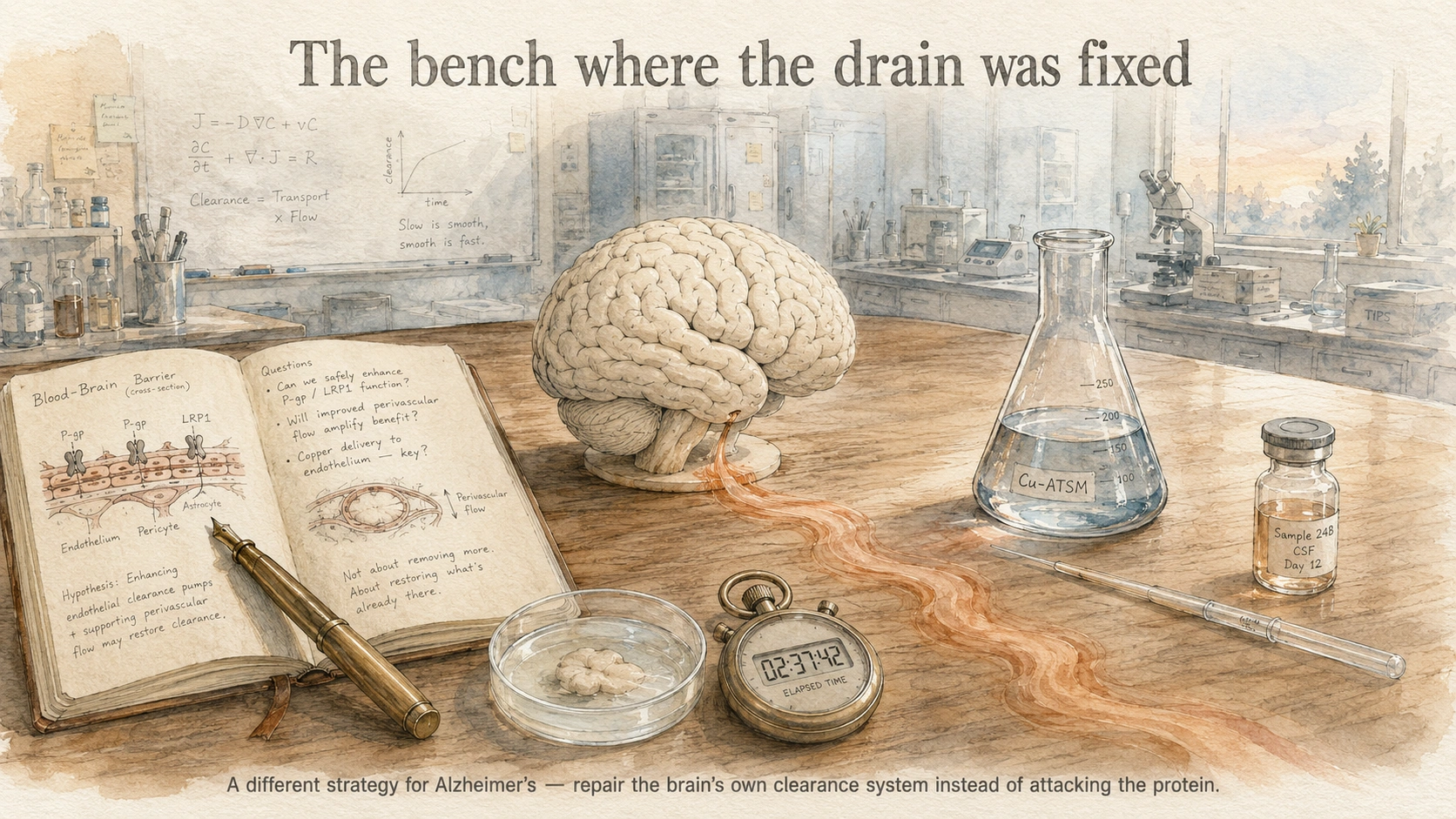
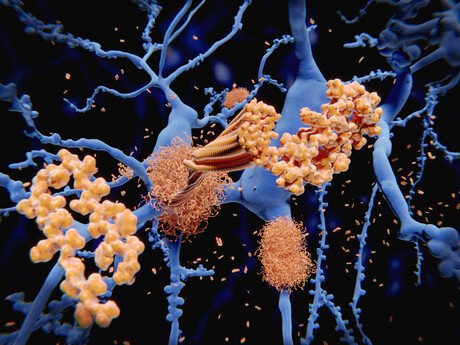
The brain has its own waste removal system, a set of molecular pumps stationed along the blood-brain barrier whose job is to flush toxic material out before it can pile up. In Alzheimer’s disease, that system breaks down. The pumps weaken, the drain clogs, and a sticky protein called amyloid-beta accumulates in the spaces between neurons instead of getting carried away. Most Alzheimer’s research over the past two decades has focused on attacking that protein directly. A new study out of Monash University in Australia took the opposite approach: fix the drain instead of fighting the clog.
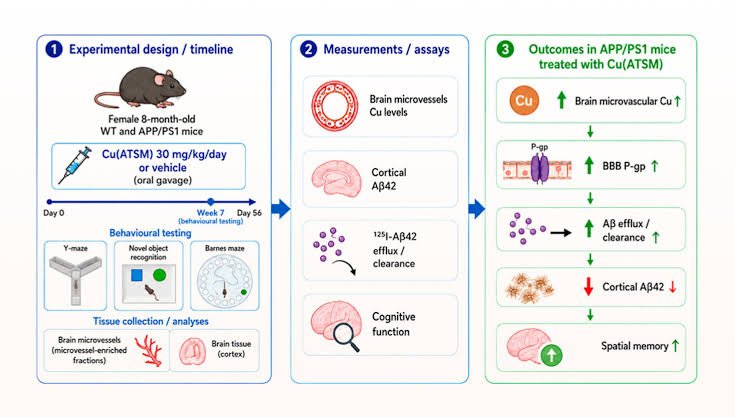
The compound is called Cu(ATSM), a copper-delivering molecule tested in mice engineered to develop a rare inherited form of Alzheimer’s. Over 56 days of treatment, researchers led by Dr. Jae Pyun at the Monash Institute of Pharmaceutical Sciences watched the brain’s clearance pumps, known as P-glycoprotein, increase in abundance by roughly 24%. Toxic amyloid-beta dropped by 42%. And on tests of spatial memory, the specific kind of memory mice rely on to navigate a maze and remember where they’ve been, performance improved by nearly 44%.
Those numbers connect in a way that matters. This is, by the researchers’ own account, the first study to show a direct link between repairing the blood-brain barrier’s pumping system and an actual improvement in cognitive performance, not just a cleaner brain on a slide, but a mouse that remembered its way around better because of it.
Here’s what separates Cu(ATSM) from most compounds that produce dramatic headlines in mouse studies and then quietly vanish. It isn’t starting from zero. The compound has already gone through human safety testing, not for Alzheimer’s, but for Parkinson’s disease and ALS. Researchers already know how it behaves in a living human body, what doses are tolerated, and what side effects tend to show up. Senior author Professor Joseph Nicolazzo, who directs Monash’s Centre for Drug Candidate Optimisation, has pointed to that existing safety data as the reason this compound could move toward human Alzheimer’s trials considerably faster than something built entirely from scratch.
That head start matters because the distance between a mouse and a person is enormous, and dementia research has no shortage of compounds that worked beautifully in a Barnes maze and did nothing whatsoever once they reached human trials. The researchers involved in this study are open about that history. A working mechanism in an engineered mouse strain is a real finding. It is not the same thing as a treatment, and nobody studying this is claiming otherwise.
Still, the mechanism itself is worth sitting with, because it reframes the whole problem. Amyloid-beta doesn’t necessarily need to be attacked head-on if the brain’s own plumbing can be repaired well enough to carry it out on its own. That’s a genuinely different strategy than most of what’s been tried before, and it arrives at a moment when the stakes keep climbing. In Australia, where this research was conducted, dementia recently overtook coronary heart disease as the leading cause of death nationally, a statistic that makes the urgency behind this kind of work hard to overstate.
What happens next isn’t up to the mice. It’s up to whether Cu(ATSM) can carry these same effects into a human trial, and whether the shortcut through existing safety data turns out to be as valuable as researchers hope. That answer is still years away. For now, what exists is a genuinely new mechanism, a real set of numbers, and a compound with fewer unknowns standing between the lab bench and the next stage than most experimental Alzheimer’s drugs ever get to start with.