

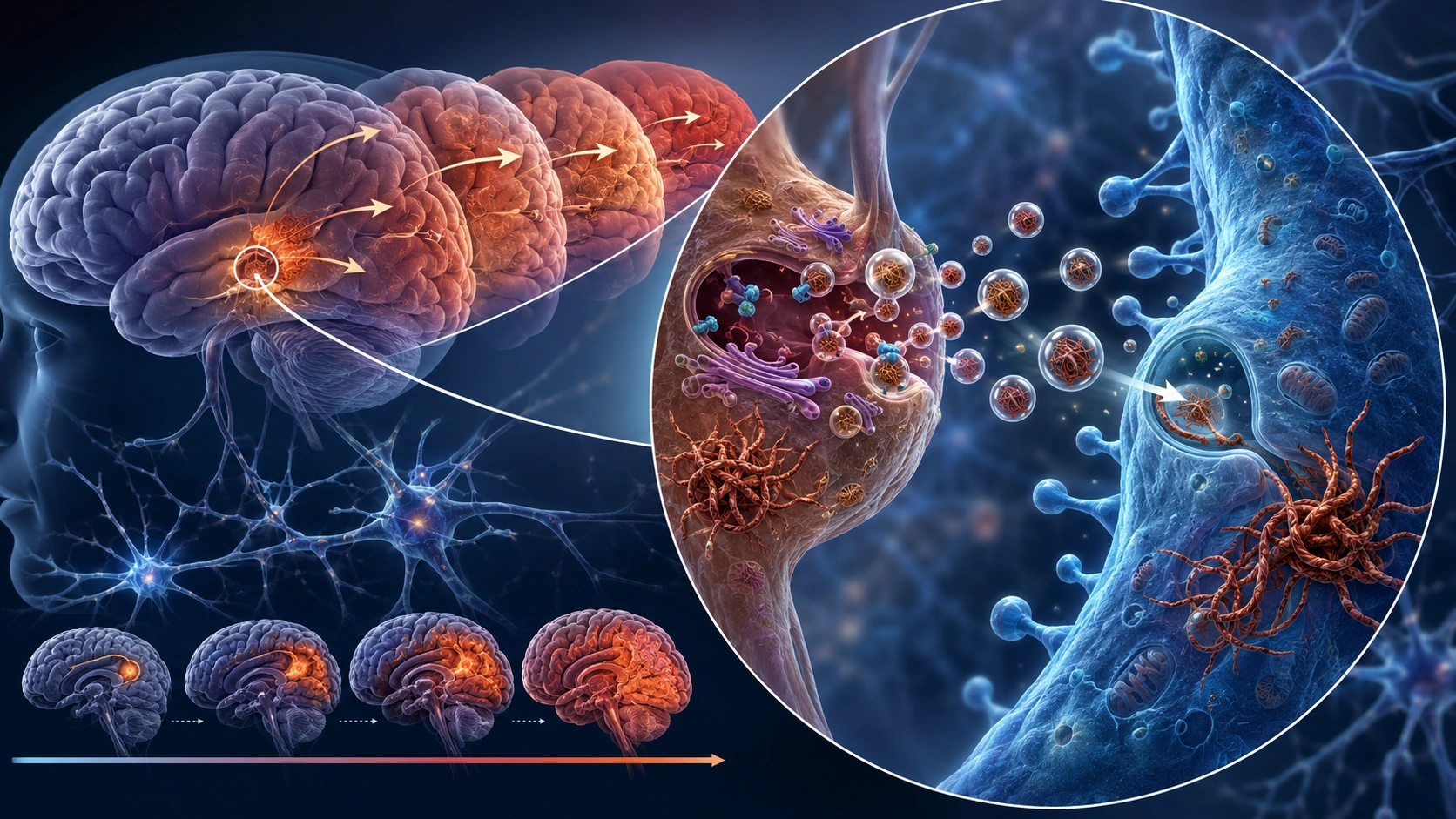
Every infectious disease detective story eventually arrives at the same question: how does the thing actually get from one place to the next. Alzheimer’s disease isn’t infectious in the way a virus is, nobody catches it from a cough or a handshake, but inside a single brain it behaves with an eerily similar logic. A toxic protein called tau starts in one small patch of tissue and, over years, works its way outward, region by region, neuron by neuron, like a rumor moving through a town. Researchers have known for a while that this spread happens. What they didn’t know, until a new study out of University of Utah Health, was exactly how tau makes the trip from a sick cell into a healthy one. The answer turns out to involve a courier nobody suspected.
The Courier Nobody Suspected
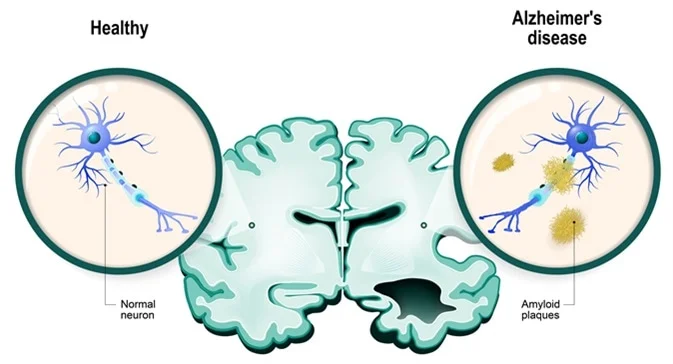
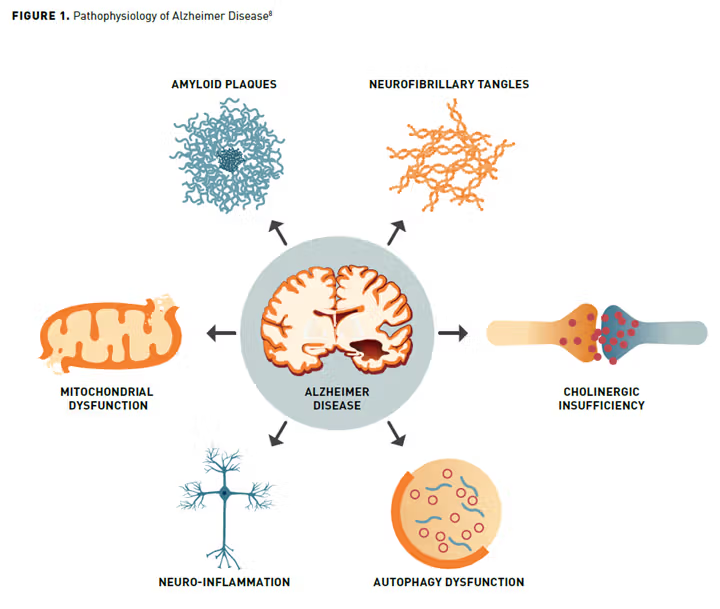
Tau isn’t a villain by nature. In a healthy neuron, it works quietly as scaffolding, helping stabilize the internal transport tracks the cell relies on to move materials around. In Alzheimer’s disease, tau misfolds and clumps into tangles that clog those same tracks and eventually kill the cell. That much has been understood for years. The genuine mystery was the delivery mechanism: once tau turns toxic inside one neuron, how does it reach across the gap and infect the next one over.
The Utah team, publishing in the journal Cell, found their answer in a protein called Arc, of all things, a protein with an entirely respectable reputation. Arc plays a legitimate, important role in healthy brain function, helping neurons communicate and playing a part in how memories actually form. Its normal job involves packaging cellular material into extracellular vesicles, tiny membrane-wrapped parcels that neurons routinely send to their neighbors, carrying genuine, useful cargo. Arc, in other words, is the postal service. It was never supposed to be smuggling anything.
How a Message Turns Into a Weapon
Here’s where the mystery resolves into something closer to a heist. The researchers found that toxic tau hijacks Arc’s normal packaging system, riding along inside the same extracellular vesicles Arc would otherwise use to send legitimate signals. Once one of these tau-loaded parcels reaches a healthy neuron and gets taken up, the tau inside can act as a seed, corrupting the receiving cell’s own normal tau and triggering a fresh round of tangle formation. The disease doesn’t just sit and grow in place. It ships itself outward, one parcel at a time, using the brain’s own internal courier network against it.
The proof came from comparing two groups of mice engineered with Alzheimer’s-like tau pathology, one with the Arc gene intact and one with it removed entirely. In the mice missing Arc, the extracellular vesicles pulled from their brains carried significantly less tau, and what tau they did carry was far less capable of seeding new tangles in healthy tissue. Take away the courier, in other words, and the toxic cargo mostly stays put.
Confirmed in Human Brain Tissue Too
A finding in mice is interesting. A finding that holds up in actual human brain tissue is the kind of detail that makes a paper worth taking seriously. The research team also examined brain tissue donated by people who had died with Alzheimer’s disease and found the same telltale combination: extracellular vesicles containing both Arc and tau packaged together, just as seen in the mouse experiments. Whatever this courier system is doing in a laboratory mouse, it appears to be doing something remarkably similar inside a real human brain affected by the disease.
Why You Can’t Just Shut the Courier Down
The obvious next thought, block Arc entirely and stop the spread cold, runs immediately into a problem. Arc isn’t some rogue protein that only shows up when something’s gone wrong. It’s doing genuinely important work in a healthy brain, contributing to the very memory formation that Alzheimer’s disease eventually destroys. Disabling it outright would likely be trading one kind of brain damage for another.
The researchers involved in this work are already thinking past that dead end, and their proposed strategy is more surgical than a blanket shutdown. Rather than stopping Arc from doing its normal job, the more promising path may be finding a way to block specifically the tau-loaded vesicles from being absorbed by healthy neurons, while leaving Arc free to keep sending its legitimate cargo the way it always has. Let the postal service keep running. Just intercept the one truck carrying contraband.
That’s still a laboratory idea rather than a treatment sitting on a pharmacy shelf, and the distance between the two remains considerable. But for a disease that has spread through the brain in ways nobody could fully explain for decades, having an actual named mechanism, a specific courier caught in the act, is the kind of detail that turns a vague, sprawling mystery into something researchers can finally take aim at directly.