
Ask most people to name the biggest controllable risk for Alzheimer’s disease and smoking, inactivity, or a poor diet usually comes up first. Stephen Wong, who directs Houston Methodist’s Chao Center for BRAIN, points to something else entirely. Recent research, he’s noted, has pushed obesity into the top modifiable risk factor for dementia in the United States, ahead of the usual suspects tracked by major dementia risk research. What his own lab has now found is a real, physical explanation for why.
What Fat Tissue Is Actually Sending to the Brain
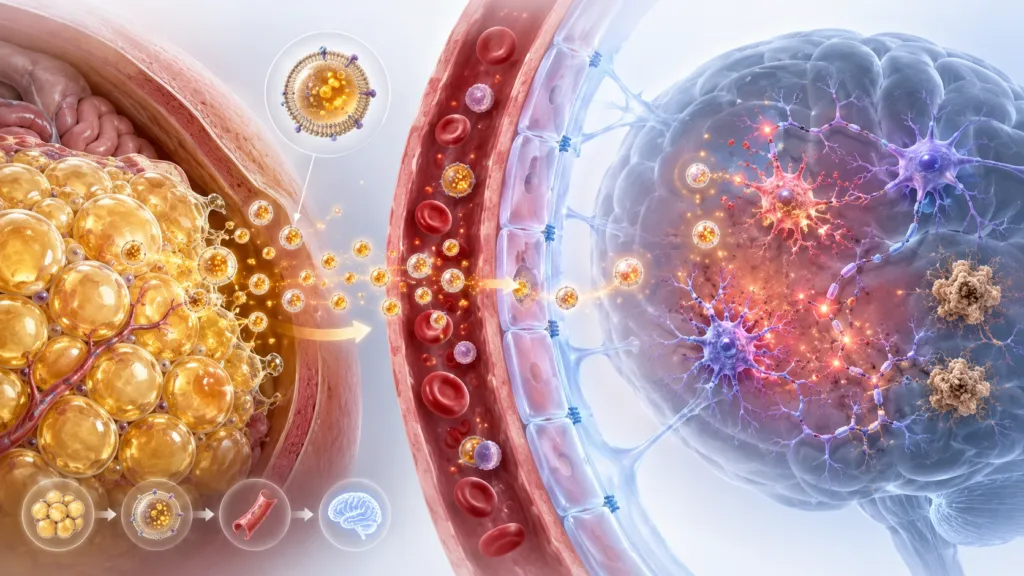
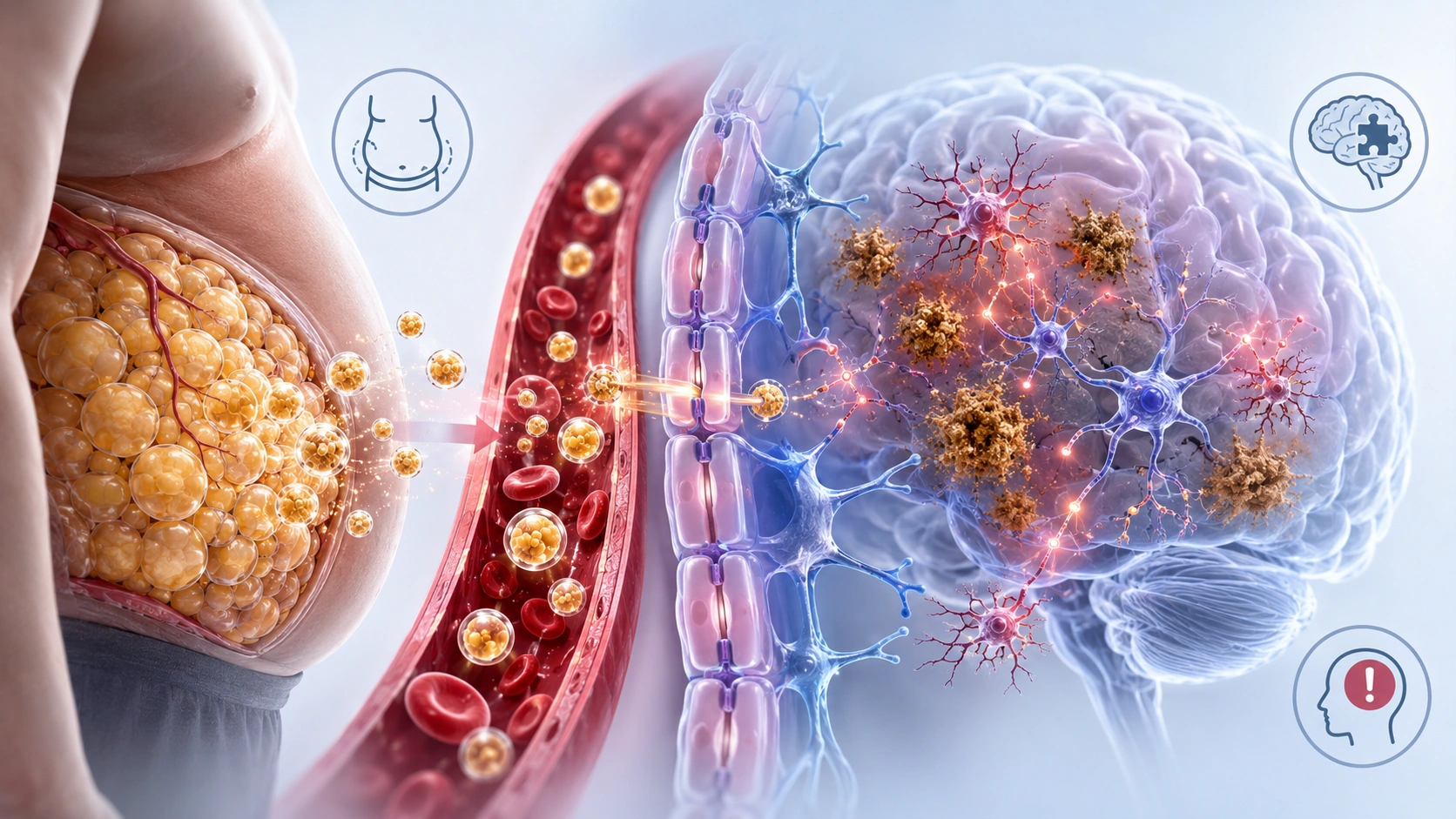
The molecule at the center of it all is called phosphatidylethanolamine, PE for short, a type of lipid that shows up at elevated levels in the body fat of people with obesity. On its own, that’s a fairly ordinary metabolic fact. What the Houston Methodist team, led by Wong and researcher Li Yang, found is where that excess PE actually goes. It gets packaged into tiny particles called extracellular vesicles and released into the bloodstream, and some of those vesicles make it all the way across the blood-brain barrier, the wall that’s supposed to keep the brain’s chemistry separate from everything happening in the rest of the body.
Once inside, the vesicles interfere with communication between brain immune cells and neurons, a process researchers call neuroimmune crosstalk, and that disruption appears to accelerate the buildup of amyloid-beta, the toxic protein at the center of Alzheimer’s pathology. The team confirmed the pattern two ways, testing it in mice bred to develop Alzheimer’s and fed a high-fat diet, and separately examining samples of actual human body fat. Published in Molecular Neurodegeneration and funded partly by the Cure Alzheimer’s Fund, the work is the most detailed mechanistic explanation yet for a connection researchers have suspected for years but couldn’t fully trace.
The Part That Actually Offers Hope
Here’s the detail worth sitting with longer than the rest. When researchers corrected the fat imbalance driving this whole process in their Alzheimer’s mouse models, memory and brain function improved. That’s not a small footnote. A mechanism finding on its own explains a problem. A mechanism finding paired with a reversal that actually worked, even in mice, points toward something researchers might eventually be able to intervene on directly, rather than just understand from a distance. Yang has said as much herself, noting that translating PE-targeted approaches into a human prevention or treatment strategy will take considerably more study, but that the door is now open in a way it wasn’t before.
Why Midlife Is the Window That Matters Most
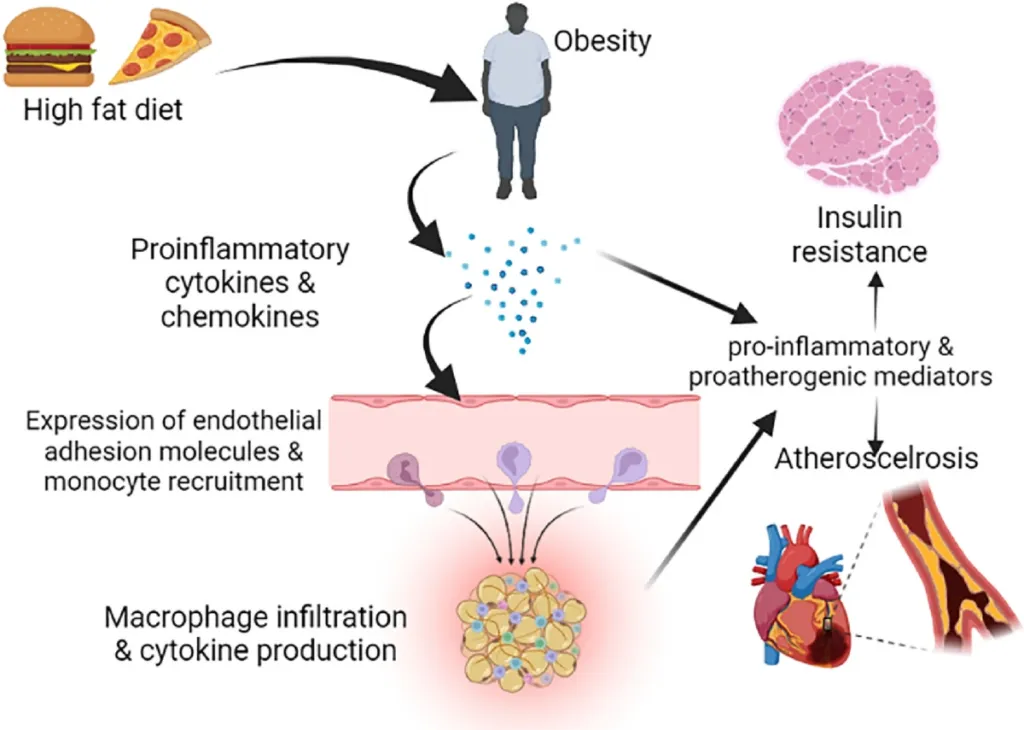
The timing of obesity turns out to matter as much as the obesity itself. Carrying excess weight specifically during midlife, not necessarily later in life, has been tied to as much as a 74% increased risk of developing dementia down the road, a striking number for a risk factor most people don’t associate with brain health at all. That timing detail lines up with a broader pattern showing up across dementia prevention research generally: the decades before symptoms appear are where the real leverage sits, not the years immediately surrounding a diagnosis.
None of this means obesity guarantees Alzheimer’s, or that a thinner midlife guarantees protection against it. What it offers is a specific, physical answer to a question that’s sat unresolved for years: not just that obesity and dementia travel together statistically, but a real, traceable path connecting a fat cell to a brain cell, one vesicle at a time. For a family thinking about where to actually put effort, that path runs in both directions, the same way muscle and metabolic health already showed up as protective territory worth defending well before any diagnosis is on the table.