
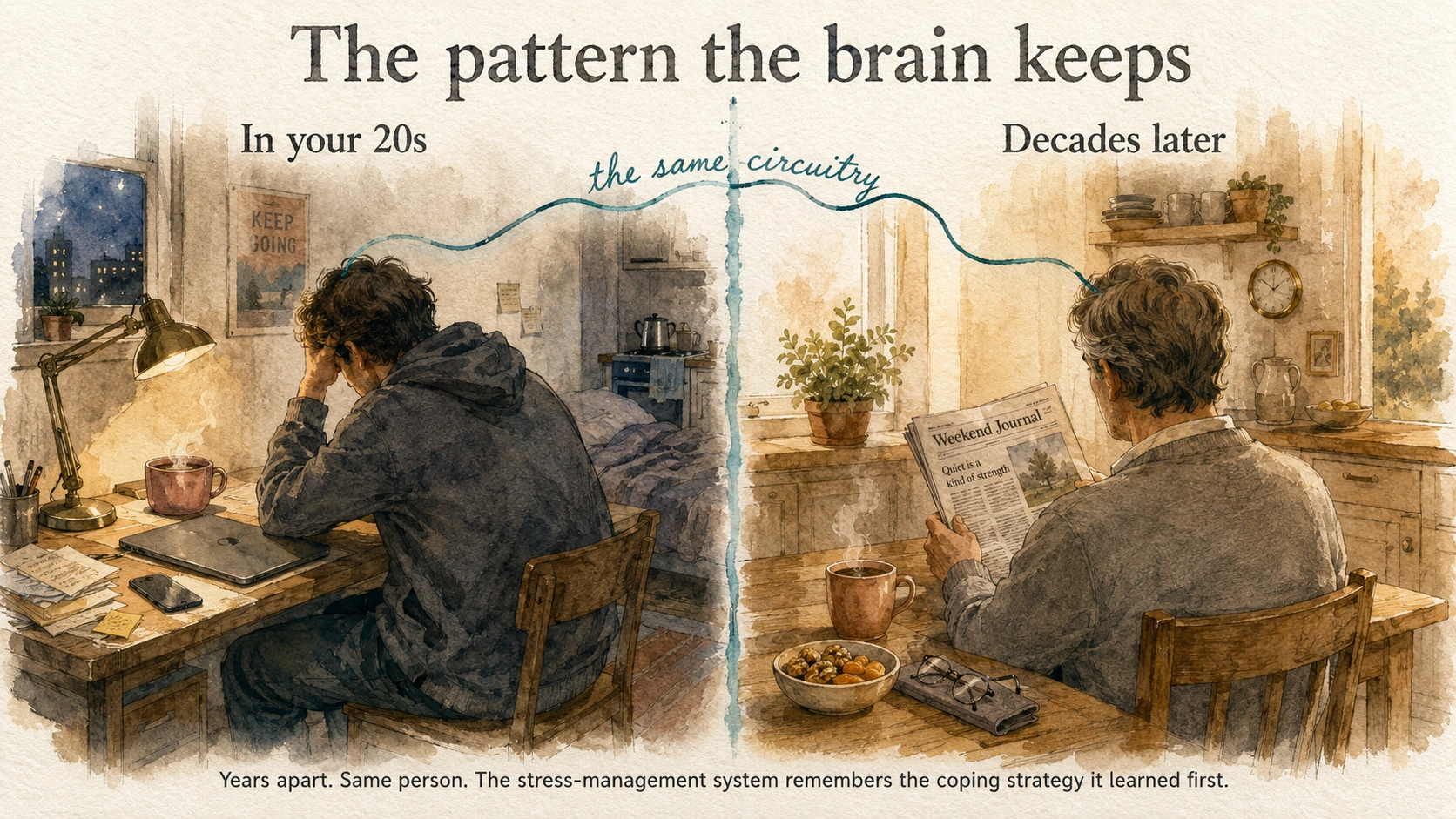
Stress and alcohol have always had a complicated relationship. A drink takes the edge off a bad day, at least for a few hours, which is exactly why so many people reach for one when things get hard. A new study from the University of Massachusetts Amherst suggests that relationship leaves a mark that doesn’t go away, even decades and years of sobriety later.
The research, led by Elena Vazey, an associate professor of biology whose lab studies the neurocircuitry behind decision-making, followed the long-term effects of combining chronic stress with alcohol use in early adulthood. The findings, published in the journal Alcohol: Clinical and Experimental Research, showed something that tends to get lost in conversations about drinking and willpower. The damage isn’t just about what happens the night of a hangover. It shows up decades later, in middle age, whether or not the drinking ever continued.
What Changes, and What Doesn’t
Here’s the part worth sitting with carefully, because it’s more specific than “alcohol is bad for the brain.” People with a history of stress-driven drinking in early adulthood didn’t show much difference in their basic ability to learn new information compared to light drinkers, once they reached middle age. What did change was flexibility, the capacity to adapt on the fly when a situation shifts unexpectedly. That’s a specific, meaningful loss. It’s the skill involved in adjusting a plan when circumstances change, recovering from a surprise, thinking clearly when the ground moves. Vazey has pointed out that this same kind of inflexibility shows up in the early stages of dementia, which makes this finding more than an abstract neuroscience curiosity.
There’s a second effect layered on top of that one. People with this history were also more likely to turn back to alcohol when stress hit later in life, even after years, sometimes decades, of not drinking. The old coping pattern didn’t disappear. It stayed available as a default the brain could still reach for.
The Brain Region at the Center of It
The research points to a specific structure called the locus coeruleus, a small but critical region involved in regulating stress response and attention. In animals with a history of chronic alcohol and stress exposure, this region showed signs of oxidative damage, the kind of cellular wear that accumulates when a system gets pushed too hard for too long without adequate recovery. That damage appears to be part of why the effects persist. It isn’t a habit sitting on top of an otherwise normal brain. It’s a structural change in the machinery responsible for managing stress in the first place.
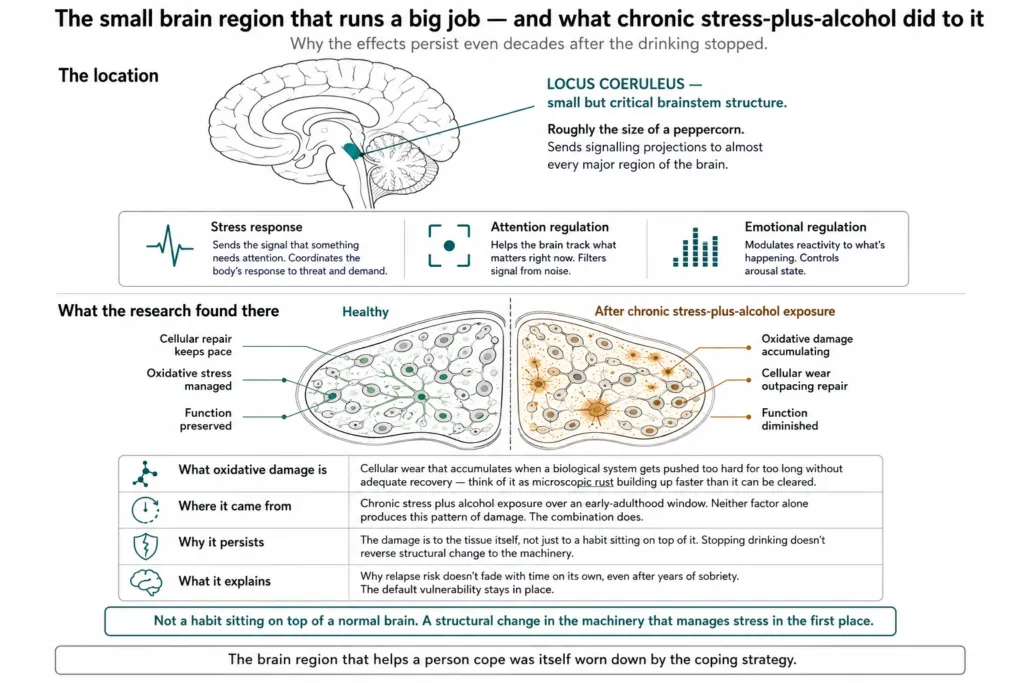
That distinction explains the vicious cycle at the center of this whole pattern. Alcohol dampens stress in the moment, but it does that by taking over a job the brain would otherwise handle on its own. Over time, the brain’s natural stress-regulation system gets less practice and less support, so it becomes less capable, which means more alcohol is needed to get the same relief the next time. Worse decision-making under the influence adds new stress on top of the old, and the cycle feeds itself.
Why This Isn’t About Willpower
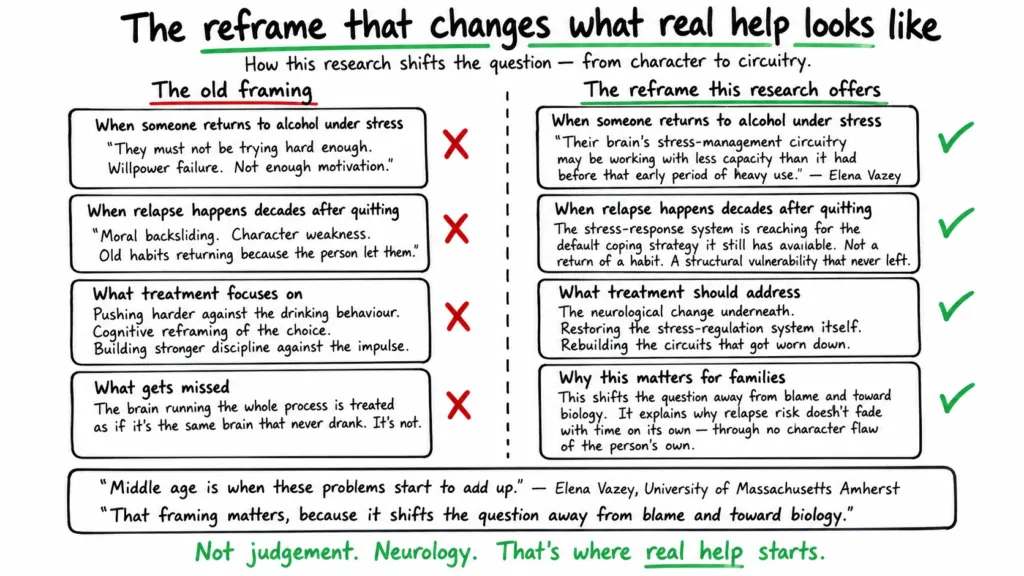
This is exactly the part that gets missed in most conversations about drinking, recovery, and relapse. A person who returns to alcohol under stress decades after quitting isn’t failing at willpower. Their brain’s stress-management circuitry may be working with less capacity than it had before that early period of heavy use, through no character flaw of their own. Vazey has said plainly that middle age is when these problems start to add up, and that framing matters, because it shifts the question away from blame and toward biology.
For families supporting an older relative with a history of stress-related drinking, whether that history is decades old or more recent, this research offers something more useful than judgment. It offers an explanation for why relapse risk doesn’t just fade with time on its own, and why real treatment approaches need to address the underlying neurological changes directly, not just the behavior sitting on top of them.