
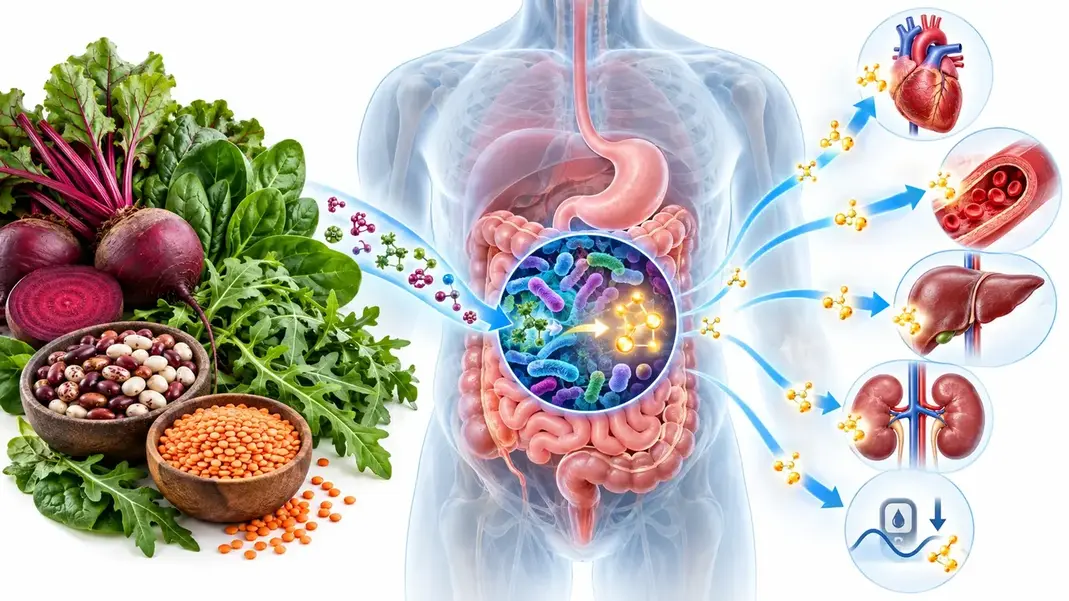
Why does a diet built around vegetables protect the heart and metabolism so much more than any single vitamin inside them seems to explain? Researchers at Karolinska Institutet think they’ve found a real piece of that answer, and it isn’t sitting in the vegetable itself. It’s happening in the gut, after the vegetable arrives.
Start with the proof, because it’s the cleanest part of the story. Mice raised entirely without gut bacteria, fed the exact same nitrate- and iron-rich diet as ordinary mice, produced none of a compound called a dinitrosyl iron complex, or DNIC. Give that identical food to a mouse with a normal gut microbiome, and the compound shows up reliably, detected across several tissue types using advanced analytical techniques. The bacteria aren’t incidental to this process. They’re the ones actually building the molecule.
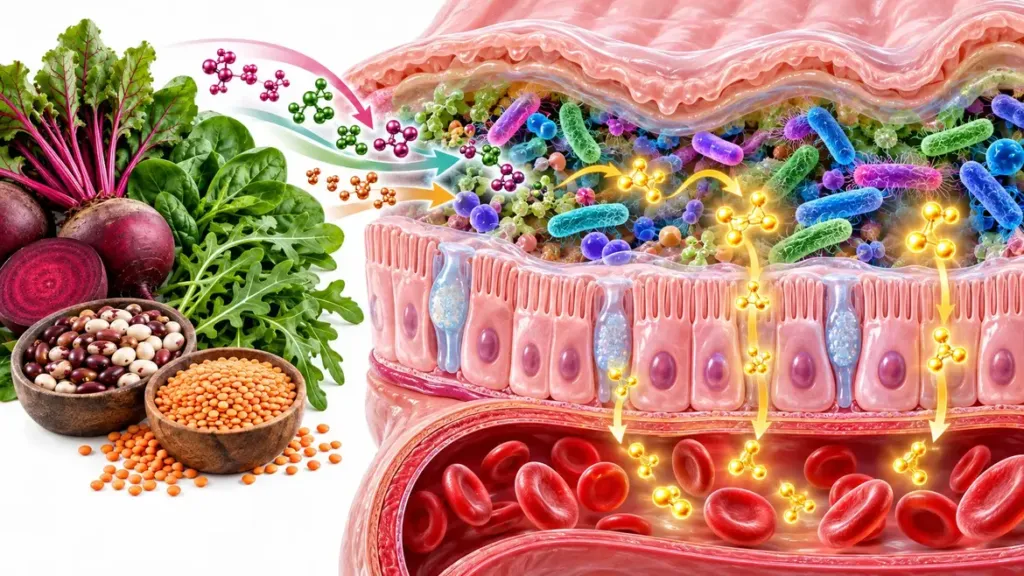
Here’s what they’re building it from. Nitrate occurs naturally in vegetables like beetroot, spinach, arugula, and lettuce. Non-heme iron, the plant form of iron distinct from the kind found in meat, shows up in beans, lentils, whole grains, and the same green vegetables. First author Andrei Kleschyov summed up the discovery directly: gut bacteria can convert components in food into biologically active molecules, and in this case, the two components, nitrate and non-heme iron, get combined into DNICs that leave the gut and travel to the rest of the body, collecting in particularly high concentrations in the liver and kidneys.
Once researchers had a compound to work with, they tested what raising its levels actually did, using two separate methods, feeding animals more nitrate and iron directly and, separately, giving them lab-made DNICs outright. Both approaches pointed the same direction: lower blood pressure, better blood vessel function, improved blood sugar control, and less fat accumulated in the liver, a genuinely broad spread of cardiometabolic benefit from one previously unknown compound.
There’s a distinction worth getting right here, since it would be easy to mistake this for old news dressed up in new language. Vegetables and nitrate have already been tied to cardiovascular benefit through nitric oxide, the molecule responsible for relaxing blood vessels. DNICs are something else. Researchers have been specific that the effects observed here traced back to the actual iron-nitrogen structure inside the DNIC molecule itself, not simply to free nitric oxide floating around afterward. Vegetables, in other words, may be doing at least two separate favors for the cardiovascular system through two separate chemical pathways, not one mechanism wearing different names.
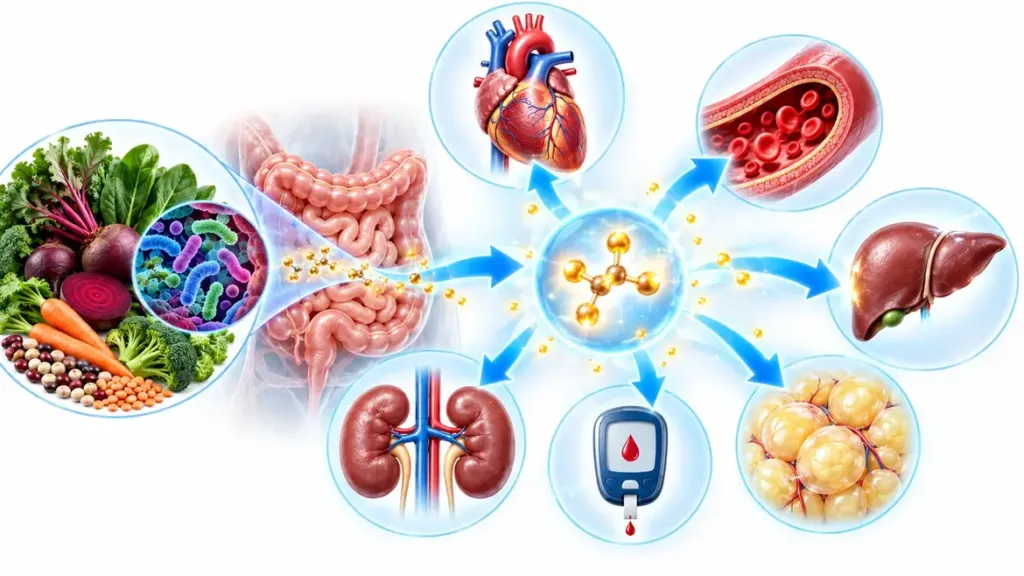
None of this is settled science yet, and the researchers involved have said so plainly. The disease-related benefits were demonstrated mainly in experimental models, and while human tissue samples were part of the investigation, confirming that raising DNIC levels actually prevents high blood pressure, diabetes, or fatty liver disease in real patients is a separate, still-pending question. Human trials testing this directly haven’t happened yet.
What’s already clear is that a diet heavy in vegetables and legumes isn’t just supplying a handful of individually helpful nutrients. It’s supplying raw ingredients to a gut ecosystem that appears to be running its own quiet chemistry lab, assembling something new out of what a plate delivers rather than simply passing nutrients through unchanged. That reframes an older finding too, one worth remembering: the discovery that vegetable-sourced nitrate protects the brain while the same nitrate from meat or water didn’t carry the same benefit was never fully explained by nitric oxide alone. A gut that can only build DNICs when it has both nitrate and plant-based iron on hand, together, in the same meal, might be exactly the missing half of that answer.