

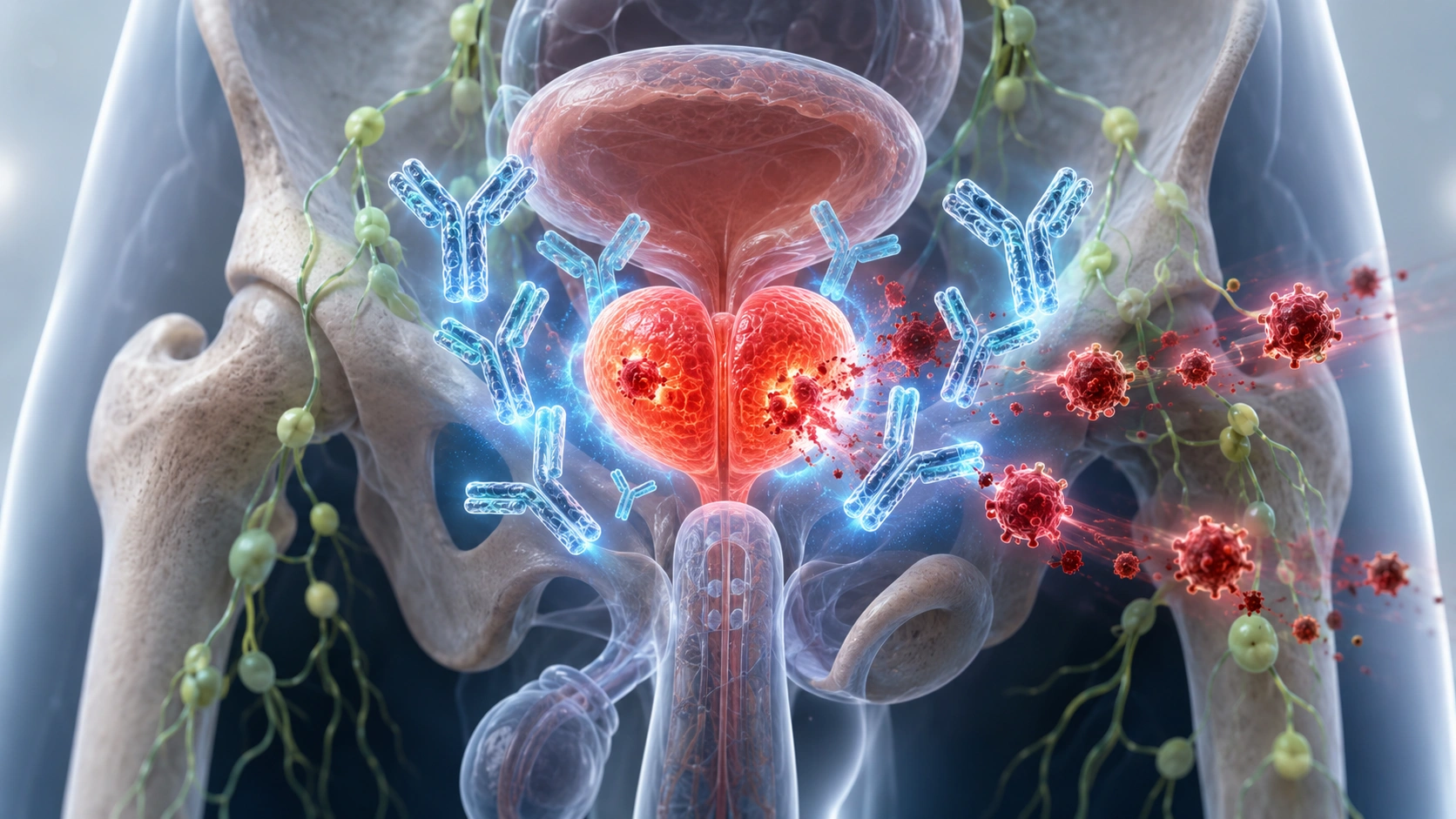
Most men diagnosed with prostate cancer will live full lives without the disease ever becoming the thing that defines them. It grows slowly, stays put, and gets managed rather than feared. The story changes entirely once cancer cells slip past the prostate itself and set up shop in the lymph nodes or bones, and it changes again, more darkly, when that spread stops responding to hormone therapy altogether. That specific, hardest version of the disease, called castration-resistant prostate cancer, is where treatment options run thin and where a new antibody developed at Umeå University is aimed directly.
The team, led by pathology professor Maréne Landström, built what’s called a fully human antibody, meaning it’s assembled entirely from human proteins rather than the partially mouse-derived antibodies that have driven a lot of earlier drug development. That distinction sounds technical, but it carries real practical weight. A fully human antibody is less likely to trigger the kind of immune rejection that has sunk otherwise promising treatments before they ever reached patients, Medical Xpress explained, a design choice central to making this specific antibody viable as an actual therapeutic candidate rather than just a laboratory curiosity.
What the antibody actually targets is a signaling pathway running through the TGF-beta type I receptor, known in the literature as TβRI, specifically blocking a cleavage step in that receptor’s activity that drives cancer cell growth, invasiveness, and the ability to spread. That’s a newly identified mechanism, distinct from the biological routes existing prostate cancer drugs already work through, Technology Networks reported, which matters for a very practical reason: a drug attacking cancer through an unfamiliar route may sidestep some of the side effects and resistance patterns that have limited older therapies built around more heavily trodden pathways.
In preclinical models of castration-resistant prostate cancer, the antibody stopped both primary tumor growth and metastatic spread, SciTechDaily confirmed across multiple independent write-ups of the underlying paper. Landström described the goal behind the work plainly, noting that the drug was developed specifically to prevent metastasis, the step that turns a manageable cancer into a genuinely dangerous one.
Here’s where I want to slow the enthusiasm down deliberately, because cancer research has a long, well-documented history of preclinical results that never survived the trip into human trials. This is animal and cell-based work. It hasn’t been tested in a single person yet, and the researchers themselves have been upfront that further safety evaluation and regulatory review stand between this antibody and anything resembling a treatment. That’s not a knock against the finding. It’s just an honest description of where a discovery like this actually sits, ScienceDaily stated directly rather than glossing over with the kind of breathless framing that has burned patients’ hope before.

What makes this particular project worth watching anyway is the collaboration behind it. The antibody was developed with drug discovery specialists at the SciLifeLab Drug Discovery and Development Platform, alongside support from the Umeå Biotech Incubator and a biotech company, MetaCurUm Biotech AB, that exists specifically to push findings like this one further down the development pipeline. That’s the kind of infrastructure that separates a paper that ends its life as a citation from one that actually reaches a clinical trial.
Landström has already pointed toward where this could go next, saying the team wants to find out whether this treatment can also be used against other types of solid tumors. If the TβRI pathway targeted here plays a similar role in other cancers, and there’s real biological reason to think it might, this antibody’s relevance could extend well beyond prostate cancer specifically. That’s still a hope rather than a finding, the same honest distance that sits between mechanism and treatment in nearly every story like this one. For now, what exists is a genuinely new idea, tested carefully, aimed at exactly the version of prostate cancer that needs new ideas most, and a research infrastructure built to actually carry it forward instead of letting it quietly disappear.