
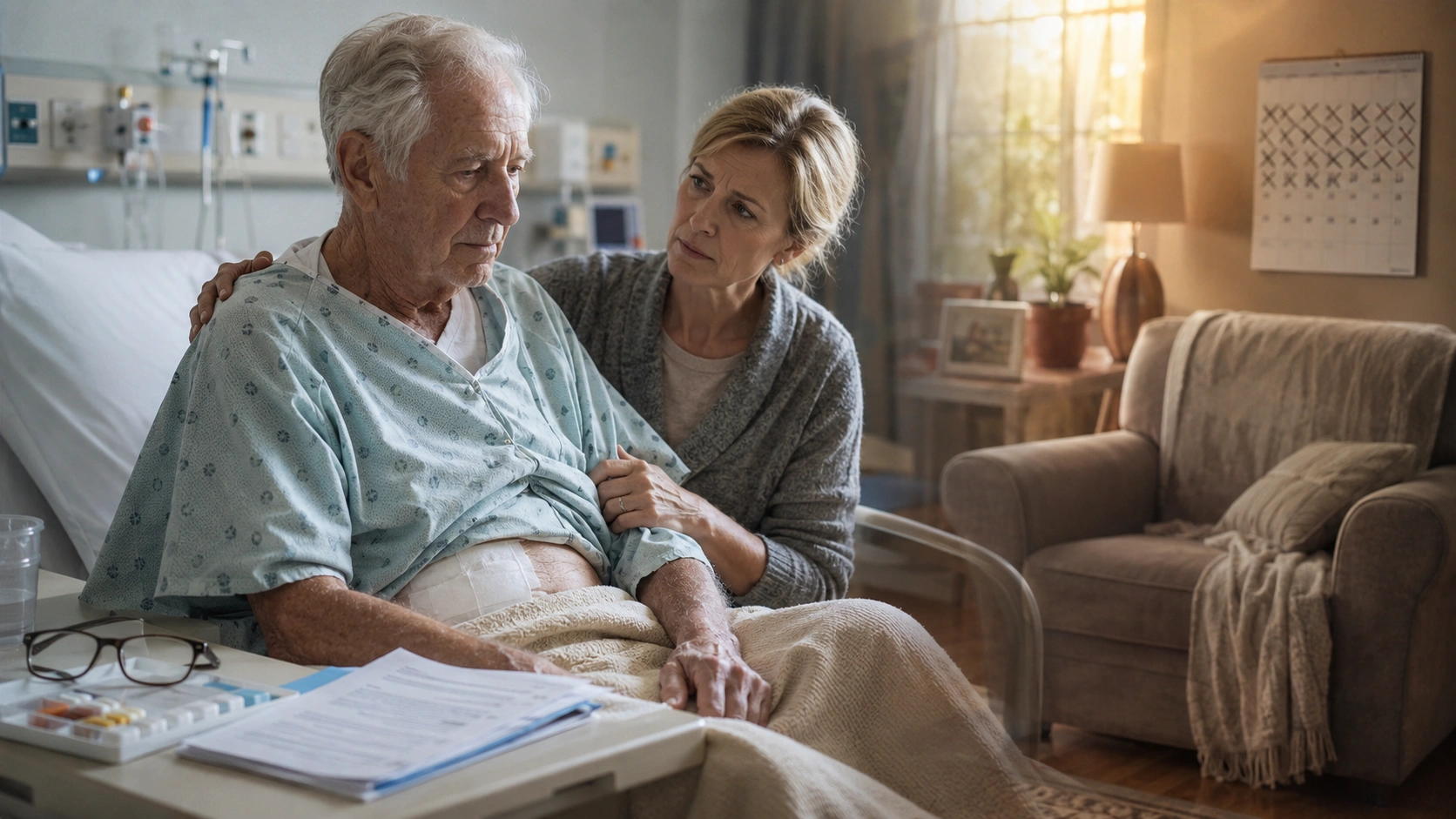
Medical training teaches a surgeon how to keep a patient alive. It teaches far less about what happens to that same patient’s life once the operation is over and the discharge papers are signed. A new study out of Brigham and Women’s Hospital, published in JACS, puts a number on that gap for the first time, and the number is a full month.
A Measure That Actually Reflects Recovery
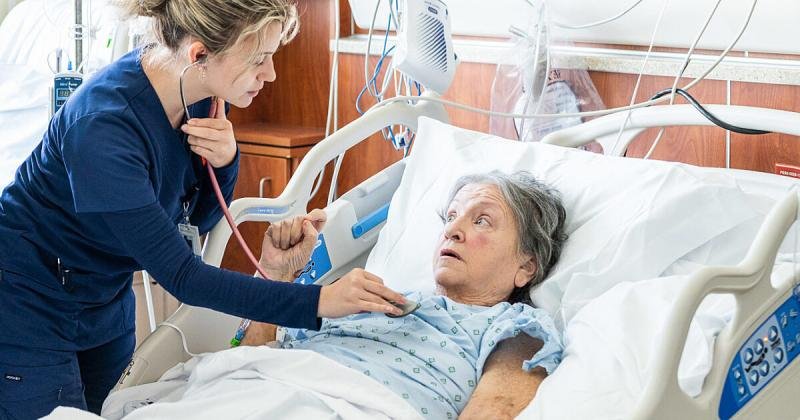
Researchers led by Manuel Castillo-Angeles analyzed Medicare records for nearly 30,000 adults age 66 and older who underwent emergency general surgery, the kind performed within 48 hours of an urgent hospital admission. Rather than relying on the usual yardsticks, survival at 30 days, complication rates, length of hospital stay, the team used a newer measure called healthy days at home. It counts the number of days a patient actually lives independently at home in the year after surgery, subtracting any time spent hospitalized, in a rehabilitation facility, in a nursing home, or worse. As Castillo-Angeles put it, this measure captures what patients can do after surgery, not just whether they survive, a point echoed throughout the medical response to the study.
The Month That Disappears
The seven procedures in the study were split into two risk tiers. Appendectomy and gallbladder removal counted as lower risk. Laparotomy, colectomy, small bowel resection, peptic ulcer repair, and lysis of adhesions counted as higher risk, operations that tend to involve more physiological stress and a longer, harder recovery. Patients who underwent a high-risk procedure averaged 308 healthy days at home over the following year. Patients who underwent a low-risk procedure averaged 345. The difference, detailed by Newswise, comes out to roughly a full month of a person’s life spent somewhere other than their own home, a month that doesn’t show up on a survival chart at all.
What struck the researchers just as much was what didn’t happen over the course of that year. There was no meaningful recovery curve narrowing the gap between the two groups as months passed. Whatever ground was lost early stayed lost, at least within the study’s one-year window.
Dementia Changed the Math in an Unexpected Way
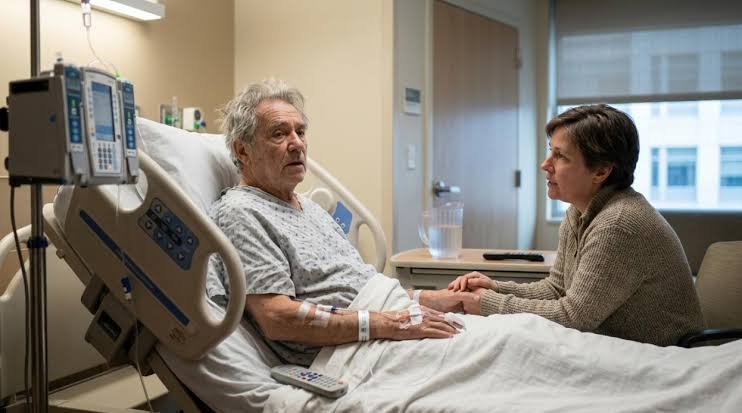
Two factors stood out as strongly linked to fewer healthy days at home regardless of which procedure a patient had: dementia and frailty. That part isn’t surprising on its own. What is surprising, and worth sitting with, is that dementia’s impact on recovery was actually larger after low-risk procedures than after high-risk ones. A person managing cognitive decline lost more relative ground recovering from a routine appendectomy than a similarly situated person did recovering from major abdominal surgery. The researchers don’t fully explain why, but it suggests that the procedure’s technical complexity isn’t the only thing determining whether someone gets back to independent living. Something about how a cognitively vulnerable patient navigates the whole recovery process, medication management, follow-up appointments, the disruption of routine, seems to matter just as much as what happened on the operating table.
That finding lands somewhere very familiar to anyone who has watched memory changes get dismissed as ordinary aging rather than a real, relevant clinical factor. Here, dementia wasn’t a footnote. It was one of the strongest predictors in the entire dataset.
A Gap in Who Gets Screened
There’s a related, uncomfortable detail worth naming. A separate analysis from the American College of Surgeons found that hospitals accredited under its geriatric surgery verification program screen nearly every older patient for dementia before surgery, while non-accredited programs screen only about half. That’s not a small discrepancy. If dementia is genuinely one of the strongest predictors of whether someone gets their independence back, a hospital that isn’t even checking for it going in is missing exactly the information that would let a care team plan around it, coverage from Medical Xpress noted, describing it as a real accountability gap in how emergency surgery gets delivered to older patients.
What This Means Once the Surgery Is Over
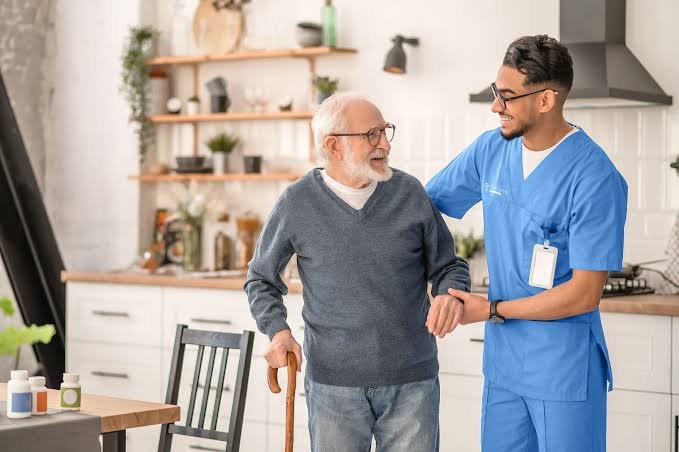
None of this argues against emergency surgery when it’s genuinely needed, and the researchers aren’t suggesting otherwise. What it argues for is a more honest conversation before and after the operation about what recovery will actually require, not just whether the patient will survive the procedure itself. For a family already managing dementia’s financial burden, knowing in advance that a high-risk procedure could mean a month or more away from independent living changes what kind of support needs to be lined up ahead of time, not scrambled together during a hospital discharge.
It also lands at a moment when access to that kind of support is genuinely harder to secure than it used to be, given how much home health capacity has shrunk in recent years. A metric like healthy days at home is useful precisely because it makes that gap visible instead of hiding it inside a statistic about survival. Recovery, coverage in Clinical Advisor pointed out, was never really the same question as survival. This study just finally gave that difference a number families and surgeons can actually plan around, in the same way stroke survivors’ long-term outcomes have reframed how that recovery gets measured too.