

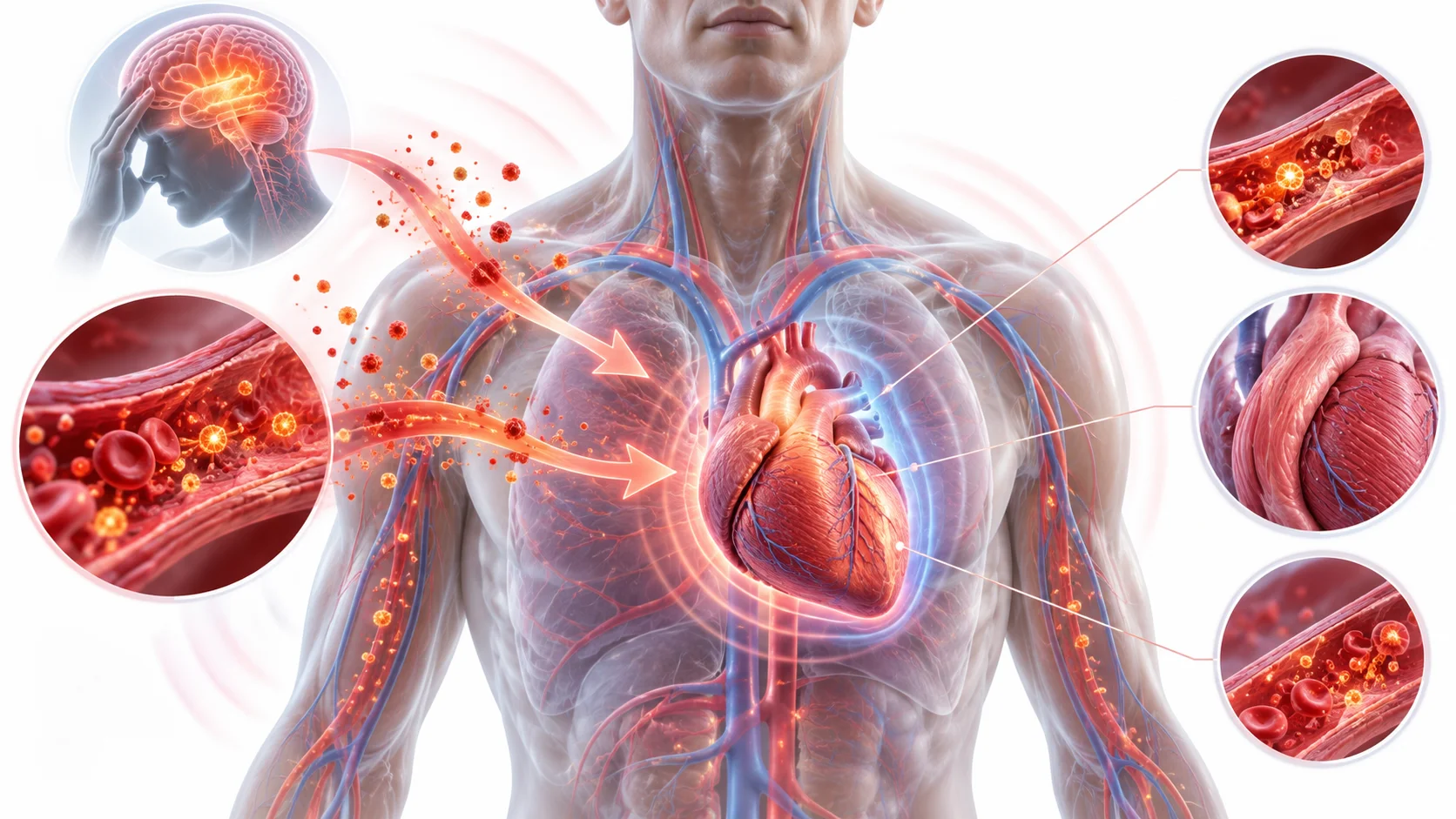
You can feel completely fine, pass a routine checkup with nothing flagged, and still be carrying something working against your heart for years. That something is chronic, low-grade inflammation, and a study out of the MRC Laboratory of Medical Sciences and Imperial College London, published in the European Journal of Preventive Cardiology, just put real numbers behind how much damage it can do while staying completely invisible.
Researchers led by Professor Declan O’Regan, who holds the British Heart Foundation Chair of Cardiovascular AI at Imperial, analyzed data from roughly 480,000 UK adults, making this one of the largest studies of its kind. What they found wasn’t just a statistical association between stress and heart disease, the kind of link most people have already half-absorbed as common sense. It was physical evidence of the heart’s actual structure changing. People with higher levels of inflammation tended to develop thicker heart walls, smaller heart chambers, and poorer heart filling, changes O’Regan described as capable of progressing quietly toward heart failure long before anyone notices a symptom worth mentioning to a doctor.
The inflammation itself didn’t come from nowhere. It tracked closely with socioeconomic disadvantage and psychological distress, the ordinary pressures of financial hardship, chronic stress, and the accumulated wear of difficult daily circumstances. People whose inflammation stayed elevated over time carried a 43% greater risk of heart attack or stroke than those with lower levels, and that risk showed up even in people with no pre-existing heart disease at the study’s start. O’Regan put the scale of it plainly: millions of people could be living with hidden inflammation, which is slowly changing their heart, an assessment that reads less like a warning about a rare condition and more like a description of an extremely common, extremely quiet one.
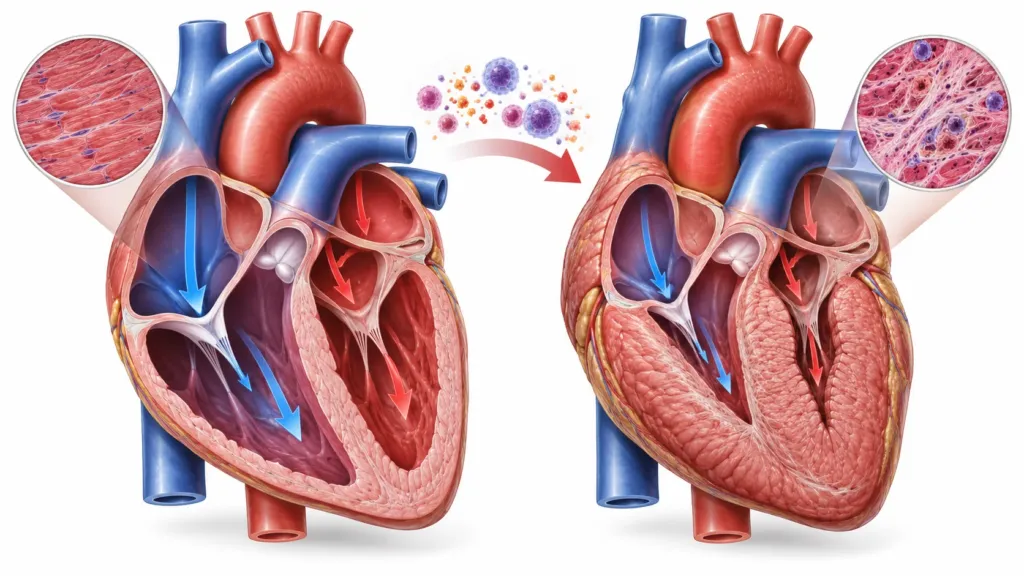
This isn’t the only research connecting the dots between stress and cardiovascular damage this way. A separate NIH-funded study found that stress-related activity in the brain’s fear center correlated directly with more inflammatory immune cells and inflamed arteries, a mechanistic thread tying psychological stress to physical cardiovascular change through the immune system rather than leaving the connection as pure correlation. The Imperial team also flagged specific inflammatory proteins from the interleukin-1 and TNF families as likely contributors to the heart changes they observed, proteins already being targeted in existing clinical drug trials for other conditions, which raises a genuinely practical possibility: medications developed for something else entirely might eventually be repurposed to interrupt this specific pathway before it reaches the heart.
It’s worth being honest about what this study can and can’t say. It’s observational, tracking who developed inflammation and who developed heart changes rather than deliberately assigning one group to experience more stress than another, so it shows a strong link rather than definitive proof that reducing stress alone would reverse or prevent the damage. The researchers themselves have framed it that way, as a reason for further investigation into anti-inflammatory treatment, not a settled cause-and-effect chain.
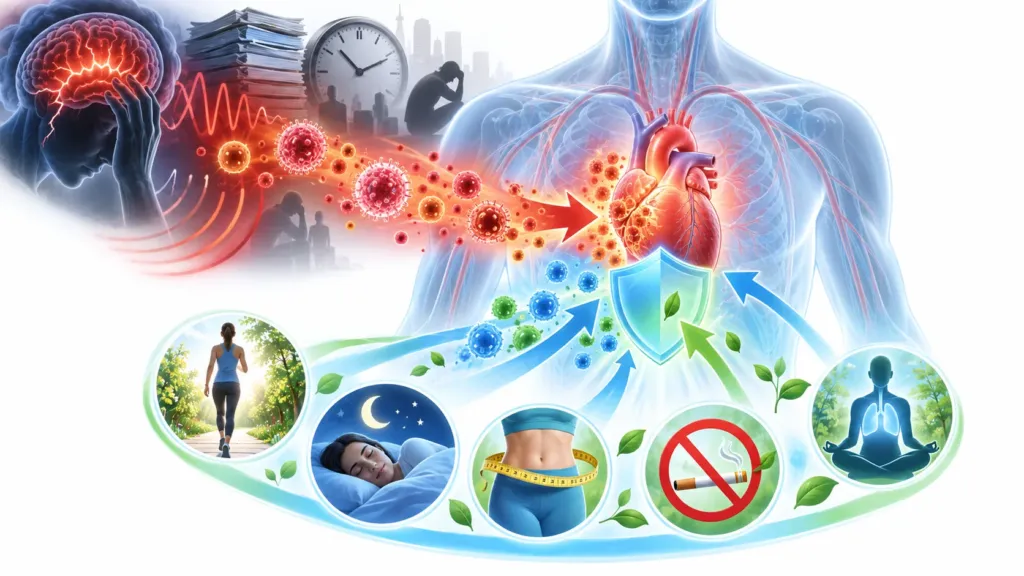
What makes this finding easier to act on than it might first sound is that the interventions already known to lower chronic inflammation aren’t exotic. Reducing stress where it’s possible to reduce, not smoking, keeping a smaller waistline, staying physically active, and getting decent sleep all move the same needle, and they happen to be the same habits that protect cardiovascular health through every other known pathway too. For a family managing an older relative’s heart risk, or anyone whose own life has been higher-stress than they’d like for longer than they’d like, that overlap means there’s no separate protocol required. The routines already known to ease chronic pain and low mood appear to be doing quiet, structural work on the heart at the same time, years before either problem would otherwise announce itself.