

People with type 2 diabetes have long faced a harder road with COVID-19 than people without it, both during the initial infection and in the months that follow. A new study from the University of Hong Kong offers one of the clearer explanations yet for why, and points to a treatment already sitting in millions of medicine cabinets as a possible way to reduce the damage.
People with type 2 diabetes face up to four times the risk of severe long COVID compared with people who don’t have diabetes, and they’re also more likely to develop pulmonary fibrosis, a form of lung scarring that can leave someone permanently short of breath. Roughly 1 in 8 people in the United States have diabetes, and type 2 accounts for more than 90% of those cases, so this isn’t a narrow subgroup. It’s a substantial share of the population carrying extra risk that researchers, until now, couldn’t fully explain.
The research team, led by virologist Runhong Zhou, started by analyzing samples from an earlier long COVID study involving 90 people hospitalized with COVID-19, including a group with diabetes. In those samples, people with diabetes showed increased activity in genetic pathways tied to monocytes, a type of immune cell linked to the onset of fibrosis. To confirm what that pattern actually meant, the researchers moved to mice bred to mimic human type 2 diabetes, infecting them with SARS-CoV-2 and tracking what happened in their lungs afterward.
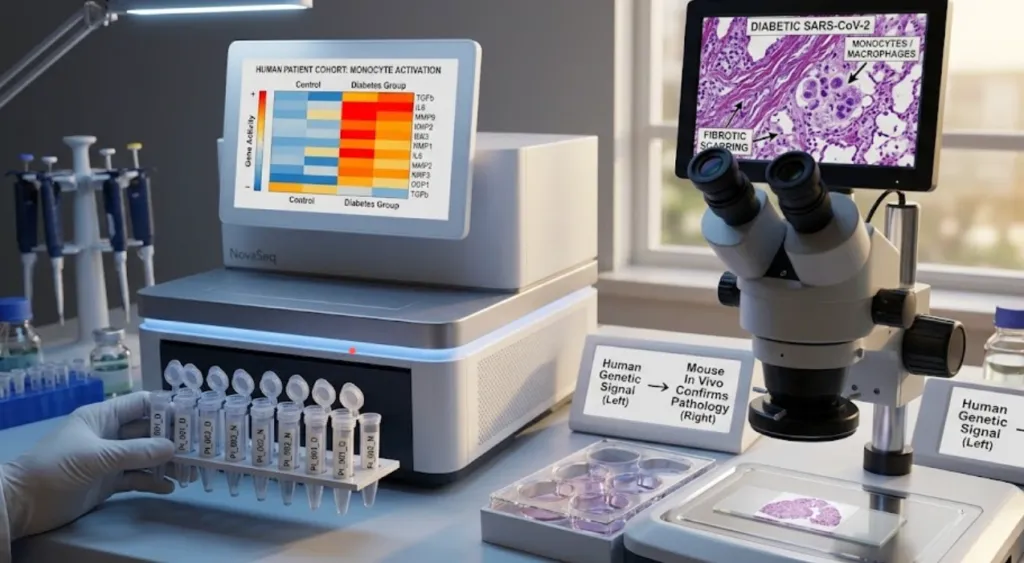
Diabetic mice infected with the virus showed heavy activation of fibrosis-related genes, the same genes that had lit up in the human diabetic patients. Then the researchers tested GLP-1 receptor agonists, the class of drugs that includes semaglutide (sold as Ozempic and Wegovy) and tirzepatide (sold as Mounjaro), already widely prescribed for diabetes and weight loss. Diabetic mice treated with a GLP-1 drug after infection developed significantly less lung scarring than untreated diabetic mice, and their fibrosis-related gene activity largely normalized.
The mechanism appears to run through the immune system rather than simply through better blood sugar control. GLP-1 drugs seem to reprogram lung macrophages, immune cells that, when left overactive, drive the buildup of scar tissue. Calm that overactive response down, and the lungs are far less likely to end up permanently damaged. Notably, the protective effect showed up even in cases where blood sugar levels weren’t dramatically improved, which suggests the drug is doing something more direct to the immune cells themselves rather than just working indirectly through better glucose control. That fits with something researchers already knew: GLP-1 receptors are highly expressed in lung tissue, giving the drug a plausible direct route into the exact cells causing the damage.
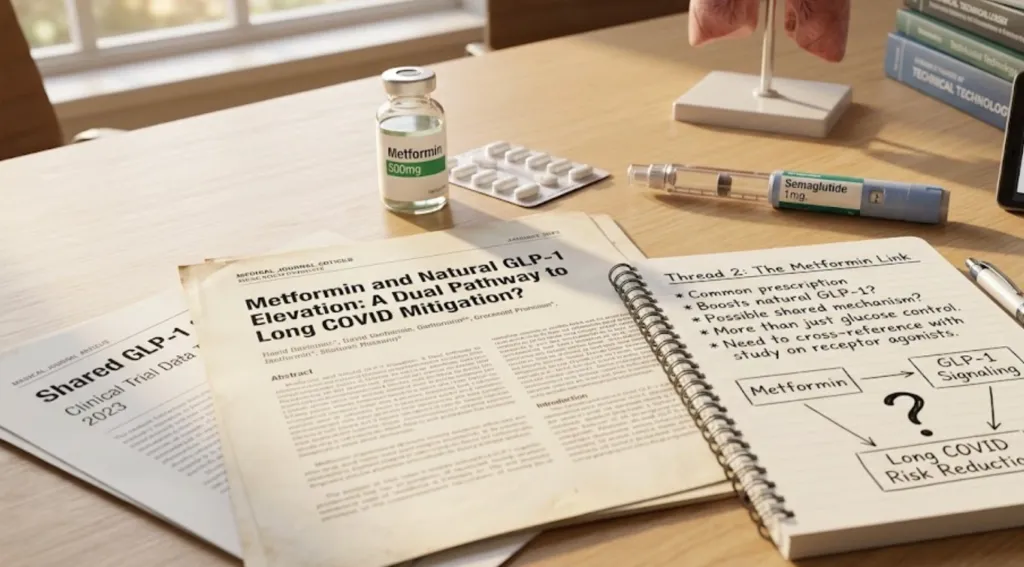
There’s a second thread worth mentioning here. An earlier clinical trial found that metformin, one of the most commonly prescribed type 2 diabetes medications, also reduced long COVID risk. Metformin is known to boost the body’s natural GLP-1 levels, which raises the possibility that both drugs may be working through a shared underlying pathway rather than two unrelated mechanisms. If that holds up, it would strengthen the case that GLP-1 signaling itself, not just glucose control, is the real protective factor.
Zhou has been careful to frame these findings as preliminary. The mouse experiments involved a relatively small number of animals, and confirming the effect in people will require dedicated clinical trials rather than assumptions carried over from diabetes and weight-loss studies. As Zhou put it, describing the goal behind the mouse experiments, the team wanted to figure out what kind of treatment may prevent this in the mouse, a first step rather than a finished answer.
Still, the practical implication is hard to ignore for a medication already prescribed to a large and growing share of older adults with diabetes. If a drug someone is already taking for blood sugar control turns out to be quietly protecting their lungs from a completely different threat, that’s the kind of finding that changes how a doctor might weigh treatment options, and gives families managing a parent’s diabetes one more reason to view GLP-1 therapy as more than just a blood sugar tool. Confirming that in humans is still the next step, but the biological logic connecting diabetes, immune overactivation, and lung scarring after COVID is now considerably less mysterious than it was before this study.