


For seven days and nights, 95,559 people wore a small tracker on their wrist and went about their lives. No sleep lab, no electrodes taped to their scalps, no overnight stay in a hospital room. Researchers at Peking University and Capital Medical University then followed those same people through years of health records, publishing what they found in PLOS Medicine, and the pattern that came out the other side was strong enough to run into dozens of separate diseases.
The headline finding concerns REM sleep, the stage most associated with dreaming. For every additional 47.6 minutes of estimated REM sleep, participants had a significantly lower risk of 83 different diseases, a list that included heart failure, multiple sclerosis, parkinsonism, dementia, and Alzheimer’s disease. Deep sleep, the most physically restorative stage, showed a narrower but still meaningful pattern, tied to lower risk of seven conditions, among them type 2 diabetes, major depressive disorder, sleep apnea, and Parkinson’s disease, as Newsweek’s summary of the paper put it.
Total sleep time mattered too, though in a less straightforward way than the old “get your eight hours” advice implies. Sleeping six to eight hours a night showed the strongest association with lower disease risk, benefiting 69 conditions in all, while getting under six hours was linked to higher odds of 24 diseases. Sleeping more than eight hours, though, wasn’t simply better. It tracked with fewer of some risks and with a higher risk of major depressive disorder at the same time, and people whose sleep length swung widely from one night to the next had higher risks of both anxiety and depression, a point Yahoo Health’s coverage drew out as a case for steadiness over sheer quantity.
Light sleep complicated the picture further. A greater share of it was associated with higher risk for 28 diseases, including major depression, while also showing a lower likelihood of heart failure and a skin infection called cellulitis, a mixed result Medscape flagged rather than flattening into a clean good-sleep-versus-bad-sleep story. Nothing here sorts neatly into helpful and harmful stages.
Several limits sit underneath all of this, and the authors named them directly. It’s an observational study, so it can’t show that sleep patterns cause disease. The arrow could point the other way, with early, undiagnosed illness quietly disrupting sleep years before any diagnosis arrives. Nobody in the study was assigned to sleep more or less and then watched, so it can’t say whether changing sleep would prevent anything. And the wrist trackers estimate sleep stages using a machine learning model rather than measuring brain activity directly, which, as one outside researcher put it, isn’t the same as actually knowing when someone is in light, REM, or deep sleep.
That last caveat is worth sitting with, because it’s the difference between this study and the more clinical sleep-prediction work that came before it. Stanford’s SleepFM model, built on nearly 600,000 hours of hospital-grade sleep recordings, predicted 130 different diseases from a single night of data, but it needed lab equipment most people will never sit inside. The appeal of the wrist-tracker approach is that it asks for almost nothing, a device many people already wear, even if the stage estimates it produces are rougher.
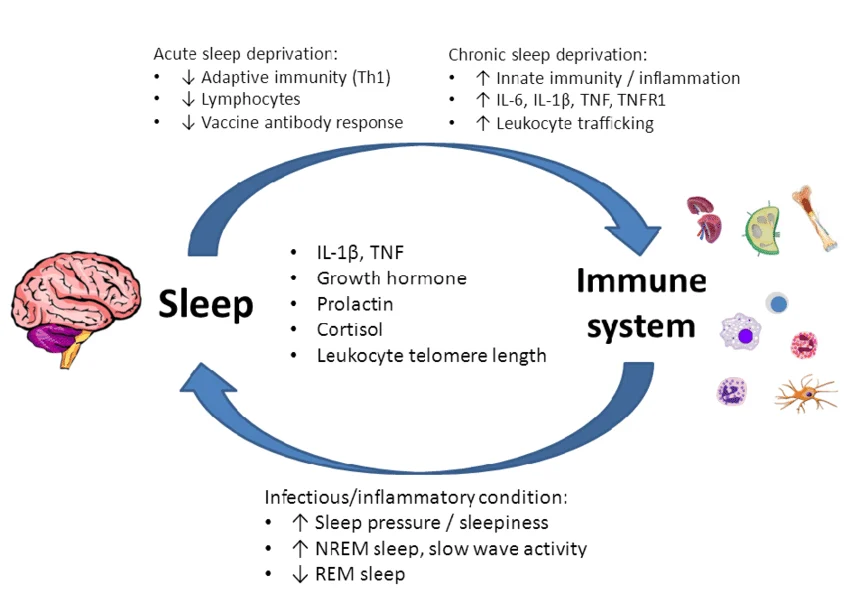
The through-line across both bodies of work, and across a separate analysis of UK Biobank sleep data that found the most erratic sleep rhythms carried nearly three times the Parkinson’s risk of the most regular ones, is that sleep keeps turning out to be a measurable signal of long-term health, not a passive stretch of lost hours. It echoes what researchers studying routine and regularity have found about pain and mood, and it sits close to work showing how disrupted sleep in Alzheimer’s disease traces back to the brain’s own immune cells. None of it tells a person exactly how many minutes of REM to chase. It does make a steady six to eight hours, taken at roughly the same time each night, look like a habit worth protecting.