

For years, a specific clinical puzzle has sat unresolved in pediatric cardiology: two children can carry the exact same genetic mutation and end up with completely different heart defects, one mild, one severe, for reasons nobody could fully explain. A new study from the Gladstone Institutes, published in Science, gets closer to an answer than researchers have managed before, and it comes from looking at DNA in a way most genetic research doesn’t.
The gene at the center of it is TBX5, already known as a master regulator of heart development, a protein that switches on hundreds of genes a heart cell needs to form and function correctly. Congenital heart disease, the most common birth defect, affecting roughly 1 in 100 babies, is sometimes traced to a child inheriting just one working copy of TBX5 instead of two. What never quite added up is why losing a single copy, with a second healthy one still present, could derail heart development so severely. Senior author Benoit Bruneau’s lab had already shown that this loss disrupts hundreds of other heart genes. What it hadn’t shown was how.
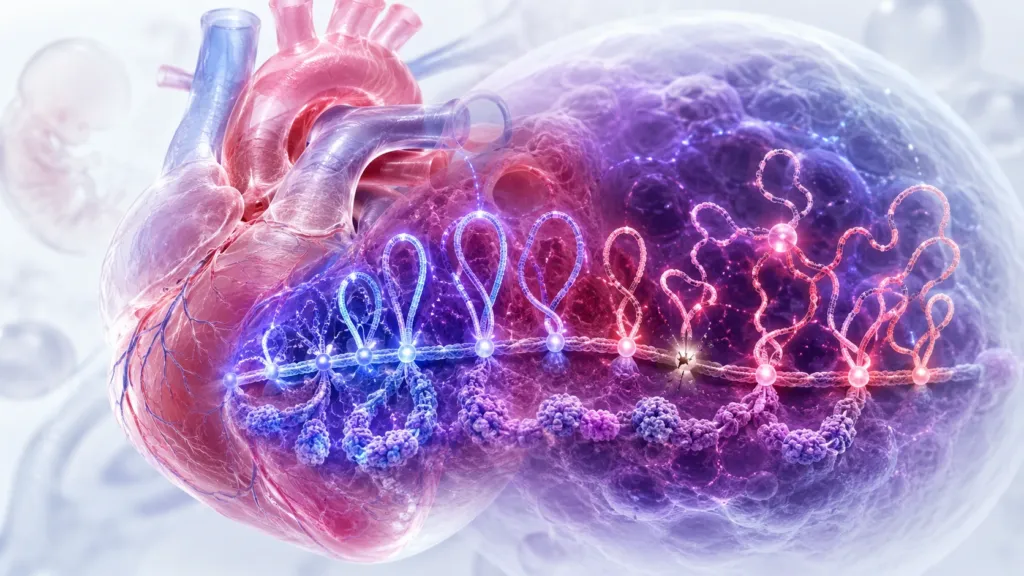
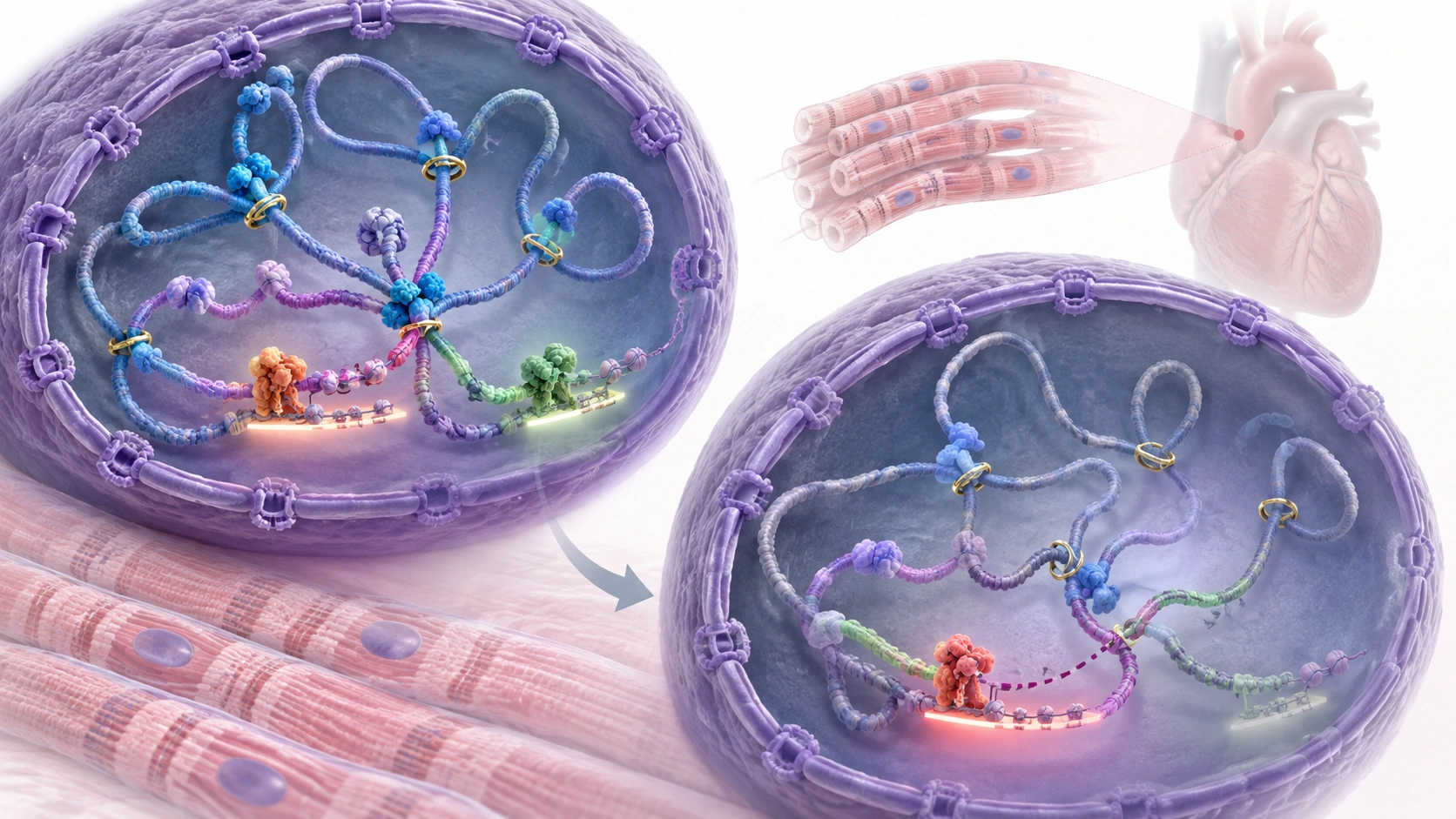
The answer turns out to involve something more physical than gene switches. DNA inside a cell isn’t just a sequence of instructions sitting in a line, ScienceDaily’s coverage explained using the researchers’ own comparison, it’s a mile-long manual folded down to fit inside something the size of a pinhead, and every cell type folds that manual differently to reach the specific genes it actually needs. A heart cell and a brain cell carry identical DNA, arranged into entirely different physical shapes. TBX5, the Gladstone team found, isn’t only switching genes on and off. It’s helping fold the manual itself, guiding a protein called cohesin to build the loops and compartments that let the right genetic switches physically touch the right genes.
Cut TBX5 levels in half, which is exactly what happens when one copy is lost, and that folding process breaks down. Enhancers, the genetic switches meant to activate specific genes, end up looping toward the wrong targets instead, misfiring the instructions heart cells depend on. Using computational models built to analyze results across thousands of individual cells, the research team traced this breakdown down to the level of single cells, and that’s where the old clinical mystery finally starts making sense. The disruption wasn’t uniform. Atrial cells and ventricular cells responded differently from each other, and even cells of the exact same type varied from one to the next. Bruneau summed up the implication directly: the cell’s 3D instruction manual simply gets folded the wrong way, and it doesn’t get folded wrong identically in every cell, which is likely why the same mutation can produce such different outcomes in different children.
There’s a bigger claim tucked inside this specific heart finding, one that reaches well past congenital heart disease. If a single protein can cause disease not by breaking a gene directly but by misfolding the genome around it, that principle may extend to other proteins tied to other birth defects entirely, a possibility the Gladstone team is already planning to test. Haploinsufficiency, the technical term for disease caused by losing just one gene copy while the other still works, has puzzled geneticists for decades precisely because the remaining healthy copy should, in theory, be enough. This research suggests that in at least some cases, it isn’t a matter of not having enough working gene left. It’s that the working copy alone can’t fold the genome’s architecture correctly on its own, a distinction indicaNews highlighted as reframing what haploinsufficiency actually means at a structural level.
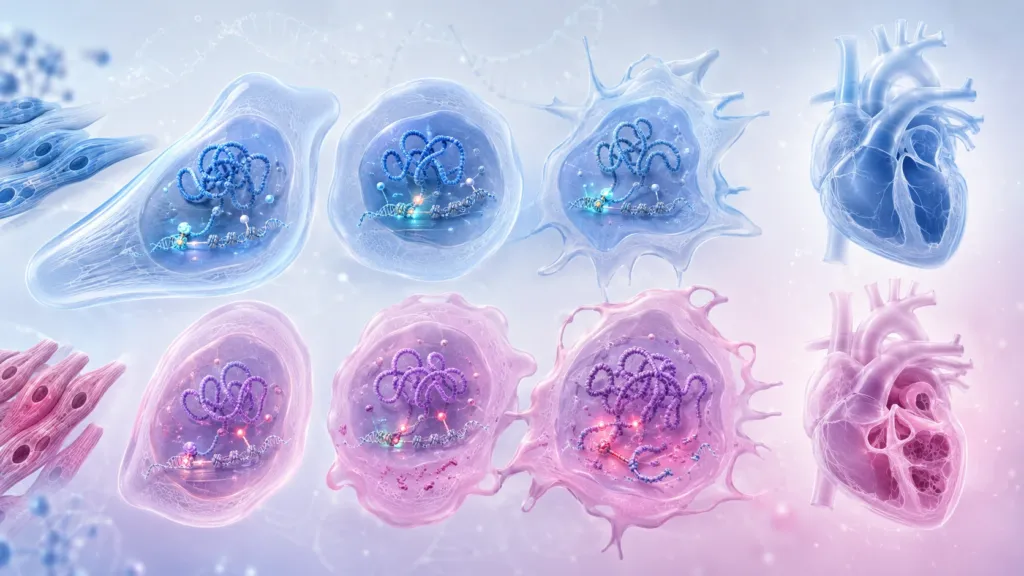
The team’s next step is figuring out exactly when during early heart development TBX5 begins organizing the genome this way, and whether other disease-linked proteins are quietly doing the same architectural work elsewhere in the body. If they are, a mechanism first identified in a developing heart could end up explaining a much wider category of developmental disease than anyone expected when this project started, adding to a growing list of discoveries where a single overlooked protein turns out to be doing far more structural work inside the heart than anyone had given it credit for.