

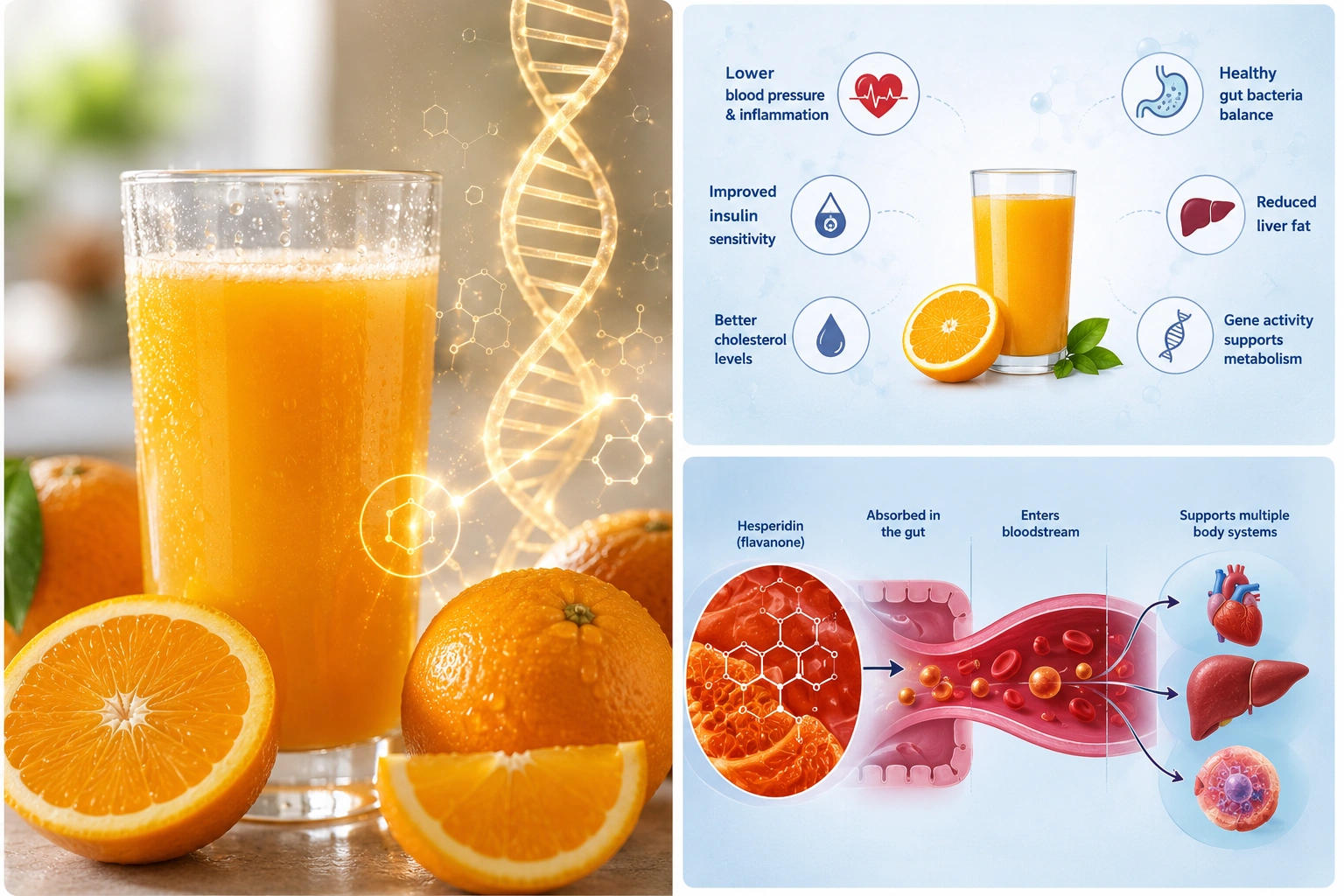
Two cups of pure, pasteurized orange juice a day for two months was enough to quiet down genes tied to high blood pressure and inflammation, according to research now being pulled into a much broader picture of what orange juice actually does once it’s inside the body. A systematic review covering 639 participants across 15 controlled trials, reported through ScienceDaily, found regular OJ consumption lowered insulin resistance and blood cholesterol, while individual trials folded into that review pointed to changes in gene activity connected to metabolism and blood sugar control, not just the usual vitamin C talking point most people already know.

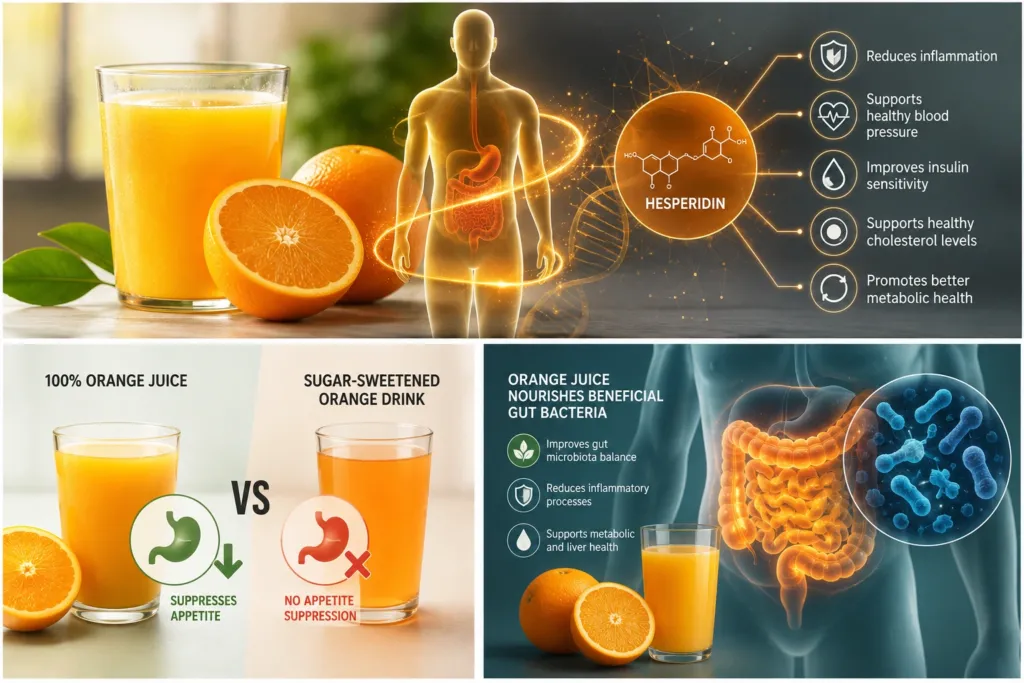
The compound researchers keep pointing to is hesperidin, a citrus flavonoid concentrated in orange juice that isn’t nearly as well known as vitamin C but appears to be doing a fair amount of the actual work. Deseret News’s coverage walked through how genes previously linked to high blood pressure and inflammation became measurably less active over the two-month trial period, a molecular-level shift that goes well beyond what a simple cholesterol or blood pressure reading alone would show.
There’s a detail here that cuts against the instinct to lump orange juice in with other sugary drinks. A separate trial comparing 100% orange juice directly against a volume-matched, sugar-sweetened orange drink found the two behaved differently in the body, with the real juice suppressing appetite at the next meal in a way the sweetened version didn’t, despite carrying comparable sugar. That distinction matters for anyone who’s been told to treat fruit juice and soda as functionally interchangeable purely because of sugar content on a label.
The gut may be benefiting too. Research out of Brazil examining orange juice from Pera and Moro varieties in people with obesity and insulin resistance found favorable shifts in gut bacterial composition, work covered by FreshFruitPortal that researchers tied to reduced inflammatory processes tracing back to the same bioactive compounds behind the blood pressure and metabolic findings, the kind of shift that’s drawn real interest since certain gut bacteria have separately been tied to diabetes risk in older adults. A separate line of research has even connected daily orange consumption to reduced liver fat in people with metabolic dysfunction-associated steatotic liver disease, a pattern that closely echoes what tomatoes showed in the same patient population just weeks earlier.
None of this adds up to orange juice being some kind of loophole food, and the researchers behind the underlying review were careful about that themselves. Coverage from yournews.com of a related inflammation-focused review noted real reductions in markers like interleukin-6, but flagged the overall evidence as still limited, built from studies that vary in design, participant health, and how much juice was actually tested, and in need of larger, independent confirmation before anyone treats the findings as settled. Orange juice still carries real natural sugar and real calories; one earlier pilot study found that adding roughly two glasses a day increased daily caloric intake meaningfully enough to affect body weight if nothing else in the diet changed to compensate.
What’s actually new here isn’t that orange juice is good or bad in some simple sense. It’s that a drink most people have filed away as a basic breakfast habit turns out to be doing something considerably more specific at a molecular level than anyone gave it credit for, detail summarized in one recent roundup of the broader research, quietly influencing thousands of genes tied to inflammation and metabolism with every glass, for better and, depending on how much and how often, potentially for worse.