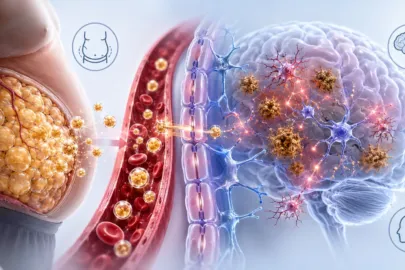

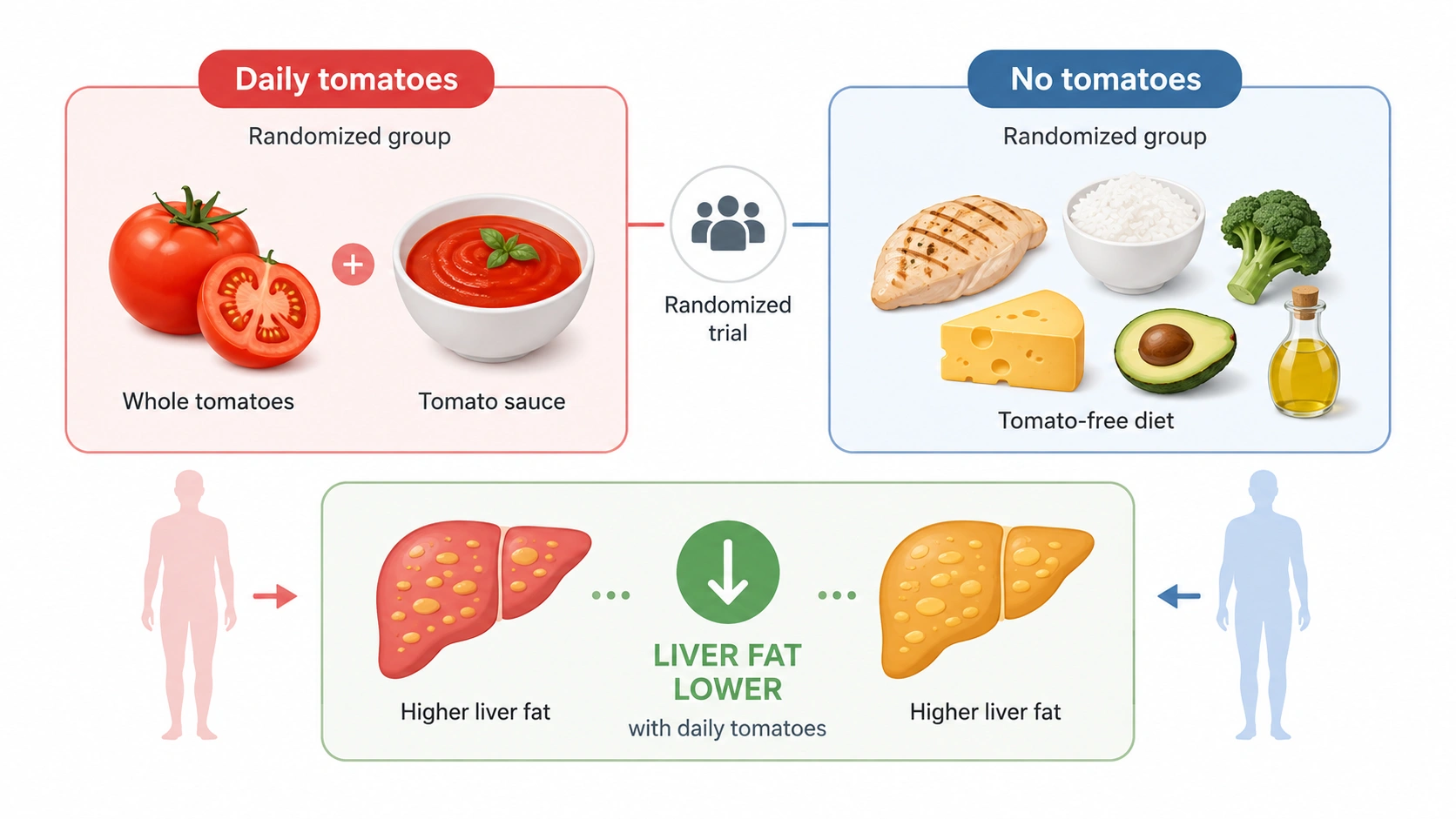
An Italian research team just tested something almost nobody had studied carefully before: whether a genuinely common food, tomatoes, could measurably change liver fat in people already living with metabolic dysfunction-associated steatotic liver disease, MASLD, the most common chronic liver condition in the world. The trial, called POMOSANO and published in the journal Nutrients, was small, 79 adults, and short, six weeks, but it was also genuinely well built: computer-randomized, allocation concealed, outcomes assessed by researchers blinded to which group each participant belonged to. That combination, modest scale paired with careful design, is worth holding onto before either dismissing or overselling what it found.
Participants, all with MASLD and a BMI of 30 or under, were split into two groups. One ate 200 grams of raw tomatoes and 50 grams of tomato sauce every day, roughly one large tomato plus a few tablespoons of sauce. The other avoided tomatoes entirely. Everyone kept their normal lifestyle and exercise habits otherwise. Researchers tracked liver fat using a FibroScan-based measurement called the controlled attenuation parameter, a non-invasive but indirect way of estimating fat buildup inside the liver.
What Actually Improved, and What Didn’t
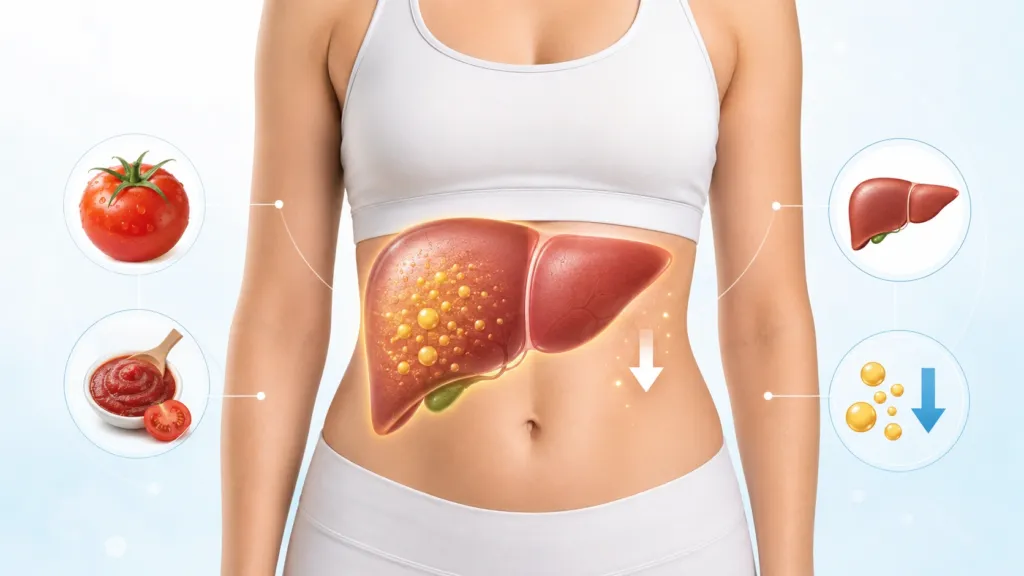
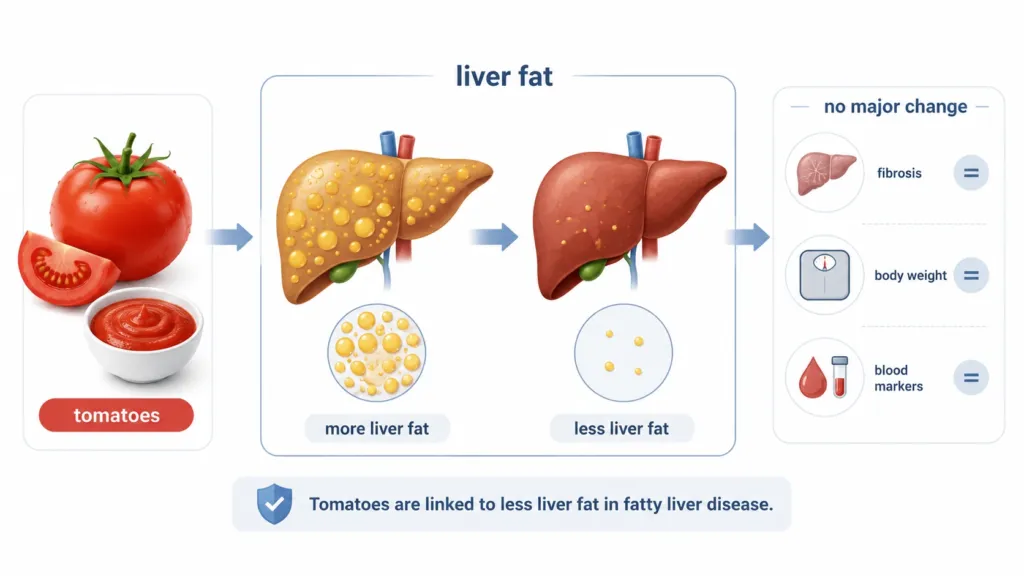
The tomato group showed a significantly greater reduction in liver fat than the tomato-free group, Medscape’s coverage of the trial confirmed. That’s the headline, and it’s real. What sits right alongside it, and gets left out of a lot of the shorter coverage, is what didn’t improve. Liver fibrosis, the scarring that marks more advanced liver damage, showed no significant change either way. Neither did broader metabolic biomarkers or body composition measured by DEXA scan. The effect was specific to fat buildup itself, not a wholesale transformation of liver or metabolic health.
That narrowness is actually useful information, not a disappointment. It tells researchers exactly where to look next rather than leaving them with a vague sense that tomatoes are generally good for the liver. The study’s authors framed it carefully, pointing to the potential role of tomato-based interventions as part of nutritional management, language that positions tomatoes as one useful piece of a broader treatment approach rather than a standalone fix.
Why Tomatoes Specifically, and What’s Still Unknown
The leading explanation involves lycopene, the compound responsible for a tomato’s red color, along with other carotenoids concentrated in the fruit. News-Medical’s write-up of the trial noted that tomatoes are a recognized source of Mediterranean diet bioactive compounds, and a separate 2026 review found lycopene carries real antioxidant and anti-inflammatory activity in laboratory research, with a plausible but still limited connection to fatty liver specifically. Nobody yet knows for certain whether lycopene is the actual active ingredient here, whether it’s a different carotenoid working alongside it, or whether some combination of compounds unique to whole tomatoes is doing the work in a way an isolated supplement couldn’t replicate.
The researchers themselves have been direct that this remains preliminary. Seventy-nine people over six weeks is enough to generate a genuine signal worth pursuing, as Cancer Health’s coverage put it, not enough to settle the question. Liver fat was measured indirectly through FibroScan rather than the more precise gold standard of MRI, and the study population was limited to people with a BMI of 30 or under, leaving open how the same intervention might perform in people with more advanced obesity. Larger, longer trials using more precise imaging are the next obvious step, something Medical News Today’s coverage of the findings also flagged as the clear direction this research needs to go before it changes how MASLD gets managed in a clinic.
For a family managing an older relative’s liver health, or anyone already juggling a MASLD diagnosis, the practical version of this finding is modest and genuinely low-risk: tomatoes are cheap, familiar, and easy to add daily without disrupting anything else in a diet, in the same way a single food swap has shown up as a real, if narrow, benefit elsewhere in recent nutrition research. It’s not a substitute for the broader dietary and lifestyle management MASLD actually requires, the same lesson that’s held up in research on how a single beverage can meaningfully lower liver disease risk without functioning as a cure on its own. It’s a small, well-tested addition worth discussing with a doctor, not a headline worth restructuring an entire diet around just yet.