
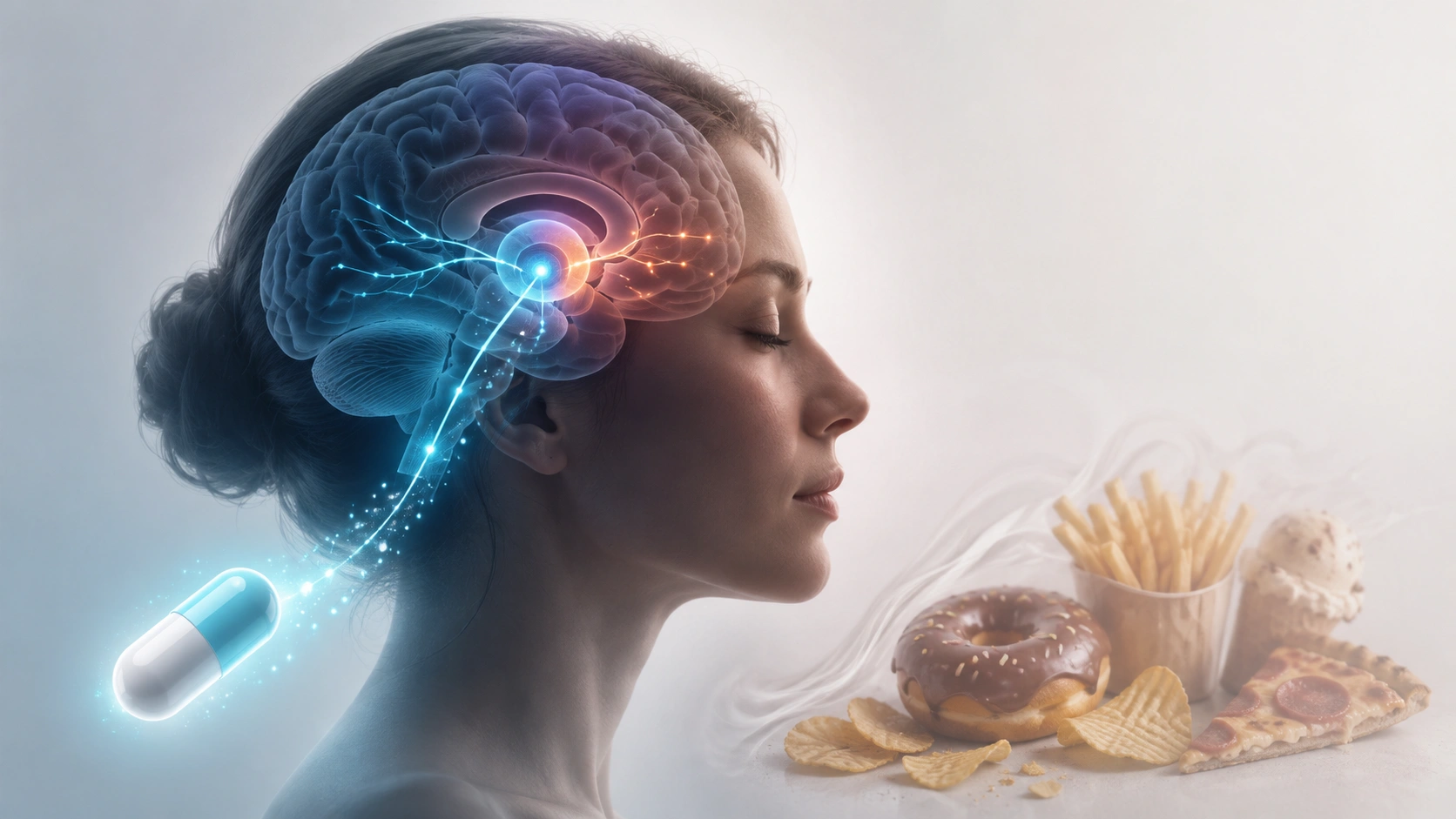
For years, the story of how GLP-1 drugs work has been fairly straightforward: they act on the hypothalamus and hindbrain, the brain’s hunger dispatch centers, telling the body it’s had enough food before it’s actually eaten very much. That explains weight loss driven by suppressing genuine physical hunger. It never fully explained why so many people on these drugs describe something else entirely, a quieting of the craving itself, the pull toward food eaten for pleasure rather than need. A new study out of the University of Virginia, funded by the NIH, has finally traced that second effect to its source, and the location is telling.
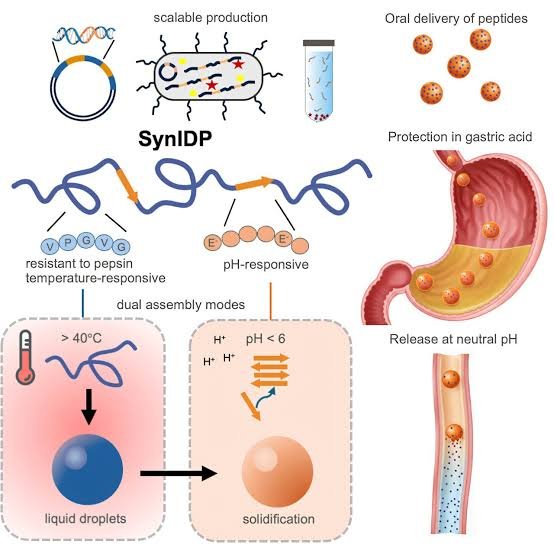
Researchers focused specifically on a newer class of GLP-1 drugs, oral, small-molecule medications like orforglipron, cheaper to make and easier to take than the injectable peptides most people associate with this drug class. Until now, nobody had a clear picture of how these particular oral drugs affected the brain’s reward machinery, the circuitry responsible for what scientists call hedonic feeding, eating driven by pleasure and sensory appeal rather than actual energy need. Using mice with humanized GLP-1 receptors, modified through CRISPR editing, the team found that these oral drugs reach further into the brain than the older injectable versions were known to go, activating a structure called the central amygdala, a region tied directly to desire and motivation, and lowering the dopamine release that normally reinforces reward-seeking behavior.
The researchers didn’t stop at simply observing that this brain region lit up. They deleted the GLP-1 receptor specifically from those central amygdala neurons and then gave the drug again. The effect on reward-driven eating weakened substantially, a result SciTechDaily detailed as strong evidence that this circuit isn’t just along for the ride. It’s a necessary part of how the drug actually dampens cravings, not an incidental side effect showing up nearby.
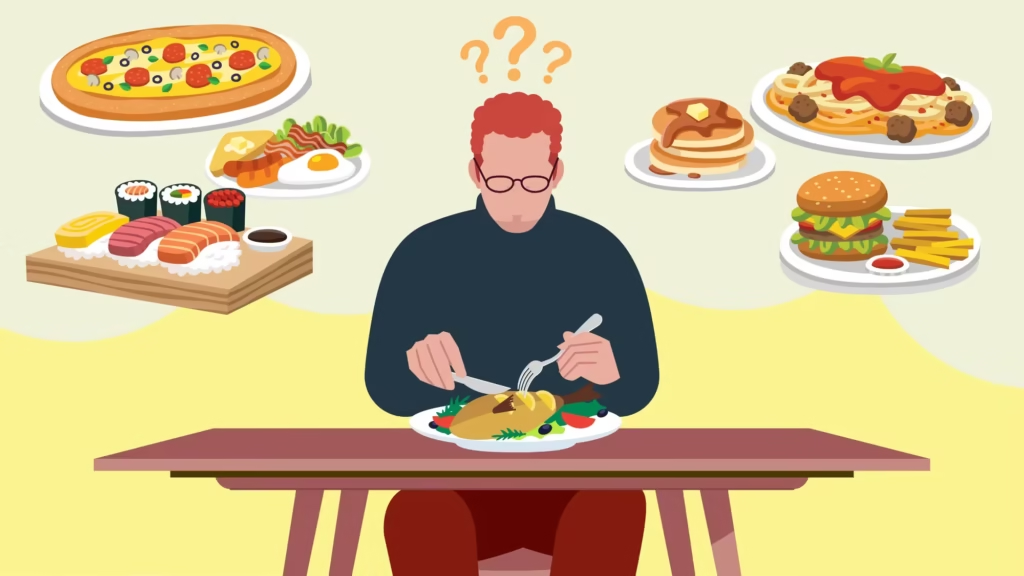
This is, in its own quiet way, a genuinely important correction to how these medications get talked about. The popular framing has always centered on appetite and portion size, as though the whole story were about how much food a stomach signals it needs. What this research maps instead is closer to the mechanism I spent years describing in a different context: a brain reward system that food, and particularly the fat, sugar, and salt combinations engineered to be maximally craveable, learns to hijack over time, driving consumption that has nothing to do with hunger and everything to do with a learned, conditioned pull toward pleasure. These drugs, it turns out, may be working on that exact hijacked circuitry directly, reaching past the stomach to the deeper wiring behind the craving itself.
Lorenzo Leggio, clinical director of the NIH’s National Institute on Drug Abuse, connected this finding to something larger than weight management. As GLP-1 access continues expanding, he noted, it’s crucial that we understand the neural mechanisms underlying the effects we’re seeing. That framing matters because a reward circuit isn’t food-specific by nature. It’s the same general system implicated in other compulsive, pleasure-driven behaviors, which is exactly why researchers are already looking at whether this same pathway might help explain, or eventually treat, cravings tied to substance use disorder, as EurekAlert reported alongside the original findings.

The honest caveat here matters as much as the discovery. This work was done in genetically modified mice, engineered specifically to make their GLP-1 receptors more humanlike, which is a meaningfully different starting point than a naturally occurring rodent brain, let alone a human one. Reward circuitry in particular has a long, frustrating history of findings that worked beautifully in a mouse and failed to translate cleanly into anything resembling human craving or choice. That history doesn’t erase the value of a well-designed mechanism study. It just means the honest version of this finding is “a real, specific brain circuit identified and confirmed necessary in mice,” not “a cure for food cravings,” and the distance between those two sentences is still considerable, the same distance that shows up again and again in research on reshaped reward circuitry over the long term. What’s genuinely new here isn’t that GLP-1 drugs curb appetite. It’s evidence for exactly where in the brain, and exactly how, the craving itself gets turned down, fitting neatly alongside everything else researchers are learning about how deeply biology, not willpower, shapes what we reach for.