

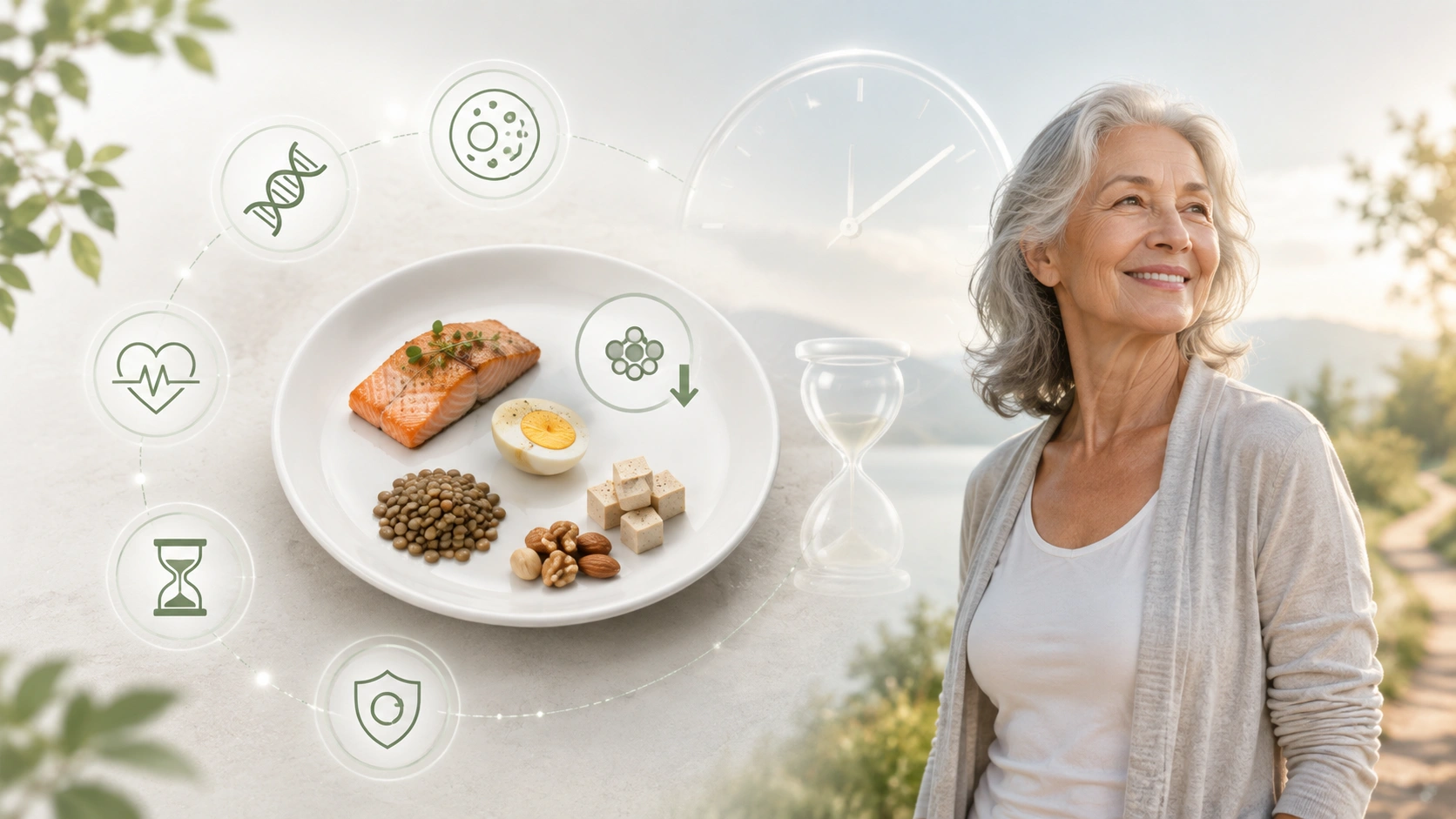
Updated federal dietary guidance told Americans to prioritize protein at every meal. Grocery aisles already agreed: protein cereal, protein coffee, protein popcorn, even protein water. A review published July 31 in the journal Cell Press Blue, pulling together more than 350 studies, arrives at almost the opposite conclusion. For a lot of people who already eat enough, it argues, less protein might do more for long-term health than more ever would.
The review was led by pathologist and biomedical researcher Dudley Lamming, and it isn’t really about diet advice at all. It’s a synthesis of what protein restriction, and restriction of specific amino acids within protein, does to aging biology across humans, mice, rats, flies, and yeast.
What Changes When Protein Intake Drops
A few threads run through the studies Lamming’s team pulled together. Lower protein intake seems to shift how the body handles energy, switch on cellular cleanup processes that clear out damaged components, and raise levels of a hormone called FGF21, which in mouse studies has been tied to longer lifespan, more so in male mice than female ones. That FGF21 rise shows up in humans too, not just rodents.

One study buried in the review is worth sitting with on its own: roughly 1,500 pairs of British twins, tracked over years, where the twin who ate more protein ended up with a higher risk of sarcopenia, the age-related loss of muscle mass, than their protein-restricted sibling. That’s backwards from what most people would guess, and Lamming has said as much himself.
None of this is an argument for eating almost nothing. Lamming was direct about that specifically: we’re not talking about extreme protein restriction down into malnutrition territory. The studies showing benefit involve moderate reductions, not starvation diets, and the review’s own authors have said the point was to map the biology, not hand out a new eating plan.
Why This Might Not Apply to the People Doctiplus Actually Serves
Here’s the part that matters most for anyone caring for an aging parent, and it’s the part easiest to miss if a headline is all someone reads. Sarcopenia, the same muscle-wasting condition that showed up worse in the higher-protein twin, is already a major risk for older adults generally, and the standard defense against it is adequate protein paired with strength training. ABC News, covering the same review, was blunt about the distinction: older adults specifically may need extra protein care, not less, because the biology of muscle loss in later life doesn’t behave the same way it does in a younger, sedentary adult eating more protein than their body needs.
People managing kidney disease, liver disease, or other chronic conditions face a similar carve-out. None of the sweeping, population-level findings in this review are built to override individualized medical guidance, and the review’s authors haven’t suggested otherwise. Anyone considering a real change to a parent’s or their own protein intake, especially later in life, is better served talking to a doctor or registered dietitian first, not adjusting groceries off a headline.
How Solid Is This, Really

Worth saying plainly: most of the strongest evidence here comes from animals, not people. The Conversation’s science team, reviewing the same paper, pointed out that the most convincing results came from mice, rats, flies, and yeast, with human data still comparatively thin. It’s also genuinely unclear whether the benefit comes from less protein overall, less animal protein specifically, fewer of certain amino acids like methionine or the branched-chain aminos, or simply that people eating less protein tend to eat a healthier diet in general. A review of 350 studies with that much variation in design, protein amounts, and study length is a synthesis, not a single clean experiment, and it’s fair to treat it that way.
Coverage from Medical Xpress captured Lamming’s own hedge on this directly: recommendations pushing more protein have also been pushing more exercise, and the two aren’t separable the way a headline treats them. A sedentary adult and an active one may need entirely different amounts, which is a more complicated message than either “eat more protein” or “eat less” and a much harder one to put on a cereal box.
What’s changed isn’t a dietary rule. It’s the confidence with which “more protein, always” gets repeated, something ScienceDaily’s write-up of the review treated as the real headline, over any specific number anyone should aim for. For most healthy adults already meeting their protein needs, more isn’t obviously better. For an older adult already losing muscle, the exercise research on why strength training protects aging muscle matters just as much as anything in this review, maybe more. Time’s reporting on the study put it about as well as anyone: protein is still essential. It just isn’t automatically better in unlimited quantity, for everyone, all the time.