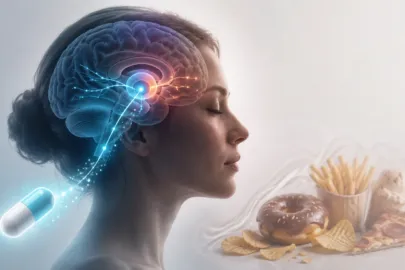

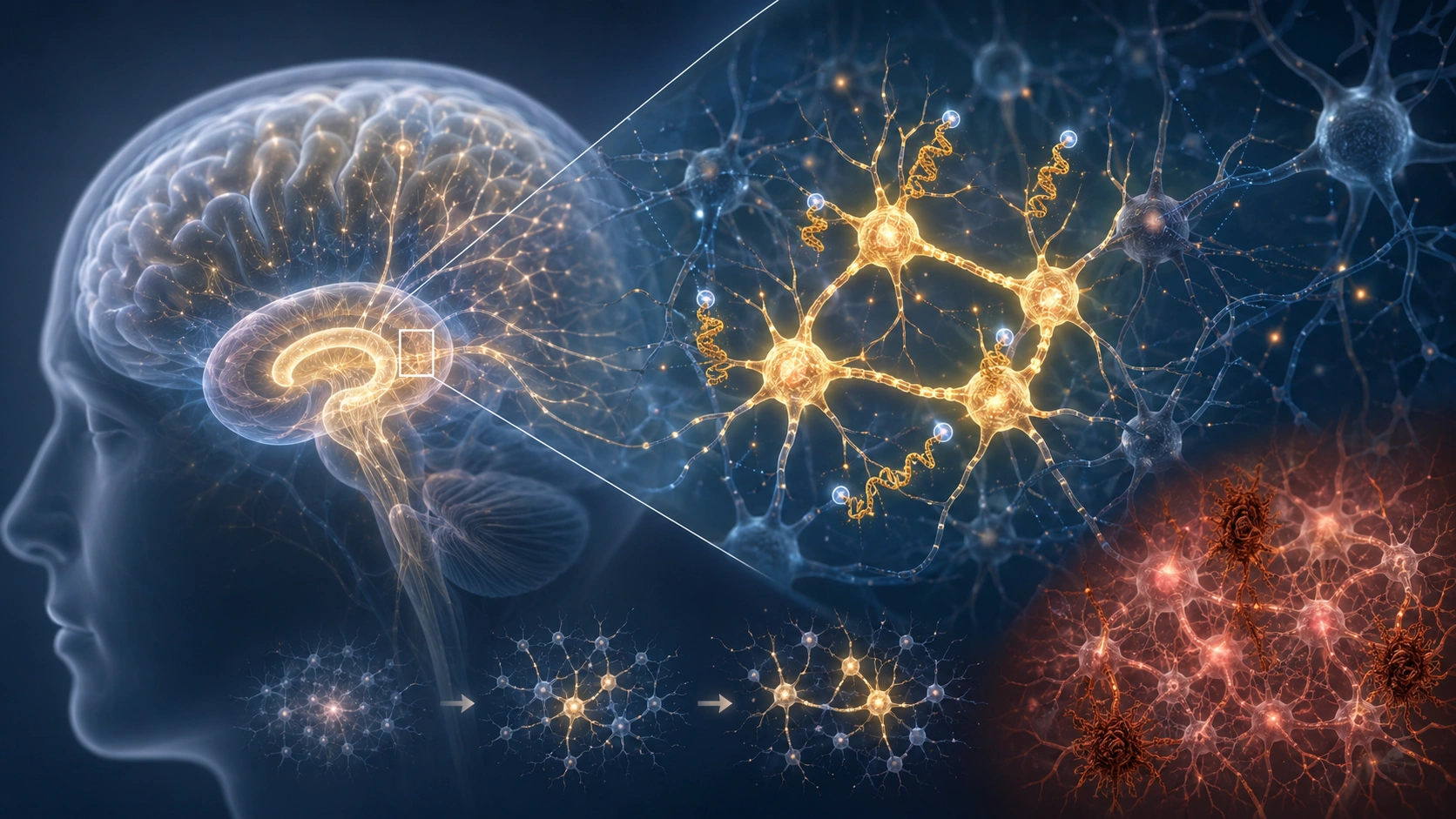
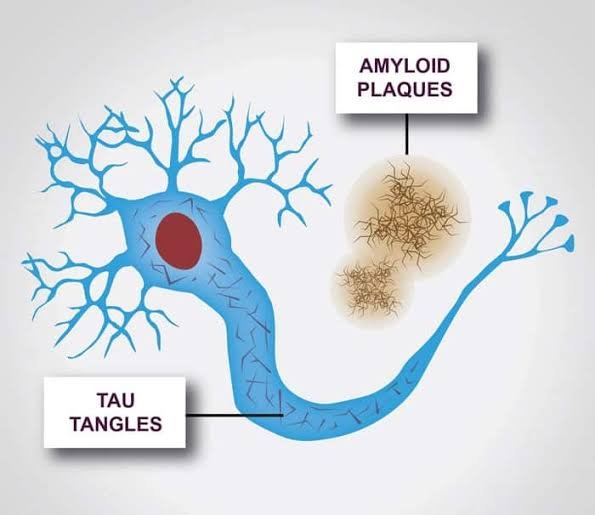
There is something almost unbearably poignant about the fact that the protein most responsible for stealing memory in Alzheimer’s disease turns out, in the healthy brain, to be one of the quiet architects of memory itself. A new study from Flinders University, working with colleagues at the University of New South Wales and Macquarie University, has found that tau, the protein behind Alzheimer’s most infamous tangles, is essential to how the brain builds memories meant to last. It is a discovery that asks us to hold two ideas at once: the villain of one story, and the unsung craftsman of another.
Not the Disease, the Discipline
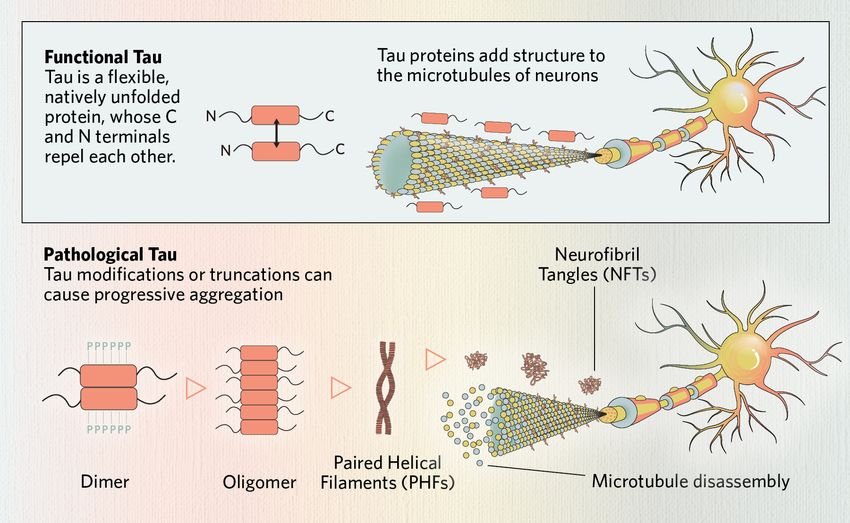
Tau has spent decades in the role of antagonist. Its name surfaces almost exclusively in connection with the tangles that clog and eventually kill neurons in Alzheimer’s disease, so thoroughly associated with decline that it can be easy to forget the protein has any legitimate business being in a healthy brain at all. This new research, published in Nature Communications, insists otherwise. In its ordinary, undisturbed state, tau is doing something essential, something that has nothing to do with disease and everything to do with the basic architecture of remembering.
The researchers describe tau’s healthy role almost as an act of discipline rather than damage. It doesn’t add anything flashy to the process of memory. It restrains. It organizes. It is, in its proper form, less a saboteur than a quiet custodian making sure the right cells, and only the right cells, take on the work of holding a memory in place.
The Difference Between Learning and Keeping
One of the more genuinely surprising aspects of the study is a distinction most of us never think to make, between the act of learning something and the separate, later act of still having it. The researchers found that tau isn’t required for a mouse to learn something new, or to recall it in the minutes or hours afterward. What tau turns out to govern is what scientists call remote memory, the kind that survives days or weeks, the kind a person reaches for when an old friend mentions something from years ago and the whole scene reassembles itself, unbidden, whole.
This is not a trivial distinction. It suggests that learning and keeping are, at some cellular level, two different acts entirely, governed by different machinery, and that a brain can manage the first perfectly well while quietly losing its grip on the second. Anyone who has watched a person with dementia describe their breakfast in perfect detail while the events of thirty years ago have gone soft and uncertain has witnessed, without knowing the mechanism, exactly this divide.
A Kind of Curator Inside the Cell
The mechanism itself has a name almost too technical to be beautiful, and yet it is: T205 phosphorylation, a precise, controlled chemical tag attached to tau at the moment a memory is being encoded. Lead researcher Renée Kosonen explained that tau helps determine which cells are selected to store a memory, a kind of casting director choosing, from among all the neurons capable of the job, the specific troupe that will carry a particular experience forward through time.
What tau appears to be doing, in practical terms, is quieting the crowd. Without this tagging, too many cells stay active, too much irrelevant noise competes for a place in the memory trace, and what should be a sharp, retrievable record becomes something blurrier, harder to locate later. With it, a smaller, more disciplined group of cells, the engram, forms cleanly, and the memory that results is more stable, more precisely bounded, easier to find again.
When the Curator Falters
Here is where the story turns back toward disease, and where the finding becomes something more than an elegant piece of basic neuroscience. When the researchers introduced disease-associated forms of tau into the picture, the damage showed up differently depending on timing, which is itself a kind of clue. Abnormal tau present while a memory was being formed interfered with the formation itself, the casting never quite came together. Abnormal tau introduced later, after a memory already existed, interfered instead with retrieval, the memory was there, intact, and simply could not be reached.
That distinction may explain something families living with dementia have long observed without a name for it: a loved one who seems, in a given moment, entirely capable of taking in something new, and yet cannot summon the past that once defined them. The problem was never a single broken thing. It was, perhaps, a curator who once worked in silence, now unable to do the job in either direction.
None of this changes anything about a diagnosis given this week. What it offers is rarer than a treatment, at least for now: an actual, mechanistic reason why memory frays the particular way it frays in this disease, rather than all at once, rather than randomly. Senior author Arne Ittner has said that understanding how tau supports memory could help clarify what goes wrong when it doesn’t, and there is something quietly moving in that ambition. To understand loss, it turns out, we first had to understand what the same small protein does when nothing is wrong at all, when it is simply, faithfully, helping a person keep hold of who they were.