


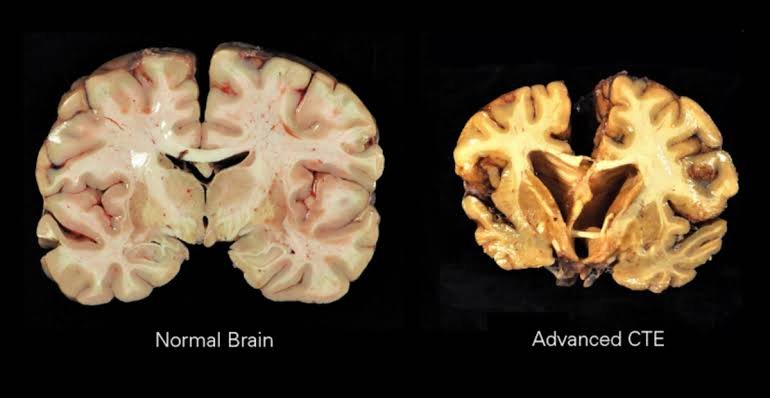
Football has a ghost that never quite leaves the sport, and its name is Mike Webster. The Hall of Fame center died in 2002 at fifty, living out of his truck by the end, and the pathologist who examined his brain found something American medicine hadn’t fully reckoned with yet: a slow, silent disease built from years of ordinary contact, not one dramatic hit. That discovery eventually gave the world a name, chronic traumatic encephalopathy, and a permanent asterisk next to every contact sport played at a professional level. Now soccer, a sport most Americans still think of as the safe alternative, has its own version of that reckoning, and it arrived this month at the Alzheimer’s Association International Conference in London.
The Largest Study of Its Kind
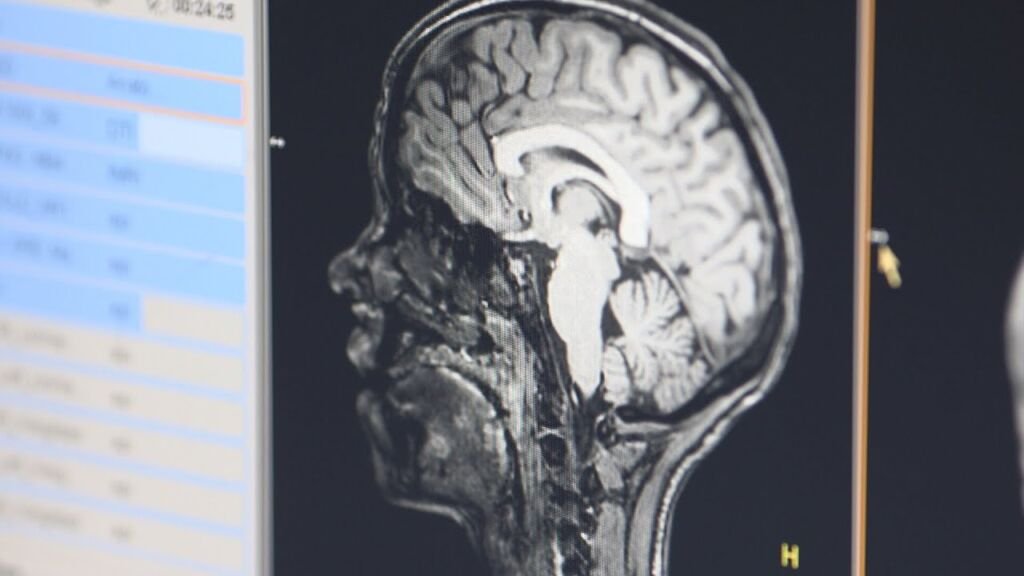
Researchers with the Advanced BRAIN Health Clinic Research Programme, based at the Institute of Sport, Exercise and Health, set out to answer a fairly direct question: does a professional soccer career leave a measurable mark on the brain by midlife, well before any dementia diagnosis would ever be considered. They recruited 142 retired elite players between the ages of 30 and 60, most men with at least three years of professional experience, along with 16 women who had competed at the top levels of the UK game. A comparison group of 56 healthy adults, none with any history of contact sports, military service, or head injury, gave researchers a baseline to measure against.
Lead author Caleigh Grace Lynch, a research technician at Imperial College London and the UK Dementia Research Institute, described the goal plainly: to see whether measurable effects on brain health in former elite soccer players even in mid-life were showing up before anything a clinician would call disease.
What Showed Up, and What Didn’t
The former players reported depression and anxiety at rates that should stop anyone reading this cold. 31% scored in the clinically significant range for depression, compared with just 9% of the comparison group. They also described real, lived difficulty with thinking clearly and making decisions day to day.
Here’s the part that complicates the story in an interesting way. When researchers ran standardized cognitive tests, the objective kind, memory tasks, processing speed, the usual battery, they found no significant difference between former players and the comparison group. The players were struggling. The tests weren’t catching it. That gap between what people report feeling and what a test can currently measure is exactly the kind of blind spot that has delayed recognition of brain injury in other sports for decades, a pattern the Mayo Clinic has documented in traumatic brain injury cases more broadly.
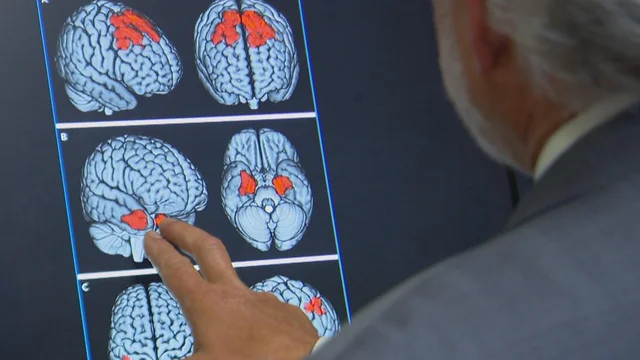
The brain imaging told a different story than the cognitive tests did. MRI scans of 124 former players showed lower gray matter volume in the frontal, cingulate, and thalamic regions, areas responsible for memory, attention, decision-making, and emotional regulation. The structure of the brain had changed in ways the standard tests weren’t built to catch, at least not yet.
The Pattern Familiar From Other Contact Sports
None of this exists in isolation. Additional research presented at the same conference, summarized in coverage from the European Medical Journal, found that heading a soccer ball, even in amateur, non-professional play, produced short-term spikes in biomarkers of brain cell injury. Longer professional careers were linked to higher rates of tau accumulation and greater risk of CTE itself, the same disease first identified in American football and now the subject of ongoing, dedicated research at institutions like Boston University’s CTE Center, which holds the largest brain tissue repository in the world focused on this exact condition.
That tau connection matters more than it might seem at first glance. Tau is the same protein at the center of Alzheimer’s research broadly, a protein whose healthy role in ordinary memory formation has only recently come into focus, which makes its disease-driven misbehavior in both Alzheimer’s and CTE feel less like two separate stories and more like variations on a shared vulnerability. It’s the kind of overlap that shows up elsewhere too, including in research on how early-life stress and substance exposure can quietly reshape brain function decades before symptoms appear.
Why Midlife Timing Matters
Lynch and her colleagues were careful about what they did and didn’t conclude. The combination of elevated psychological symptoms and altered brain structure, appearing before any clinically apparent neurodegenerative disease, suggests something is already underway, not that a diagnosis is imminent. What the researchers are calling for is longitudinal monitoring, tracking these same players over years, to see whether today’s structural differences predict tomorrow’s disease, or whether some of these changes might resolve, stabilize, or turn out to matter less than the imaging alone suggests.
That kind of patience runs against the instinct to want a clean answer immediately, but it’s the same instinct researchers studying why some brains resist Alzheimer’s damage entirely have had to sit with too. Not every brain exposed to the same risk ends up on the same path, and broader reporting on the study has noted that understanding why some former players may be more vulnerable than others could matter as much as the initial finding itself.
What This Means for Families and the Sport
For a family with a former player in their lives, whether a professional past or decades of amateur heading and collisions, this research is a reason to take reported depression, anxiety, or subjective thinking difficulties seriously rather than waiting for a cognitive test to confirm what a person is already describing. The tests, as this study shows plainly, may simply not be sensitive enough yet to catch what’s actually happening. AAIC 2026 drew more than 11,000 attendees and over 7,800 scientific submissions this year, a reminder of just how much of the field is now oriented toward catching neurodegenerative disease earlier, in populations nobody used to think to look at closely, soccer players very much included.