
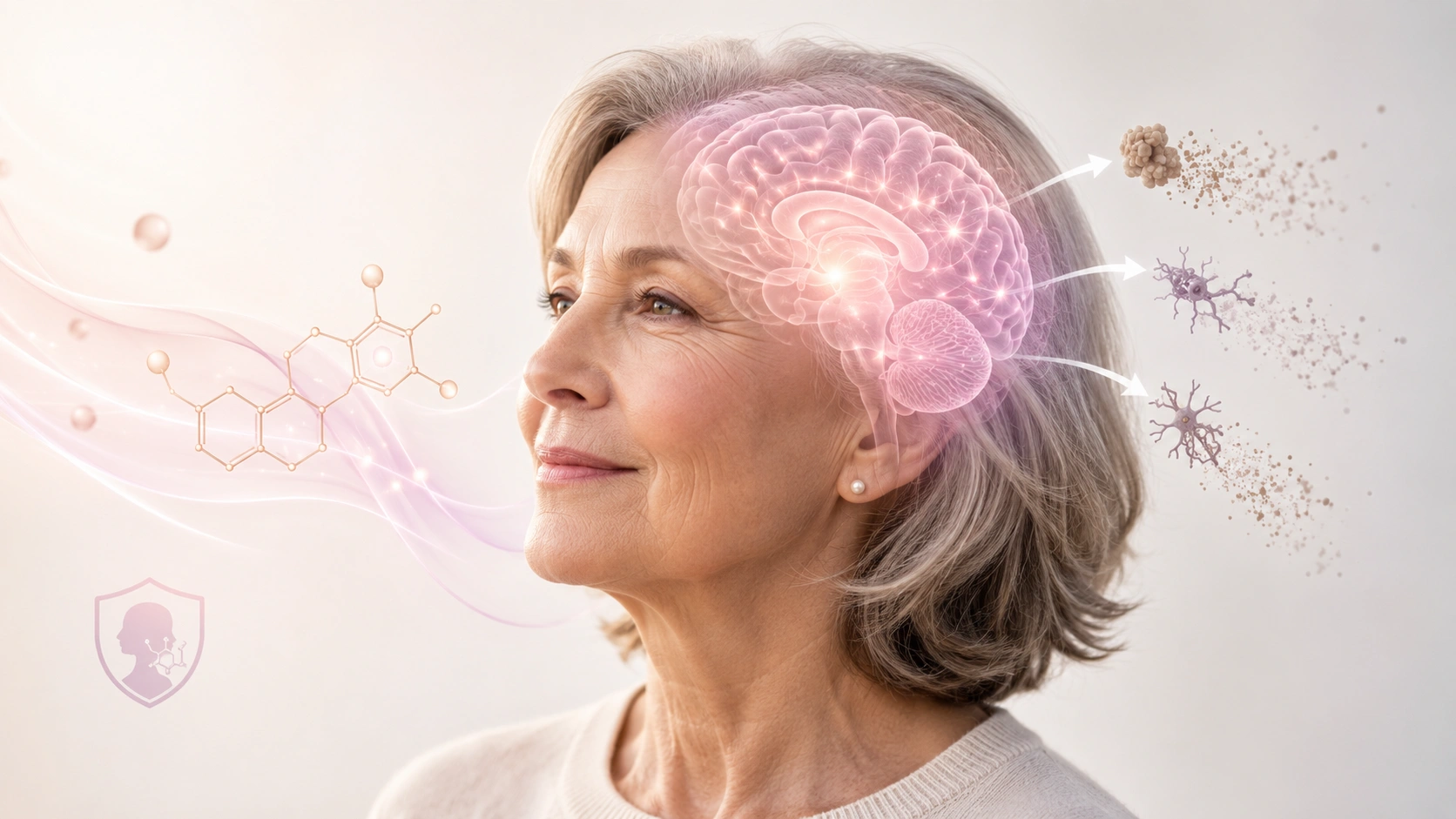
This particular question has been wrong before, publicly and consequentially, which is exactly why the newest answer deserves care rather than a headline taken at face value. Two decades ago, a landmark study found that hormone therapy raised dementia risk in older women, a finding that reshaped prescribing practice and left millions of women avoiding treatment for menopause symptoms out of fear it might cost them their minds later. A new Stanford Medicine study, published August 12 in Neurology, complicates that history considerably, and the complication matters as much as the headline number.
Researchers led by Jennifer Bruno drew on two major existing datasets, the National Alzheimer’s Coordinating Center and the Alzheimer’s Disease Neuroimaging Initiative, covering 21,462 women. What sets this study apart from most of what came before it is the autopsy component, detailed reporting from Science News explained: 258 brains from women who had used estrogen-only hormone therapy, compared against roughly 2,701 brains from women who had used none, scored for the actual physical hallmarks of Alzheimer’s, amyloid plaques, tau tangles, and the density of individual plaques, combined into a single pathology measure. Stanford neuroscientist Hadi Hosseini pointed to exactly this gap in prior research: the field had largely relied on cognitive tests and blood markers rather than these gold standards of Alzheimer’s, which are these postmortem neurophysiological outcomes, the actual brain tissue itself.
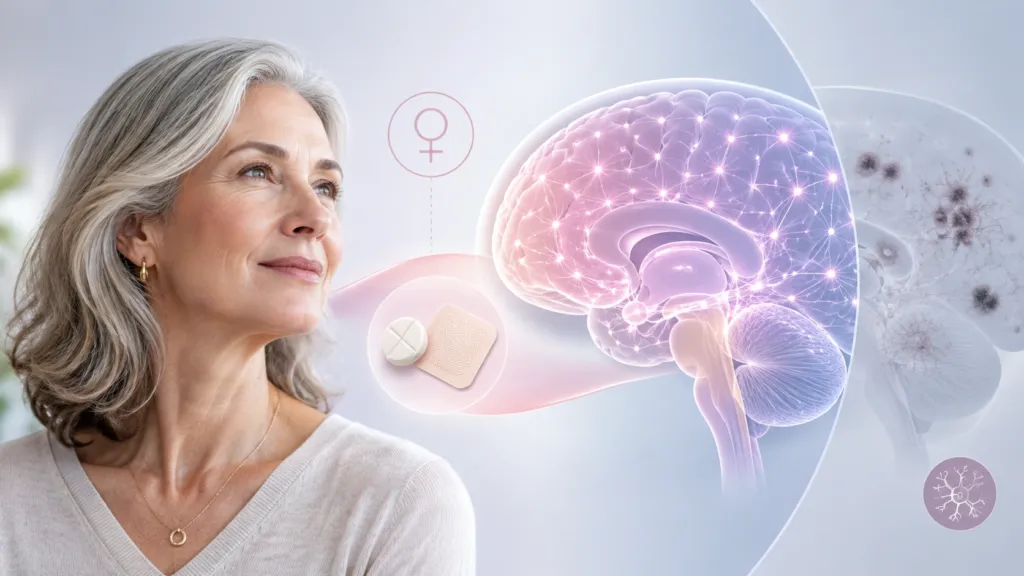
The numbers were substantial. Women who had used estrogen-only therapy showed 39% lower odds of a clinical dementia diagnosis and 35% lower odds of showing the hallmark brain changes of Alzheimer’s disease, after researchers adjusted for age, education, genetics, and race. Among therapy users, 18% showed no signs of Alzheimer’s pathology at all when their brains were examined, compared with 10% of non-users. At the other extreme, 40% of users showed all three disease hallmarks, against 51% of women who never used hormone therapy.
Here’s the detail that changes how this finding should actually be read, and it’s the part easiest to lose in a headline. Estrogen-only therapy is specifically what’s prescribed to women who no longer have a uterus, Scientific American’s coverage clarified, typically after a hysterectomy, because estrogen taken alone raises the risk of uterine cancer in women who still have one. Most women going through menopause with an intact uterus take a combined estrogen-progesterone therapy instead, and the researchers didn’t have enough data on that combined form to run the same analysis. That’s not a minor footnote. It means this finding, as striking as it is, speaks to a specific subset of women on a specific hormone regimen, not to hormone therapy broadly, and it says nothing definitive yet about the version most menopausal women actually take, an important caveat Time’s own reporting also flagged directly.
It’s also worth remembering directly why researchers approached this so cautiously in the first place, as Medical Daily’s analysis put it: this specific question has a history of whiplash. Earlier research, most notably from the Women’s Health Initiative in the early 2000s, found that hormone therapy, particularly the combined form started later in life, was linked to a higher risk of dementia rather than a lower one. That finding changed prescribing patterns for a generation and still shapes how doctors and patients think about hormone therapy today. A single new observational study, however well designed, doesn’t erase two decades of caution built on a different, also well-designed study. Bruno herself has been direct that these findings help researchers understand the relationship better without yet supporting specific recommendations to patients about their own hormone use.

None of this diminishes what the autopsy data actually shows. It’s a real, biologically grounded signal, tied to actual brain tissue rather than a symptom checklist, and it adds real weight to a broader theory that’s been circulating for years: that the sharp estrogen drop at menopause may itself be a meaningful factor in why Alzheimer’s affects women at roughly twice the rate it affects men. What it can’t yet do is answer the question a woman actually facing a menopause treatment decision would want answered, whether starting hormone therapy today would lower her own future risk, and for which form of it, and at what age. That’s the study researchers say still needs to happen, ideally the kind of randomized trial that can show cause rather than just correlation, before anyone treats this as settled guidance rather than a genuinely promising and genuinely incomplete first look.