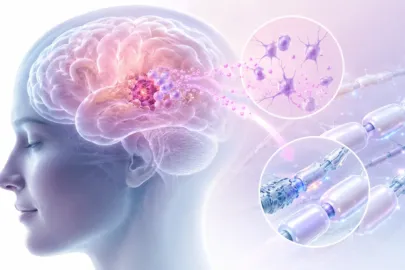

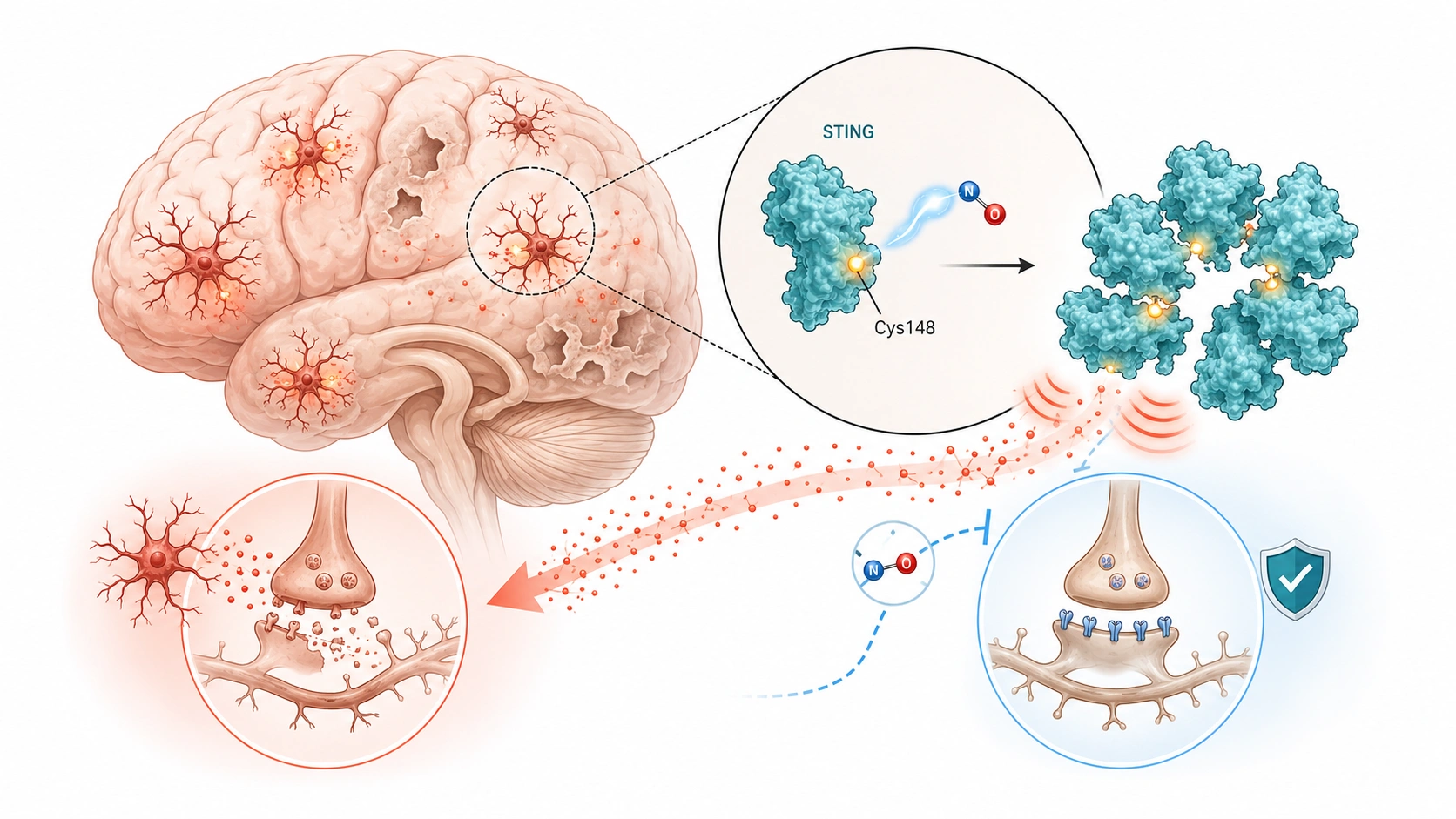
Chemistry has a habit of hiding its biggest consequences inside its smallest details, and Alzheimer’s disease just handed researchers a textbook example. A team at Scripps Research has traced a piece of the chronic brain inflammation seen in Alzheimer’s down to a single, specific atomic-level event: a molecule related to nitric oxide attaching itself to one particular amino acid, cysteine 148, on a protein called STING.
STING normally works as part of the brain’s early-warning immune system, the kind of protein that’s supposed to notice trouble and sound an alarm, then quiet back down once the threat passes. The problem, as ScienceDaily reported, is that in Alzheimer’s disease, STING seems to get stuck in the “sound the alarm” position. Researchers found that a chemical reaction called S-nitrosylation, first described by senior author Stuart Lipton more than 30 years ago, modifies that one cysteine and locks STING into forming larger clusters that keep churning out inflammatory signals long after any real threat has passed.
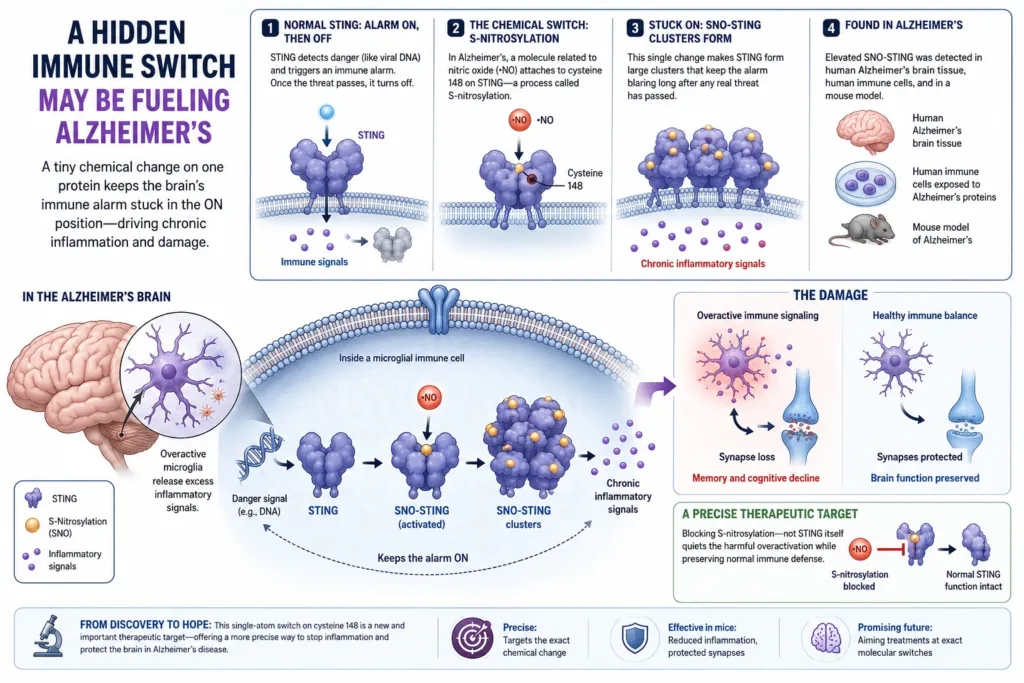
Lipton’s team, led by postdoctoral researcher Lauren Carnevale and working with mass spectrometry expert John Yates III, didn’t just spot this modified protein once and call it a day. They found elevated levels of the altered version, which they call SNO-STING, in three separate places: postmortem brain tissue from people who had Alzheimer’s, human brain immune cells grown in a lab and exposed to Alzheimer’s-associated proteins, and a mouse model of the disease. Three independent confirmations of the same chemical signature is the kind of consistency that turns a curious observation into something worth chasing with a drug.
And chasing it worked, at least in mice. When the researchers blocked this specific chemical modification, neuroinflammation dropped, and just as importantly, the synapses connecting brain cells, the exact structures that erode as Alzheimer’s progresses and memory fades, were protected from degrading. Lipton called it plainly: this is a new and important therapeutic target for Alzheimer’s disease.
What makes this particular switch appealing as a drug target isn’t just that it works, it’s how narrowly it works. STING still has a real job to do defending the brain against genuine threats, and a treatment that shut the whole protein down would leave patients more vulnerable elsewhere. Blocking only the S-nitrosylation modification, rather than STING itself, spared normal immune function while quieting only the pathological overactivation driving the damage.
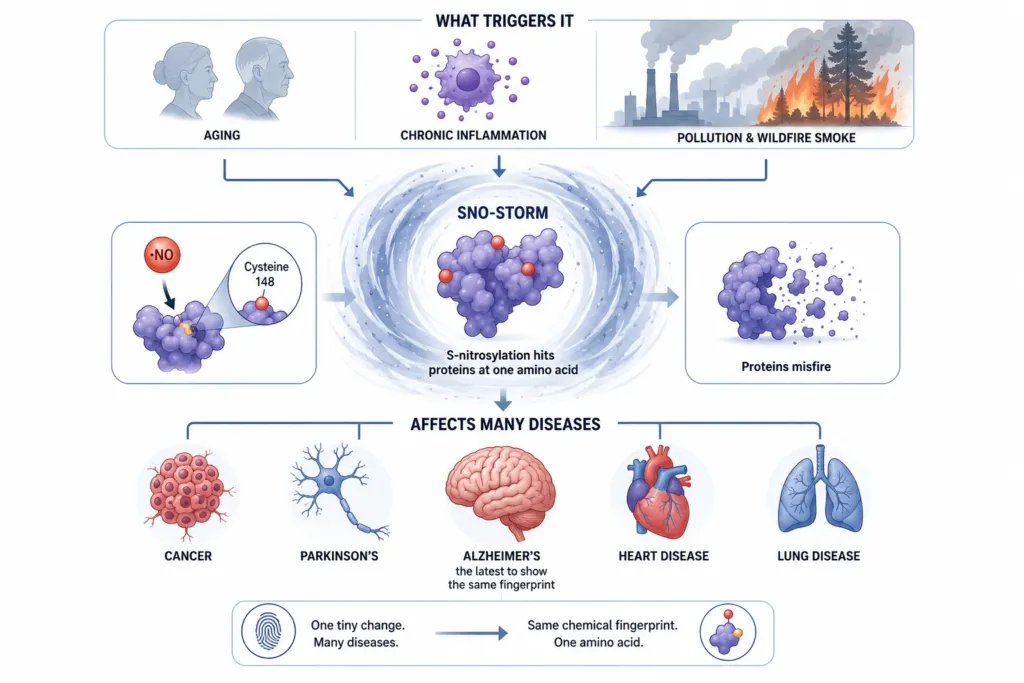
This isn’t an isolated curiosity in Lipton’s research either. His lab has spent three decades documenting how this same S-nitrosylation reaction gets triggered by aging, chronic inflammation, and environmental exposures like air pollution and wildfire smoke, disrupting proteins across a whole range of diseases including cancer and Parkinson’s, a pattern his team has come to call a SNO-storm. Alzheimer’s, it turns out, is just the latest disease to show up carrying this same chemical fingerprint, down to one amino acid where it does its damage.
That precision is what separates this discovery from the broader, blunter anti-inflammatory strategies tried against Alzheimer’s in the past. It’s the same kind of narrow-target thinking behind aging muscle’s molecular switch, and it echoes a pattern showing up elsewhere in current Alzheimer’s research too, a hijacked courier protein, and a targeted copper compound designed to clear toxic proteins without disturbing everything else around them. None of these individual discoveries is a cure sitting on a shelf. Together, they suggest a field that’s finally learning to aim at exact chemical addresses inside diseased cells, rather than carpet-bombing entire biological systems and hoping for the best.