
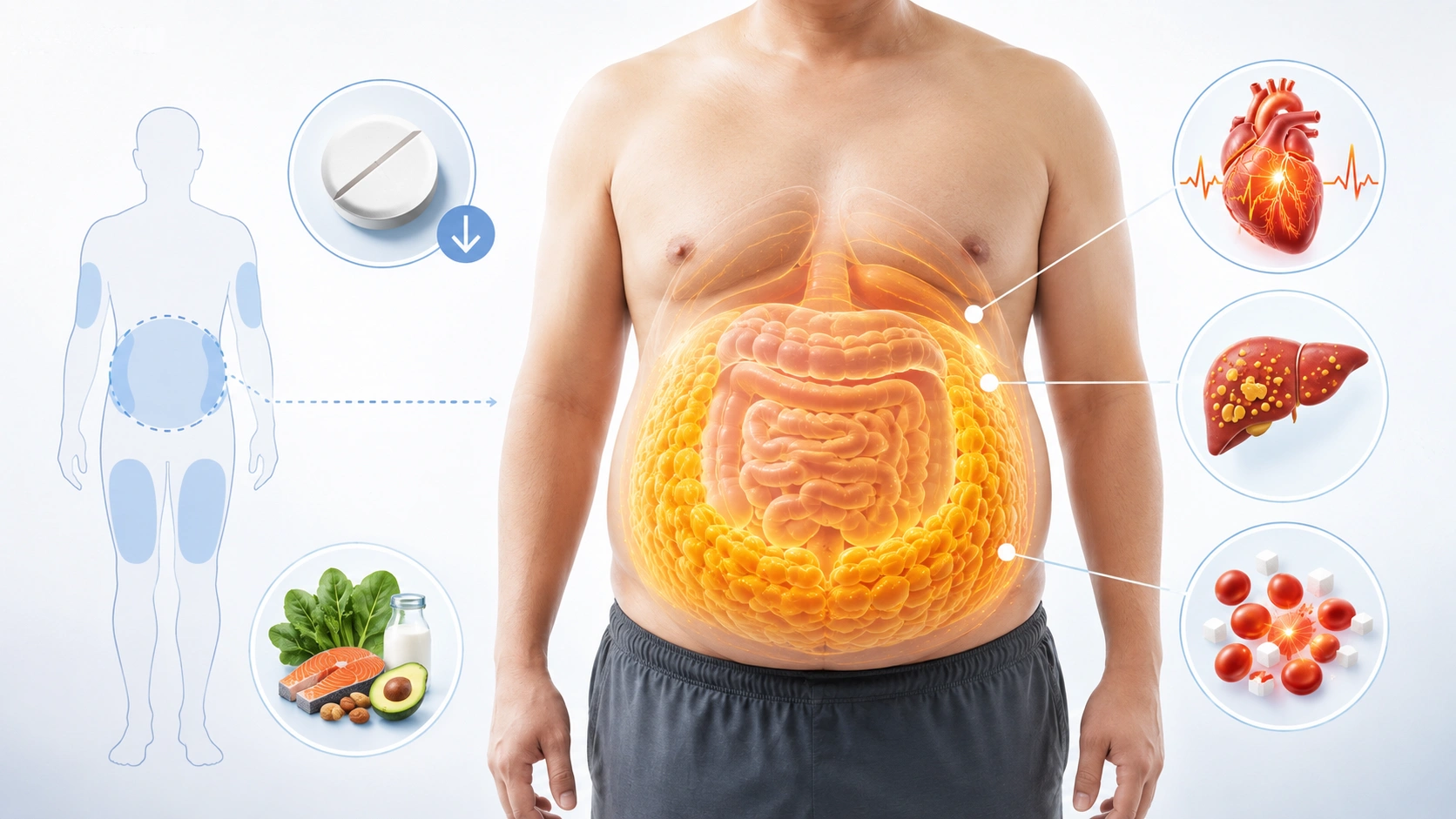
Belly fat doesn’t just sit there. It actively pulls vitamin D out of circulation, trapping it inside fat cells and leaving less available to the rest of the body at exactly the point in life when the body needs it most.
A study tracking 5,520 adults over 50 for six years, published in Diabetes, Obesity and Metabolism, found that this specific combination, abdominal obesity paired with vitamin D deficiency, carried a 123% higher risk of death than having neither condition at all.
Each factor mattered plenty on its own. Abdominal obesity, defined in the study as a waist circumference above roughly 40 inches for men and 35 for women, raised mortality risk by 47%. Vitamin D deficiency alone, blood levels below 30 nanomoles per liter, raised it by as much as 91%. Neither number is small. Together, HealthDay’s reporting on the findings noted, the two didn’t just add up. They compounded into something considerably worse than either risk on its own.

Tiago Silva Alexandre, the gerontology professor at the Federal University of São Carlos who led the research alongside colleagues at University College London, laid out why the two conditions feed each other rather than simply coexisting. Vitamin D, he pointed out, is a hormone that acts on various organs, and its deficiency impairs several bodily functions, not a narrow nutrient with one job. Abdominal fat interferes with that hormone in more than one way at once: sequestering it physically inside fat tissue, and separately disrupting the enzymes responsible for making it available to the rest of the body. Layer that on top of the low-grade, chronic inflammation that tends to accompany both aging and excess abdominal fat, Newsweek’s coverage detailed, and the result is an immune system working with fewer resources exactly when inflammation is running higher than usual.
This isn’t a standalone finding for Alexandre’s research group either. The same team has previously shown that abdominal obesity itself raises the risk of developing vitamin D deficiency over time, work that laid the groundwork for treating the two conditions as connected rather than coincidental, and separate research has tied vitamin D deficiency in older adults to as much as a 78% higher risk of losing muscle strength. Put together, that’s a fuller picture of what’s actually at stake: not just a mortality statistic, but a specific chain running from belly fat to hormone deficiency to inflammation to physical decline, each link documented across more than one study from the same research team.
What makes this particular combination worth taking seriously in a doctor’s office, rather than filing away as one more alarming statistic, is how manageable both halves of it actually are. A waist measurement takes thirty seconds. A vitamin D blood test is standard and inexpensive. The researchers themselves have pointed to regular screening for both conditions, paired with treatment when either shows up, as a genuinely practical way to extend healthy years for people over 50, not a complicated intervention requiring specialist referrals or expensive new technology.
For a family managing an older parent’s care, that’s a short, concrete list worth raising at the next checkup: a waist measurement and a vitamin D level, the same kind of overlooked basics that tend to get waved off as ordinary aging until someone actually checks the numbers. Muscle strength, cardiovascular health, and now overall mortality risk all show up connected to the same handful of measurable, addressable factors researchers keep finding, again and again, sitting in plain sight.