

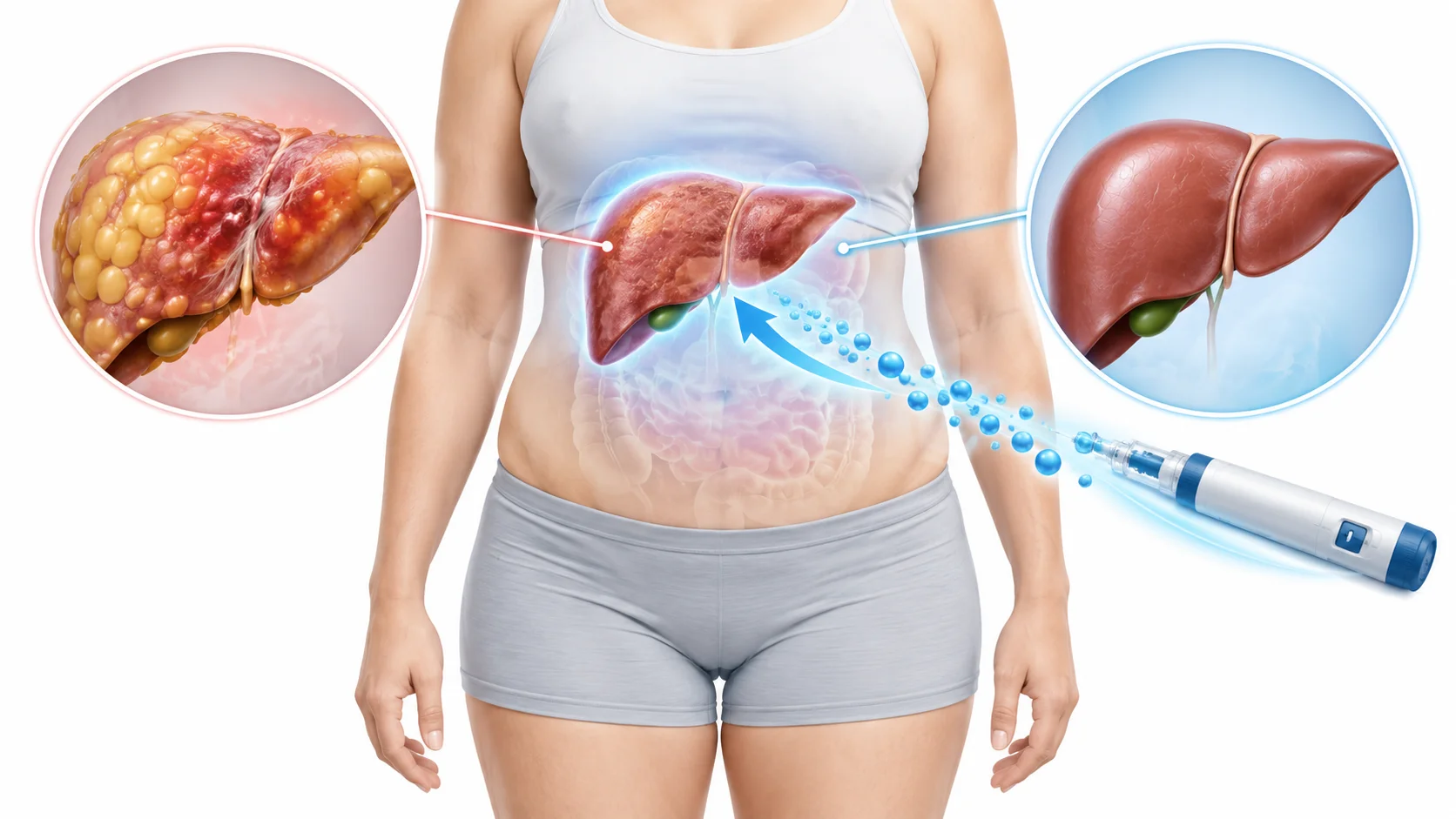
The working assumption about GLP-1 drugs and liver health was simple: less body fat means less fat clogging the liver, so any liver improvement on semaglutide was really just weight loss showing up in a different organ. Daniel Drucker, the University of Toronto researcher who helped lay the groundwork for GLP-1 medicines back in the 1980s, kept running into data that didn’t fit that story. In clinical trials, patients who lost very little weight showed the same reductions in liver inflammation as patients who lost a great deal of it. If weight loss were the whole explanation, that gap shouldn’t exist.
The Liver Cells Nobody Thought Carried This Receptor
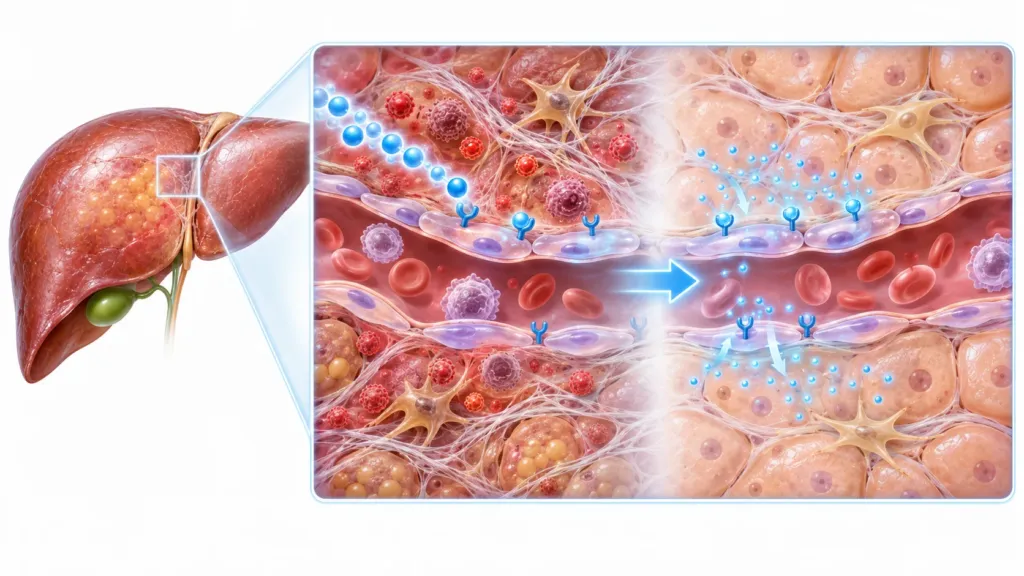
Drucker’s team, working with postdoctoral researcher Maria Gonzalez-Rellan at Sinai Health, went looking for a direct explanation instead of an indirect one. The prevailing assumption in the field held that liver cells simply didn’t carry the receptor semaglutide binds to, meaning the drug had no real route into liver tissue at all. That assumption turned out to be wrong. A specific subset of liver cells called liver sinusoidal endothelial cells, LSECs, do carry the GLP-1 receptor. When semaglutide activates it, these cells shift their gene activity and start releasing anti-inflammatory molecules that calm the surrounding liver tissue directly, reducing inflammation and scarring from the inside rather than as a downstream effect of a smaller waistline.
Proof That Weight Loss Wasn’t the Real Driver
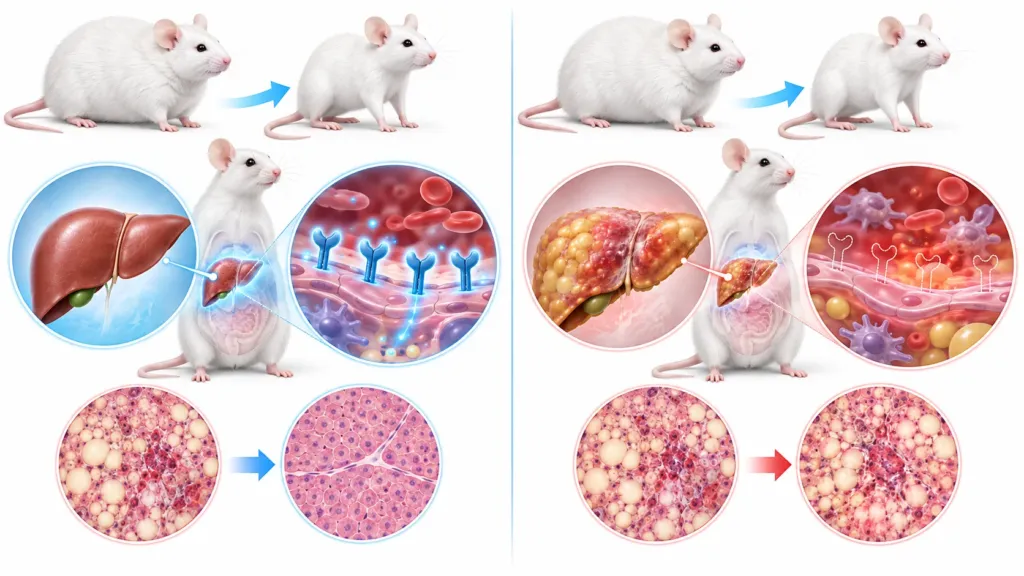
The team didn’t stop at identifying the receptor. They tested mice genetically engineered without it, then gave those mice semaglutide and let them lose weight normally. The mice dropped 20% of their body weight, a substantial amount by any standard, and showed no liver improvement whatsoever. Take away the LSEC receptor, and the liver benefit disappears entirely, even with real, significant weight loss still happening. That’s about as clean a piece of evidence as this kind of research gets: the receptor, not the pounds lost, is doing the actual work. Drucker summed up what the finding resolved directly: patients who lose very little weight see the same reductions in liver inflammation, and now there’s a specific cellular reason why.
What This Could Mean for How the Drug Gets Prescribed
The timing behind this research landing back in the news matters. Semaglutide received FDA approval in August 2026 specifically for MASH, metabolic dysfunction-associated steatohepatitis, a serious liver condition estimated to affect around 6% of American adults and, more broadly, a category of metabolic liver disease projected to reach nearly two billion people worldwide by 2050. A drug already being prescribed at high doses for weight loss now has a documented, separate reason to work on the liver specifically, which opens a real clinical question: if the liver benefit doesn’t require major weight loss to kick in, could lower doses treat liver disease effectively while sparing patients the side effects and cost that come with dosing aimed purely at shedding pounds.
That question connects to a broader pattern researchers are noticing across GLP-1 medicines generally. Work out of the University of Colorado’s Anschutz Medical Campus has documented similar weight-independent benefits turning up in the heart and kidneys too, suggesting these drugs are doing more organ-specific work throughout the body than the weight-loss headline ever captured. Drucker has been careful not to overcorrect in the other direction, noting that weight loss still matters and improves plenty else in a patient’s health. What’s changed is that it’s no longer the only measure that should count as success, a shift that lines up with other recent liver research finding that narrow, specific interventions can move real markers of liver health without transforming a person’s weight or metabolism wholesale.
For a family managing an older relative on GLP-1 therapy, or weighing whether to start one, this research adds a genuinely useful data point to the conversation with a prescriber: the scale isn’t the only thing worth tracking, the same lesson that’s shown up again and again as liver health research matures beyond treating body weight as the single number that explains everything happening inside the organ.